Wildlike blends piercing, designer jewelry and self-expression in Manhattan
Wildlike turns piercing into a luxury, photo-ready ritual, where designer jewelry and community make personalization feel like an event.

Wildlike makes the case that personalized jewelry is no longer just a product category. It is an experience, staged in real time, with piercing, styling and community folded into the purchase. In Manhattan, the store reads as a jewelry boutique, a piercing studio, a social hub and an event space all at once, which is exactly why it feels so relevant to the way self-expression shoppers now buy.
The experience is the product
Alysa Teichman built Wildlike around the idea that luxury jewelry and body-piercing culture can coexist without losing either side’s edge. The brand describes itself as a new piercing concept at the forefront of experiential retail, and that phrasing matters because the appeal is not only what is on display, but what happens in the room. Customers encounter high-end jewelry in a safe, sterile environment, then move through a setting designed to feel layered, polished and highly photogenic.
That format works because personalization is most powerful when it is visible. A ring, charm or stud becomes more meaningful when it marks a piercing, a milestone or a style decision made in the moment. Wildlike leans into that emotional charge, treating the transaction less like a standard jewelry sale and more like a lived-in style ritual.
Why self-expression shoppers respond to it
Wildlike’s language is built around personal expression and community, and that combination helps explain why the concept has traction. Shoppers drawn to personalized jewelry are rarely looking only for material value; they want a piece to signal identity, a memory or a mood. By pairing designer jewelry with body piercing, the store gives them a way to make that signal immediate and highly personal.
The brand also makes community part of the purchase. Its events are designed to create “surprise and delight,” which turns the store into a place customers return to even after the initial piercing or jewelry buy. That is a meaningful shift for the category: instead of treating jewelry as a one-time transaction, Wildlike treats it as an ongoing relationship with a clientele the company calls “Wildies.”
- the piercing itself, which turns the body into part of the design
- the jewelry selection, which lets customers choose pieces that fit their taste and comfort level
- the event-driven atmosphere, which makes the purchase feel social rather than solitary
For shoppers, the most personalization-friendly parts of the experience are obvious:
The Manhattan location extends the idea
Wildlike opened its first location in Dallas in July 2021, then expanded to New York in 2023 with a Lower Manhattan, NoHo outpost. That move was not just geographic; it was strategic. Teichman had long wanted to return to New York, where she studied at New York University, and the city’s density, style fluency and brand-building power fit the concept’s ambitions.
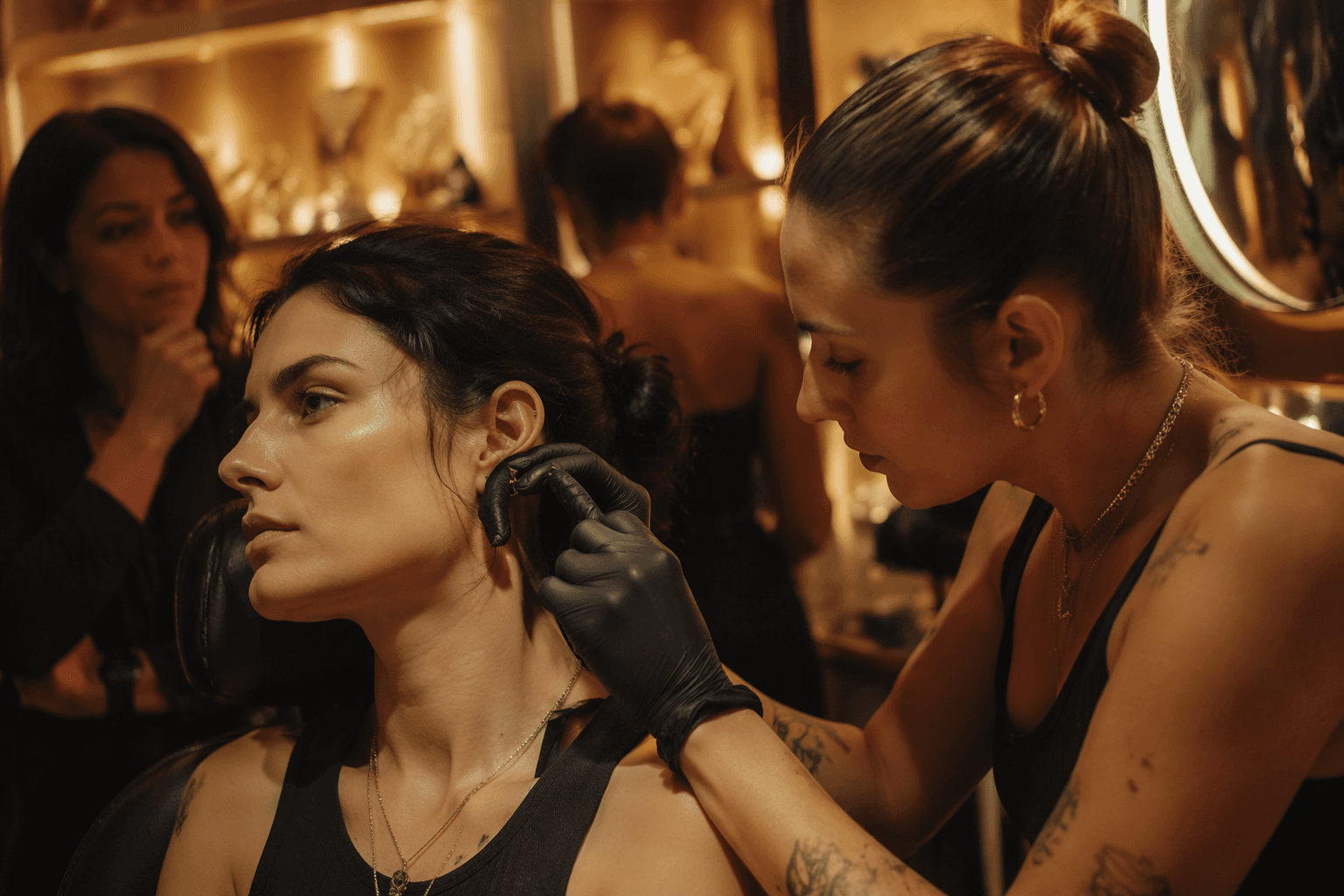
The Manhattan shop was intentionally presented as a second store, but it also signaled that Wildlike’s formula could travel beyond its Texas roots. Coverage around the expansion described the business as a multimillion-dollar enterprise, with annual sales in the millions in its first two years, which suggests this is not a novelty act built on aesthetics alone. The model has real commercial weight.
That matters in personalized jewelry because the strongest concepts are not only emotional, they are operationally sound. A sterile piercing environment, a confident jewelry assortment and a space that encourages repeat visits are all part of the value proposition. Wildlike understands that buying a piece linked to the body is different from buying a pendant off a tray. The setting has to earn trust before it can earn a sale.
A family jewelry legacy with a sharper edge
Teichman is the second-generation owner of Ylang 23, the designer jewelry business founded by Joanne and Charles Teichman in 1985. That lineage gives Wildlike a foundation many trend-driven retail concepts do not have. It is not merely borrowing the language of luxury jewelry; it is extending a family business built on designer taste into a newer, more culture-forward lane.
The connection between Ylang 23 and Wildlike helps explain the mix of polish and rebellion that defines the Manhattan store. One side of the story is heritage, expertise and a long relationship with fine jewelry. The other is tattoo-culture edge, piercing and the energy of self-made style. Put together, they create a retail environment that feels current without seeming disposable.
What retailers should take from the format
Wildlike is persuasive because it understands that personalization is emotional, but it is also theatrical. The store does not just sell a piece; it frames a decision, gives it a setting and lets the customer leave with a story attached. That is why the studio-plus-event-space model works so well for identity-driven shoppers, especially in jewelry, where the best purchases often mark a life change, a gift or a self-defined aesthetic shift.
The New York location’s inclusion among INSTORE’s America’s Coolest Stores honorable mentions for 2025 reinforces that the industry is noticing the formula. The lesson is not that every retailer needs a piercing studio. It is that the most compelling personalized jewelry experiences now blur the line between retail, service and community. The stores that win will be the ones that make customers feel seen before they ever look at the price tag.
This article was produced by Prism’s automated news system from verified source data, official records, and press releases, then run through automated quality and moderation checks before publishing. The system is built and supervised by the people who set the standards it runs under. Read our full AI policy.
Know something we missed? Have a correction or additional information?
Submit a Tip