Women drive self-purchase ring boom with bold diamond styles
Women are choosing self-purchase rings with fancy cuts, antique stones and bold settings, turning diamond buying into a personal milestone instead of a proposal.
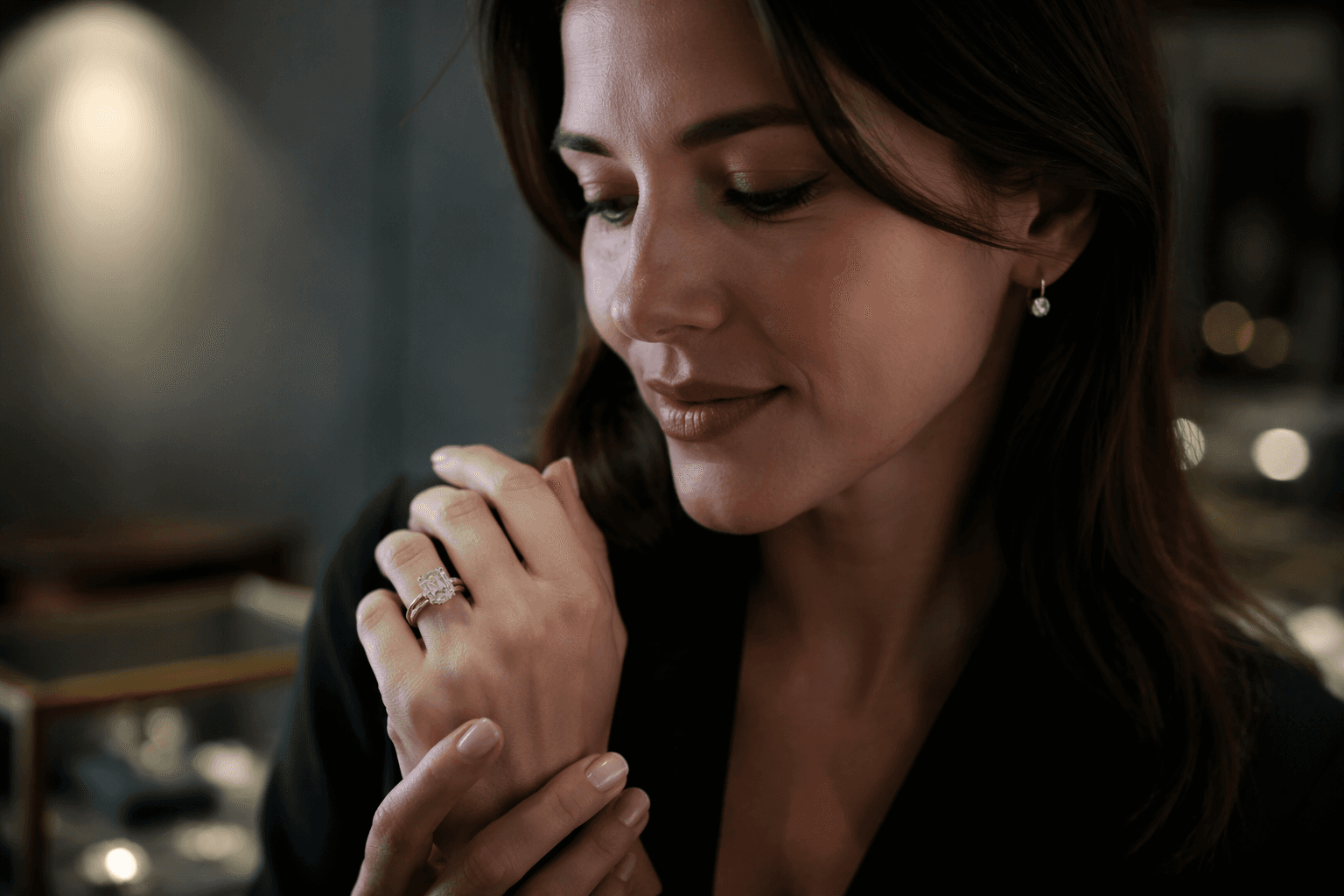
Women are making the ring category more personal, and the design clues are easy to read: higher-ticket diamond rings chosen for themselves, with fancy cuts, antique stones and bold settings that feel declarative rather than bridal. The appeal is not just sparkle, but authorship, a ring that marks a promotion, a birthday, a divorce, a move or a quiet private victory without waiting for anyone else to define the moment.
The new language of self-purchase
The clearest shift is aesthetic. INSTORE describes women buying rings that look chosen, not assigned, and that distinction matters because it changes how the jewelry is worn and read. Fancy cuts bring a sense of individuality, antique stones add depth and history, and bold settings give the piece enough presence to stand on its own.
That mix tells you a lot about buyer intent. A self-purchase ring is often less about matching a future wedding band and more about expressing taste in one concentrated object. A strong setting, a stone with age or character, and a cut that feels slightly unexpected all signal that the ring is meant to represent the wearer first.
A market De Beers has watched for decades
This is not a fleeting discovery. De Beers says it has recognized the rise of female self-purchase since the 1970s, and it helped popularize the idea with its 2003 “Women of the World Raise Your Right Hand” campaign. The industry has spent years learning that women were already buying diamonds for themselves, even when the market’s language still centered engagement.
The numbers make that case harder to ignore. In De Beers’ 2019 coverage, 14 percent of U.S. women said they had bought their own engagement ring, and self-purchasers spent 33 percent more on average than men, at $4,400 versus $3,300. JCK also reported that 33 percent of all female nonbridal diamond jewelry in the United States was purchased by women for themselves, with rings leading the category.
That matters because rings are the most visibly symbolic piece of diamond jewelry. When women make them the site of self-purchase, they are not just buying a luxury item. They are choosing a format long associated with commitment and turning it into a marker of self-definition.
What the latest demand data says
De Beers’ June 2026 Diamond Report says its U.S. Diamond Acquisition Study is based on responses from 18,500 women ages 18 to 74. In that same report, average spend on natural diamonds rose 25 percent in 2025 compared with 2023, a sign that buyers are moving upward in value, not just volume.
The company also says Gen Z is already the second-largest generation buying natural diamond jewelry, which helps explain why the self-purchase ring boom feels more visible now. Younger buyers are approaching diamond jewelry as a personal style category, not only a milestone category, and that shift favors pieces with sharper visual identity: unusual cuts, antique character and settings with presence.
A 2025 De Beers-commissioned Ipsos and Natural Diamond Council study adds another layer. More than 40 percent of women and 50 percent of men expected to purchase or receive natural diamond jewelry in the next two years, and 23 percent of women expected to acquire jewelry for themselves. The direction of travel is clear: self-purchasing is no longer a niche behavior tucked at the edge of the market.
Why rings, and why now
Jewelers have spent years learning that self-purchase is not driven by one life stage. The Women’s Jewelry Association launched “March Is Me Month” to encourage women to buy jewelry for themselves, and that framing fits the broader behavior pattern. Jewelers Mutual said in 2026 that self-purchasing is driven by personal milestones, holidays and “just because” moments.
That is the real pivot. The ring is no longer reserved for a proposal or anniversary. It can mark finishing a degree, running a business, recovering from a hard year or simply choosing a piece that feels right now. National Jeweler’s report that independent jewelry retailers saw average retail sale values rise 7 percent in 2024, even as unit sales dipped slightly, suggests buyers are willing to spend more when a piece feels emotionally specific and materially substantial.
How to read the design signals
If you are choosing a self-purchase ring, the style should reflect the reason you are buying it. The most compelling rings in this category do not look generic. They look intentional.
- Fancy cuts work when you want the stone to feel distinct and less bridal-coded.
- Antique stones bring history into the piece and can make the ring feel collected rather than newly standardized.
- Bold settings signal confidence and help the ring stand up as a statement piece on its own.
- Higher-ticket diamonds make sense when the ring is meant to anchor daily wear and long-term meaning, not just a passing fashion moment.
The best self-purchase rings also hold up under scrutiny. Ask where the stone came from, whether it is antique or newly cut, and what the setting is made to do. A bold silhouette is only worthwhile if the prongs, gallery and shank are sturdy enough for regular wear, because a personal milestone ring should not feel precious in the fragile sense.
Provenance matters as much as polish
For readers who care about sustainability and the story behind the stone, the category rewards more questions, not fewer. Antique stones have a built-in material logic because they re-enter circulation rather than requiring a new extraction. Natural diamonds, meanwhile, carry a different provenance story and should never be sold on vague language alone.
That is where greenwashing usually creeps in. If a seller leans on words like ethical, responsible or conscious without explaining whether the ring uses antique stones, newly mined natural diamonds, or a particular approach to sourcing and manufacturing, the claim is too soft to trust. A ring chosen for yourself should feel specific in every respect, from the origin of the stone to the architecture of the setting.
The self-purchase boom is not really about buying more jewelry. It is about buying jewelry that knows exactly what it is for: a private achievement, a visible identity marker and a piece with enough design conviction to stand in for a milestone that may never have had a ceremony.
This article was produced by Prism’s automated news system from verified source data, official records, and press releases, then run through automated quality and moderation checks before publishing. The system is built and supervised by the people who set the standards it runs under. Read our full AI policy.
Know something we missed? Have a correction or additional information?
Submit a Tip