Brevani’s butterfly brooches bring whimsy to contemporary fine jewelry
Brevani’s anodized-titanium butterflies show why the motif keeps returning: collectors still reward history, handwork, and playful stones over generic sparkle.
A butterfly brooch reveals more than whimsy
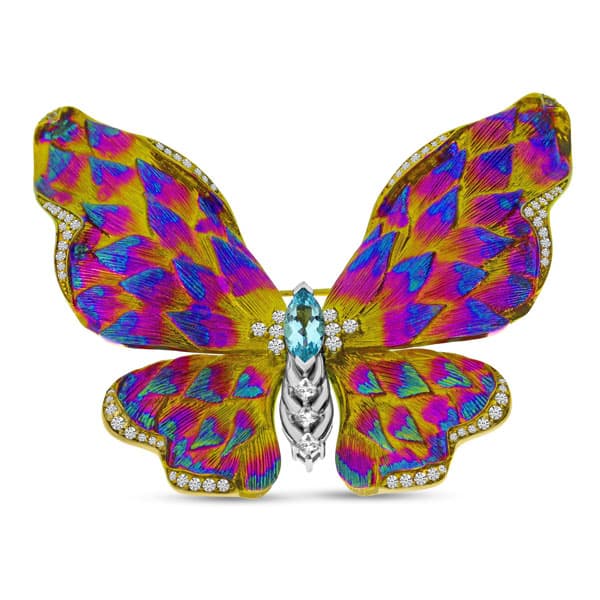
A butterfly brooch can look playful at first glance, but the best examples tell you exactly where to look: at the metal, the stones, the hinge, and the hand behind the finish. Brevani’s new butterfly brooches make that lesson vivid, with anodized titanium wings and gemstone accents in topaz, quartz, and peridot, each piece given its own personality through color and stone choice.
That kind of exuberance is not a detour from fine jewelry tradition. It is part of a longer conversation between ornament and identity, and it is heading straight into the JCK show in Las Vegas later in May, where the trade gathers at The Venetian Resort and partner hotels. The message is clear: brooches are no longer being treated as dusty leftovers from another era. They are back in the room, and butterfly motifs are one of the most useful ways to understand why.
Why the butterfly keeps coming back
The butterfly has history on its side. The British Museum holds butterfly-form brooches, and the Met dates Art Nouveau broadly from the 1880s to the First World War, a period when jewelry drew heavily from the natural world. JCK noted years ago that butterfly jewelry has been used for centuries and was especially visible in the Art Nouveau era, which makes Brevani’s modern version feel less like a novelty and more like a continuation.
That continuity matters in the vintage market. Rapaport reported in 2025 that brooches had been gaining real traction for about 20 years, with a renewed surge in the past few years. The forces behind that revival are practical as much as aesthetic: video calls made lapel jewelry visible again, fashion brought brooches back into styling conversations, and men have embraced them as part of a broader return to personal adornment. In other words, the brooch is not merely surviving. It is being worn with intention.
What Brevani is doing differently
Brevani’s butterflies sit at the contemporary end of that lineage. Anodized titanium gives the wings a crisp, modern surface and a range of hues that can make each butterfly feel slightly different from the next. The gemstones, topaz, quartz, and peridot, keep the look from becoming too industrial; they soften the metal with color and a more natural sparkle.
That balance is what makes the design interesting for vintage-minded readers. The brooch does not imitate an antique butterfly, but it borrows the oldest successful trick in jewelry design: make nature feel alive on the body. The result is a piece that evokes the cabinet-of-curiosities mood JCK identified, where beauty comes with a hint of collecting, classification, and wonder.
It also offers a useful reminder about modern claims. Titanium is a material choice, not a provenance credential. Its appeal lies in execution, in the way the surface is treated and the stones are chosen, not in any vague sustainability halo. If a contemporary butterfly brooch leans too hard on whimsy without explaining materials, construction, or sourcing, the story is thin.
How to read a vintage butterfly brooch
Use a modern piece like Brevani’s as a decoder ring for the vintage market. A collectible butterfly brooch usually has more than a pleasant silhouette. It shows a clear design vocabulary from its period, whether that means Art Nouveau curves, midcentury restraint, or a later high-jewelry interpretation with stronger symmetry and cleaner lines. It also feels resolved from every angle, not just from the front.
Look first at the materials. In vintage brooches, the combination of metal, stone quality, and any enamel or surface work often tells you more than a signature. Cleanly set stones, consistent color in enamel, and evidence of deliberate finishing all matter. A butterfly rendered in a generic mass-market style may be charming, but if the wings are flat, the stones are loosely matched, and the clasp feels like an afterthought, it reads as decorative rather than collectible.
Then study the mechanics. The clasp should sit securely and open and close with purpose. The pin should feel integrated, not tacked on. Tiny stamped marks, if present, can help place the piece, while scratches and patina may support age if they sit naturally with the rest of the construction. Wear should feel honest, not careless. A brooch that has lived should still look cared for.
What separates collectible from merely decorative
A decorative butterfly brooch often relies on immediate appeal: a pretty silhouette, bright stones, or generic sparkle. A collectible one has a stronger point of view. It may use less obvious materials, a more inventive body shape, or a more disciplined hand in the setting. The wings may have dimensionality, the body may be sculpted rather than simplified, and the overall form may feel tied to a specific era or workshop sensibility.
Resale appeal tends to follow those distinctions. Rarity helps, but rarity without craftsmanship is not enough. A well-preserved butterfly with period character, recognizable workmanship, and a design that still looks wearable on a lapel or neckline will usually travel better in the market than a louder piece with no real pedigree. Condition also matters in a particularly visual way with butterfly motifs, because even small losses to enamel, stones, or pin hardware can flatten the whole effect.
Wearability is the final test. The best butterfly brooches, vintage or modern, balance scale and comfort. They sit well on fabric, hold their shape, and do not feel so heavy that they pull at a collar or jacket. In that sense, Brevani’s titanium version is instructive: its contemporary materials suggest lightness and ease, while many older examples trade on richer metals and more substantial construction. Both can be desirable, but for different reasons.
Why this motif still sells
The current appetite for brooches is not just nostalgia. It is a search for pieces that can carry personality without requiring a full jewelry suite. Butterfly brooches do that especially well because they sit between elegance and play, between symbolic and decorative. In the vintage market, that means the motif rewards close looking: period details, metalwork, stone choice, and the honesty of wear all affect whether a butterfly feels collectible or simply cute.
Brevani’s new butterflies land squarely in that conversation. They prove that whimsy can still be finely made, and they also sharpen the eye for older pieces. Once you know how a modern butterfly is constructed, the vintage ones begin to disclose their value with far more precision.
Know something we missed? Have a correction or additional information?
Submit a Tip