Danish royals mark confirmation with heirloom jewels and living family history
Pearls, a Dagmar Cross, and a 1940 brooch show how royal jewelry can function as a family archive, not just an accessory.
Heirloom jewelry tells the story before anyone speaks
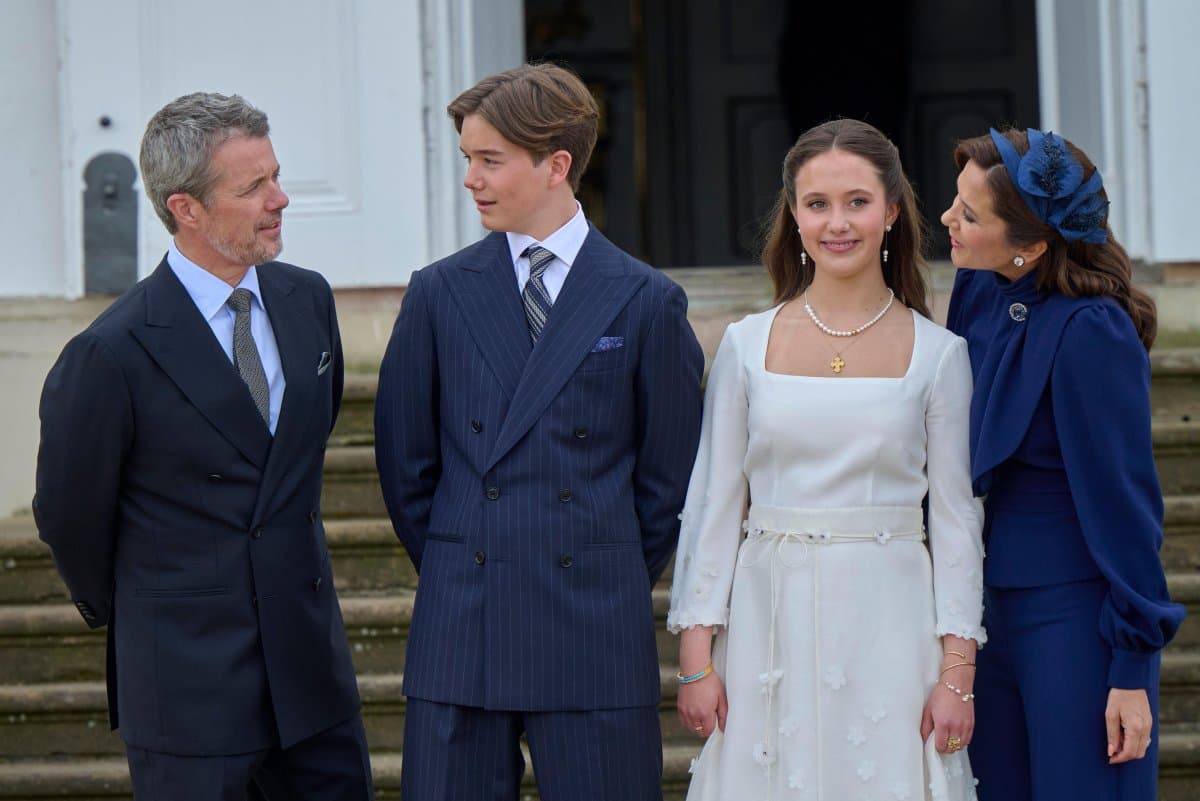
Prince Vincent and Princess Josephine’s confirmation at Fredensborg Palace on April 18, 2026, turned a family rite into a lesson in how jewelry carries memory. King Frederik X, Queen Mary, Crown Prince Christian, Princess Isabella, Queen Margrethe, and all twelve godparents were there, but the emotional center of the day was just as powerful: Mary had lost her father, John Dalgleish Donaldson, a week earlier, and King Felipe of Spain reportedly greeted her with, “I am so sorry for your loss,” as the family gathered around the twins.
That is where heirloom jewelry becomes more than decoration. In royal life, an old jewel is often a document you can wear, one that records who gave it, when it was first worn, and which milestone it has already survived. The Danish court has long used inherited pieces this way, and the confirmation made that tradition visible again.
What Josephine wore, and why the details matter
Princess Josephine’s jewelry mixed modern pieces with the language of ceremony. She wore Julie Sandlau pearl earrings, a necklace with round white pearls, seed pearls, and a single golden bead, plus a gold Dagmar Cross pendant. The effect was restrained, but the message was clear: pearls can soften a look, crosses can anchor it, and a carefully chosen necklace can sit between contemporary design and inherited symbolism.
For anyone studying vintage jewelry, that combination is a clue. A jewel does not need to be ancient to participate in family history, and a modern piece can still be selected to echo older traditions. Josephine’s pearls and cross read as part of a ritual wardrobe, the sort of ensemble that is assembled to honor the occasion rather than to chase novelty.
The Danish royals also remind you that family continuity is often built through repetition. Princess Josephine, born on 8 January 2011, lives with her family at Amalienborg and in the Chancellery House at Fredensborg Palace, which makes these ceremonial appearances feel less like one-off displays and more like chapters in a household archive.
How to read a jewel as family record
A piece with family history often reveals itself through use, not just value. Look for the places where a jewel has already lived a life: a brooch worn again at another milestone, a pendant chosen for a confirmation, or pearls that keep returning because they suit both mourning and celebration. The best clues are usually the simplest ones.
- A named donor and a date, like a baptism gift or a transfer from one generation to the next.
- A piece that appears in more than one family ceremony, especially across decades.
- A design that survives style changes, such as pearls, crosses, and brooches that can move from christening to confirmation to formal portrait.
- Signs that the piece was reset, restyled, or re-set in a new mount while preserving the original stones or motif.
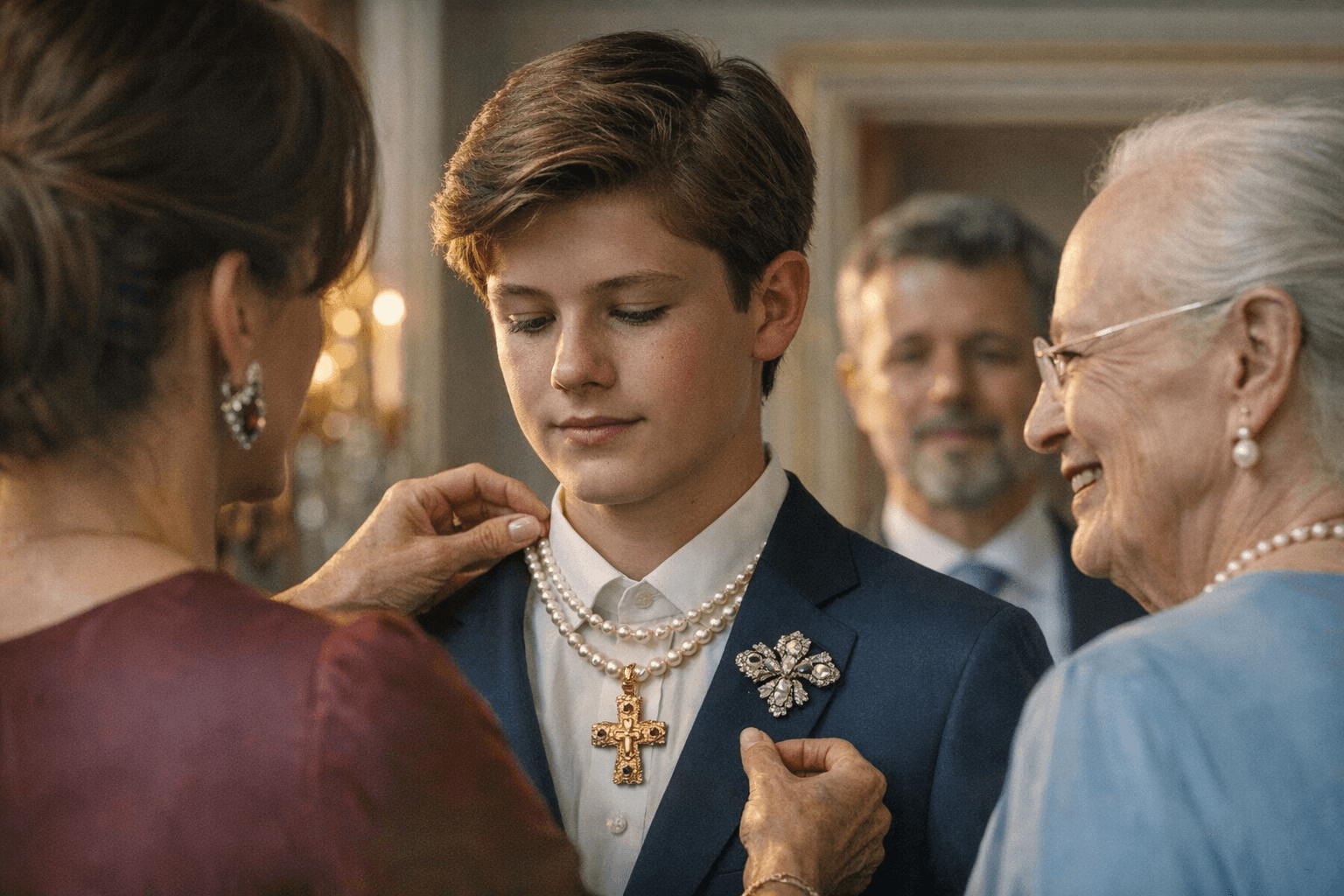
Princess Isabella’s confirmation in 2022 is the clearest example in this Danish family. She wore a diamond-and-pearl brooch that first belonged to Queen Margrethe, who received it as a baptism gift from Queen Alexandrine in 1940. Margrethe later gave the brooch to Isabella in 2007. That chain of ownership is the real value: the brooch is not only old, it is documented, named, and deliberately handed down.
That is the difference between a vintage jewel and a family relic. Age alone creates scarcity; provenance creates meaning. When a piece can be traced from giver to wearer, it becomes a small archive of trust, affection, and ceremony.
The British centenary showed the same instinct in a different register
The Danish confirmation was not the only royal moment to lean on heirloom-like symbolism. Queen Elizabeth II was marked in a centenary program on April 21, 2026, with commemorative events that celebrated her life, service, and legacy. King Charles III issued a message on April 20, 2026, for what would have been her 100th birthday, and the program also included a major exhibition, “Queen Elizabeth II: Her Life in Style,” at The King’s Gallery.
That exhibition brought together more than 300 items from the Royal Collection, many shown publicly for the first time. It matters because the display treated clothing and jewels not as static objects but as evidence of a life lived in public view. At the Buckingham Palace reception, pearls again dominated the accessory story, reinforcing the same visual shorthand seen in Denmark: pearls read as continuity, composure, and memory.
For collectors and buyers, that is the larger lesson. Pearls travel well across generations because they are versatile, but they also gather meaning through repetition. A pearl brooch seen in one decade and a pearl necklace chosen in another become part of the same family sentence.
What gives an old jewel its highest value
In vintage jewelry, material worth and age matter, but they are not the whole story. A diamond-and-pearl brooch can be valuable because of its stones, yet it becomes more compelling when it can be tied to Queen Alexandrine, Queen Margrethe, and Princess Isabella. A string of pearls can be elegant on its own, but it becomes richer when it is chosen again for a confirmation, a memorial, or a family portrait.
That is why the Danish royals’ choices resonate beyond courtly fashion. They show how a jewel can hold private grief, public ceremony, and family continuity at once. A piece with a clean paper trail, visible wear, and repeated ceremonial use is not just old jewelry. It is a living record, and in that record lies the real inheritance.
This article was produced by Prism’s automated news system from verified source data, official records, and press releases, then run through automated quality and moderation checks before publishing. The system is built and supervised by the people who set the standards it runs under. Read our full AI policy.
Did this article answer your question?