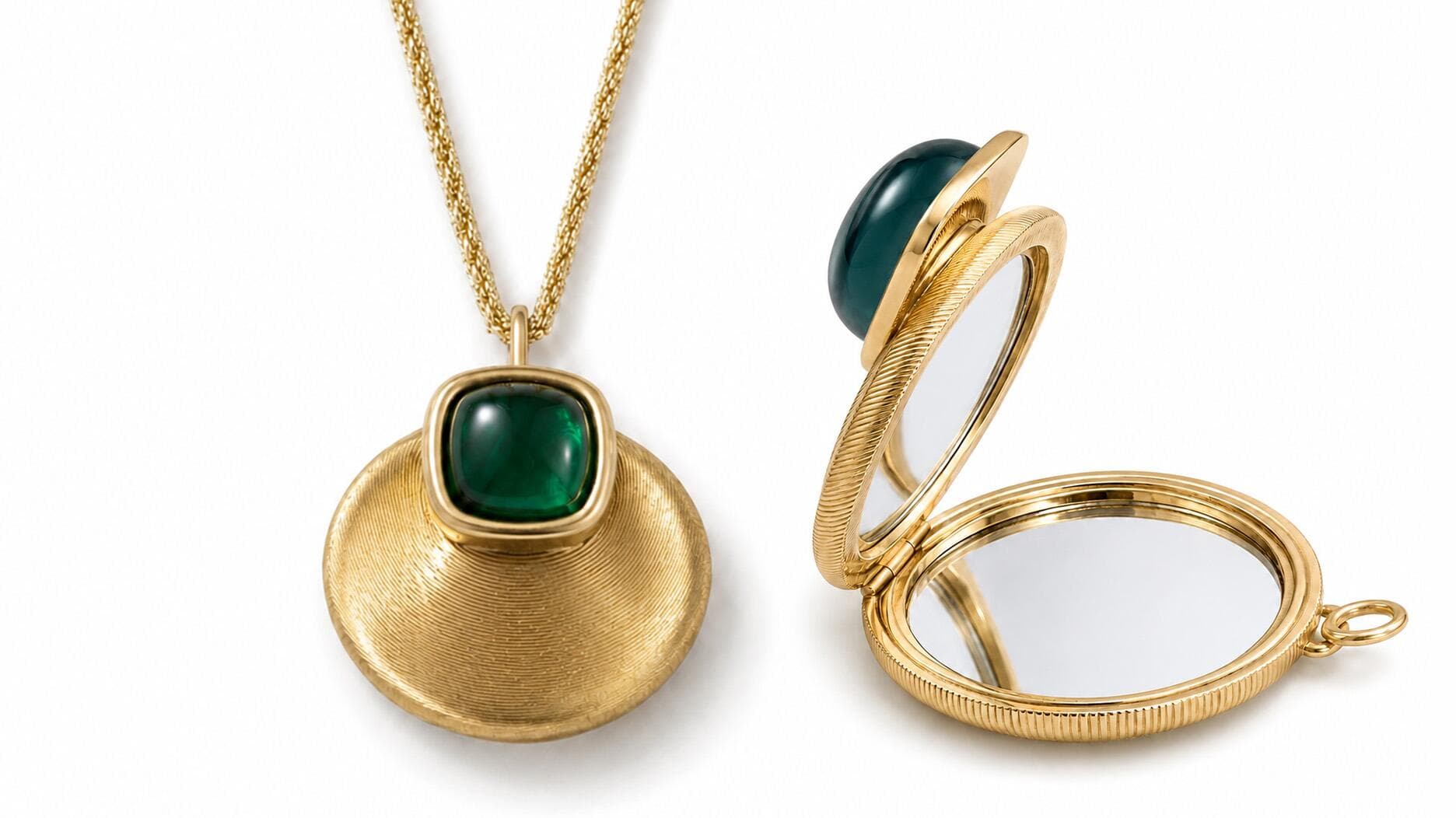
French hallmarks reveal authentic Cartier, Boucheron estate jewelry origins
An authentic Cartier or Boucheron jewel speaks twice: first in the signature, then in the French punches that prove the metal, origin, and age.
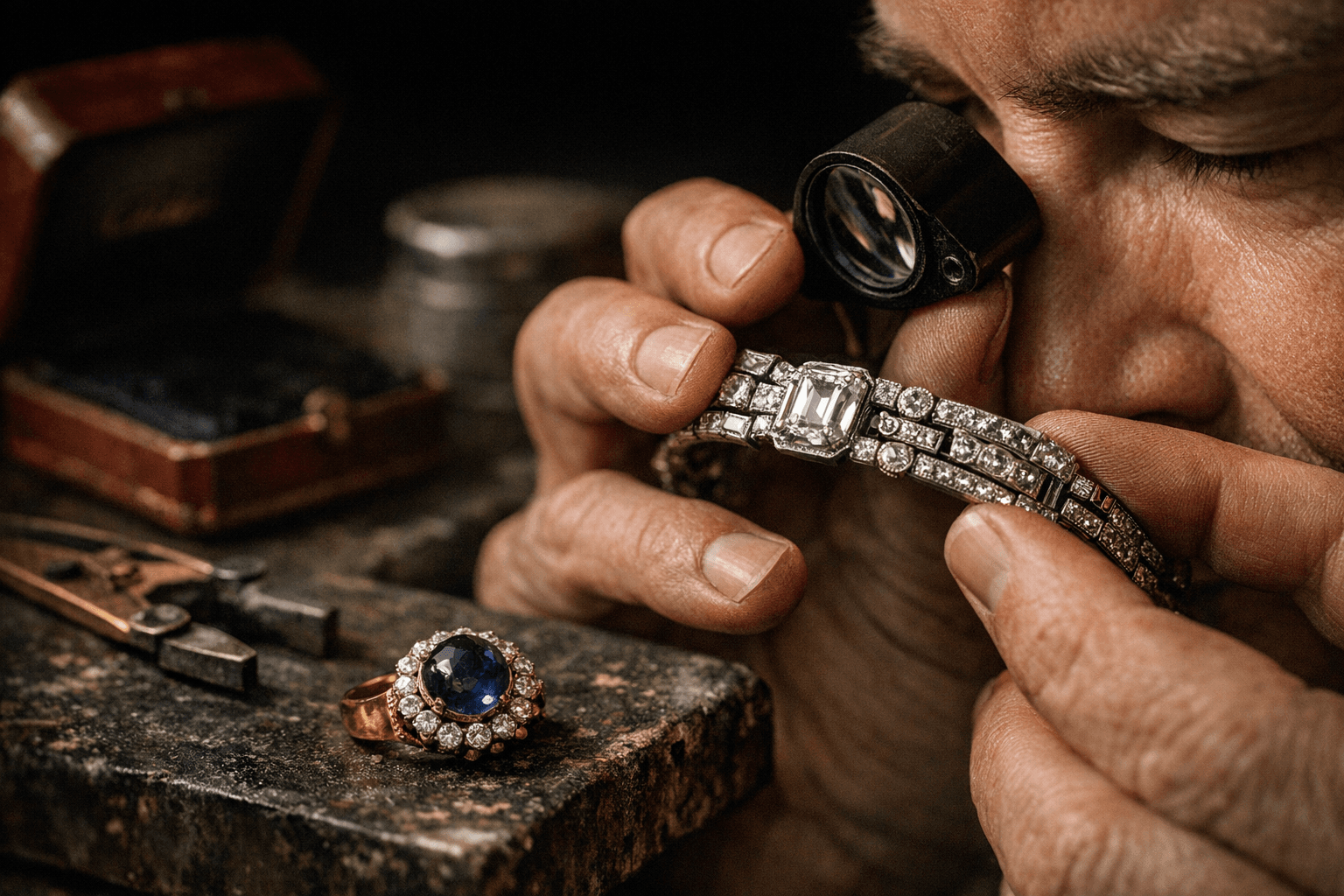
Start with the underside, not the logo
An inherited Cartier ring or Boucheron brooch can look convincing at arm’s length. Turn it over, though, and the real story usually lives in the smallest marks. On French estate jewelry, the signature is only the opening line; the French hallmarks, assay punches, and maker’s mark are what tell you whether the piece was actually made in precious metal under the rules of the French system.
That distinction matters because a name can be copied, but a state-applied metal mark carries a different kind of authority. The French Bureau de Garantie, the government assay authority, stamped jewelry only after it met legal standards for precious metal content. For collectors, that makes the marks on signed Cartier, Boucheron, and other Place Vendôme pieces the difference between a documented jewel and a costly mistake.
Read the French system in the right order
The cleanest way to inspect a piece is simple: look at the signature, then the state marks, then the maker’s mark. A Cartier or Boucheron name may be the reason you picked up the jewel in the first place, but the marks on the metal are what let you verify the story.
Begin by identifying the guarantee mark. In French jewelry, the eagle’s head is the official mark for 18-karat gold, or 750 gold, and it has been used since 1838. If the piece is platinum, the mark you may find instead is the dog head, another symbol recognized in French hallmark guides. If the jewel was made elsewhere and assayed in France, the owl mark can appear as the official clue that it passed through the French system as an imported piece.
The punches to know by sight
- Eagle’s head: the French guarantee mark for 18-karat gold, used since 1838. It is one of the most important clues on Cartier and Boucheron estate jewelry in gold.
- Owl: used for imported pieces assayed in France. It tells you the jewel entered the French control system even if it was not originally made there.
- Dog head: associated with platinum in French hallmark guides. On a platinum jewel, this mark can confirm the metal category at a glance.
- Maker’s mark, or poinçon de maître: typically registered in a lozenge-shaped cartouche, with initials and a distinguishing symbol. This is the jeweler’s own registered identity, separate from the state hallmark.
Those punches do not replace each other. They work together. A house signature may tell you who made the jewel, but the French punches help show whether the metal itself aligns with the claim.
Why Cartier and Boucheron are the maisons collectors watch most closely
Cartier, founded in Paris in 1847 by Louis-François Cartier, and Boucheron, founded in 1858 by Frédéric Boucheron, sit in the sweet spot of desirability and scrutiny. Their history is deeply tied to Parisian luxury, and Boucheron’s move into Place Vendôme made the address itself part of the brand’s mythology. In 1893, Boucheron became the first jeweler to open a boutique on Place Vendôme, at 26 Place Vendôme, after beginning in the arcades of the Palais-Royal.
That heritage is exactly why signed estate pieces from these houses are so frequently examined under a loupe. When a jewel carries a Cartier or Boucheron signature, the market expects more than glamour. It expects the quiet discipline of French hallmarking, the same system that gives the metal an independent voice. On a well-preserved piece, the house name and the punches should feel like they belong to the same sentence.
Where collectors most often misread the evidence
The most common mistake is trusting the signature and skipping the marks. A neat Cartier script does not prove the gold is original, and a Boucheron name alone cannot establish French origin. Signatures are easy to add, copy, or alter; the state marks are harder to fake convincingly because they have to fit the language of the French system.
Another frequent error is expecting every French piece to look identical. France’s hallmarking system includes multiple versions of the eagle head, and some guides note that since 1838 a single official hallmark plus the goldsmith’s mark has been sufficient on French work. Parisian and provincial punches can differ in shape and control symbols, so a mark that looks unfamiliar is not automatically wrong. It may simply belong to a different period or a different control office.
The final trap is confusing a later addition with the original jewel. A repair, a resized shank, a replaced clasp, or a later safety chain can carry its own marks, and those marks may be newer than the jewel itself. That is why the underside must be read as a whole object, not as a single stamped fragment. The original signature may sit on one component, while a later piece of hardware tells a separate, much newer story.
What a convincing French jewel should tell you
A properly understood Cartier or Boucheron estate piece should read like evidence, not theater. The house signature gives you the name, the French guarantee mark confirms the metal, and the maker’s lozenge links the jewel to a registered workshop identity. When the pieces align, the object feels anchored in Place Vendôme culture rather than floating free as a tempting name attached to uncertain metal.
That is the practical power of French hallmarks. They do not simply decorate the underside of a jewel, they authenticate it in layers. For collectors, the most valuable habit is also the simplest one: turn the piece over, study the punches, and let the French state mark have the final word.
This article was produced by Prism’s automated news system from verified source data, official records, and press releases, then run through automated quality and moderation checks before publishing. The system is built and supervised by the people who set the standards it runs under. Read our full AI policy.
Did this article answer your question?