How to sell vintage jewelry now, amid record gold prices
Record gold prices make inherited jewelry easier to sell, but the best returns still go to pieces with proof, provenance, and collector appeal.
The market is telling you to look again
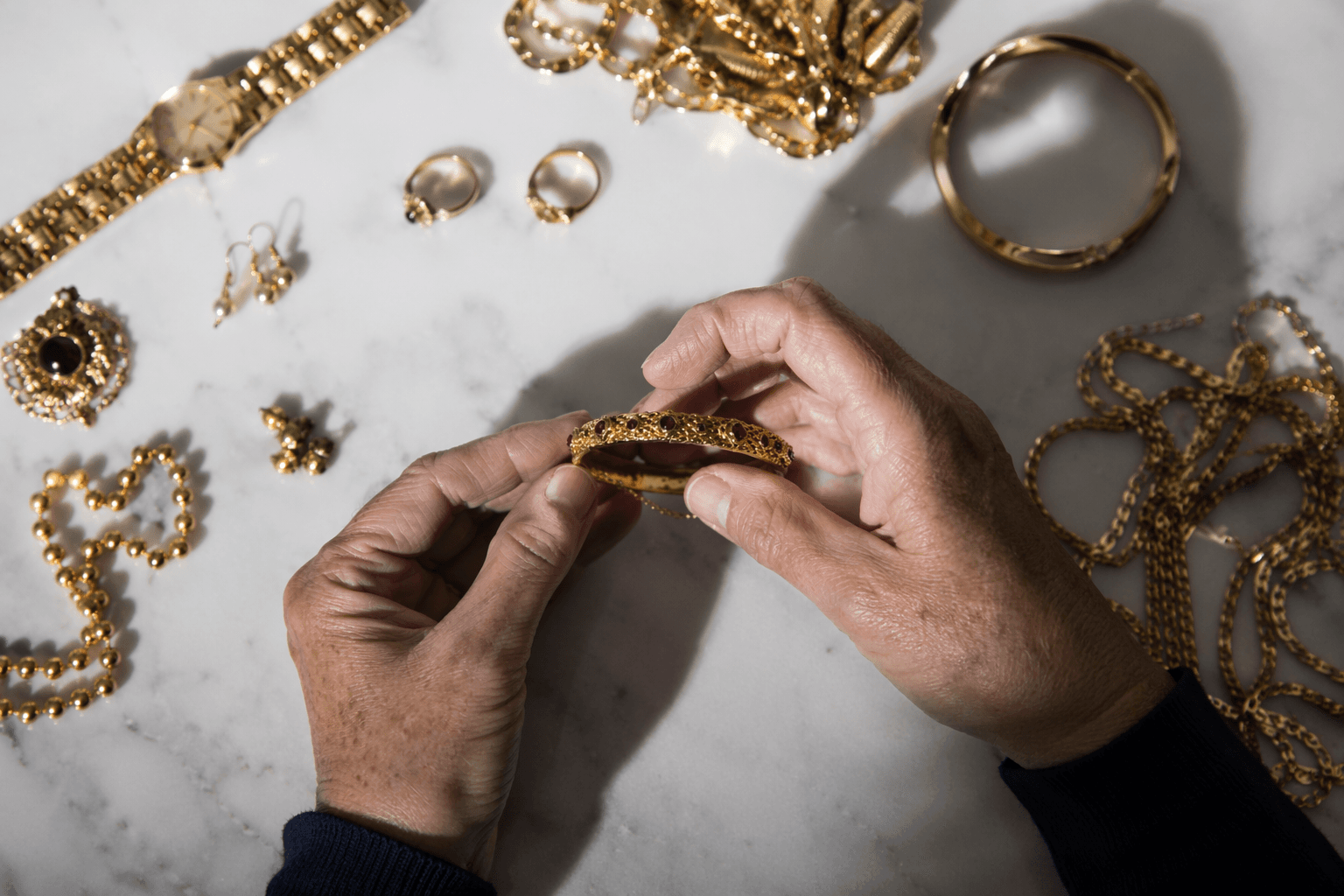
A scratched signet ring, a brooch with softened patina, or a velvet box of mismatched earrings can hide more value than the gold weight suggests. When spot gold hovered around $3,317 an ounce in mid-April 2025 amid tariff-driven volatility, it turned old jewelry into a more serious financial asset, not just a family keepsake.
The bigger signal is not only price. The World Gold Council said total gold demand in 2025 topped 5,000 tonnes for the first time, while the value of global gold demand reached a record $555 billion. Jewelry demand volume weakened under higher prices, but spending on jewelry still climbed to a record $172 billion. That is the kind of split that rewards sellers with good pieces and punishes anyone who rushes to a melt buyer too quickly.
Start by separating scrap from story
Before you sell, sort the box with a collector’s eye. Pieces with hallmarks, maker’s marks, original clasps, intact stone settings, and clean documentary history deserve a different conversation than broken chain links or anonymous gold bands. GIA’s guidance is clear that a trained appraiser will look at quality, market availability, and desirability, and that fashion can affect price when the piece is mounted.
That means an inherited ring is not just a carat count. A piece with an original setting, a distinctive design, or a recognizable era can carry value beyond bullion because buyers are paying for craft, scarcity, and condition as much as metal. In a market where jewelry demand value is at a record high but volume is softer, the best-looking pieces are the ones that can still command a premium.
Get the right appraisal before you accept an offer
The first serious step is an independent appraisal, not a casual estimate from the first person who offers to buy. GIA says appraisals should be done by an independent appraiser and should include a quality analysis, a description, and a valuation of the item. It also recommends looking for appraisers with gemological and appraisal training, and points to professional groups such as the American Society of Appraisers, the Appraisers Association of America, and the American Gem Society.
That credentialing matters because a good appraisal is not just about what the piece is made of. Many appraisal associations require a GIA Graduate Gemologist diploma plus additional appraisal training, which helps the appraiser judge stones, settings, workmanship, and market context rather than simply counting grams. If you have a diamond ring, a signed brooch, or a jewel with colored stones, the difference between a formal appraisal and a quick offer can be thousands of dollars.
What to gather before you show the piece
A buyer will pay more when the jewelry arrives with its evidence intact. Keep everything together and present it cleanly.
- Clear photographs of the front, back, clasp, marks, and stones
- Any original receipts, appraisals, insurance documents, or sales paperwork
- Certificates or reports tied to the jewel
- Notes about repairs, resizing, missing stones, or replaced parts
- Any box, pouch, or maker’s packaging that supports provenance
GIA’s jewelry reporting services show why this paper trail matters. Its reports can include metal testing, item weight, markings, a photo, and grading details performed to the extent the mounting permits. In a resale market increasingly shaped by trust, those details help a buyer verify authenticity and condition instead of pricing the piece as an unknown.
Why the resale market is working in your favor
The vintage and estate market is not operating in a vacuum. BCG and Vestiaire Collective said the global resale market is now roughly $210 billion to $220 billion, and BCG has argued that digital product passports can close trust gaps around authenticity, condition, repairs, and ownership history. That matters for jewelry because secondhand luxury now competes on confidence as much as taste.
The RealReal’s 2025 resale report said fine jewelry continued to hold strong in resale, while Rebag said rising global tariffs pushed more shoppers toward resale and reinforced confidence in investment-worthy luxury. Put simply, more buyers are willing to look at pre-owned jewelry if the story is clean, the condition is honest, and the piece feels special. For sellers, that widens the pool beyond scrap buyers and makes it worth waiting for an offer that recognizes design, not just weight.
How to avoid underselling to the wrong buyer
The wrong buyer is usually the one who talks only about gold content. If a piece is offered as a melt lot before anyone has examined the setting, the stones, the hallmarks, and the craftsmanship, you are likely being priced for the easiest exit, not the highest one.
Wait for multiple offers, especially if the piece is a signed jewel, a period brooch, an unusual vintage ring, or anything with clear collector appeal. The best offer is often not the fastest one. It is the one that treats the jewel as a complete object, with condition, fashion relevance, and authenticity all reflected in the number.
When to sell now, and when to pause
Sell now if the piece is heavy gold, lightly documented, and unlikely to appeal to collectors beyond its metal. Sell now if you already have a strong appraisal, clear photos, and competing offers. Sell now if the jewelry is sitting unworn and the market is offering both record metal prices and unusually strong secondhand demand.
Pause if the piece has an identifiable maker, original stones, an unusual period setting, or paperwork that can still be assembled into a convincing provenance file. In this market, the smartest sellers do not confuse urgency with opportunity. They let the record gold price do its work, then make sure the jewel is judged as jewelry, not just metal.
Know something we missed? Have a correction or additional information?
Submit a Tip