Karan Johar’s Met Gala debut spotlights Indian craft and heirloom jewels
Karan Johar’s 5,600-hour Manish Malhotra look put Raja Ravi Varma, zardozi and hand-painted gold work front and center. The real luxury was provenance.
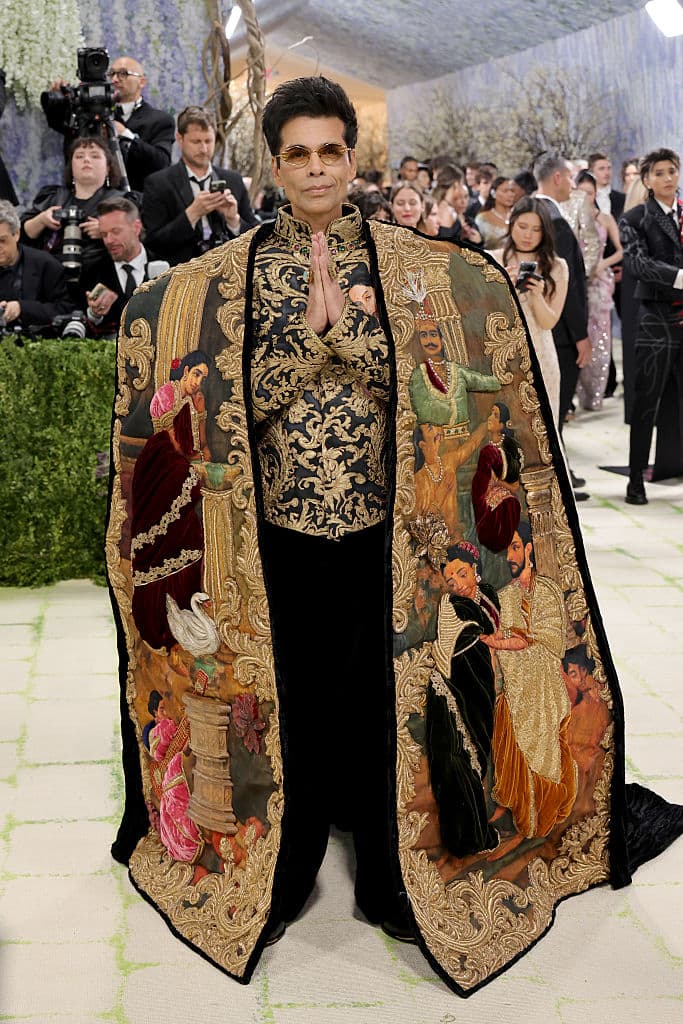
Karan Johar’s Met Gala debut made a pointed case for Indian craft, with heirloom jewels, artisan labor and cultural specificity carrying as much weight as the spectacle itself. Johar arrived in a dramatic Manish Malhotra creation inspired by Raja Ravi Varma, joining the Maharaja of Jaipur, Isha Ambani, Ananya Birla, Diya Mehta Jatia and Sudha Reddy in an Indian contingent that answered the “Fashion Is Art” brief with objects rooted in handmade tradition rather than empty flash.
Johar said after the gala that “India almost got the assignment better than any other,” and Malhotra said “artisans” was the first word that came to mind when he heard the theme. That instinct showed in the construction. Johar and Malhotra share a 32-year history, beginning when Johar’s first film job in 1994 was as Malhotra’s costume assistant on Dilwale Dulhania Le Jayenge. The Met moment felt like a full circle return, but one that also reframed Indian formalwear for a global audience that too often reduces Indian guests to scattered names and side notes.
The ensemble, titled Framed in Eternity, took 5,600 hours over 86 days to complete, with every motif painted by hand. The surface language was dense and deliberate: vintage zardozi, three-dimensional embroidery, hand-painted gold work and a sculptural cape built with figurines of artisans Malhotra has worked with for decades. Bombay Times described the look as a black bandhgala with golden embroidery, a painted panel of a woman, tailored black trousers, Copper Mallet shoes and Anna-Karin Karlsson eyewear. The result was less costume than archive, a wearable argument for process, memory and authorship.
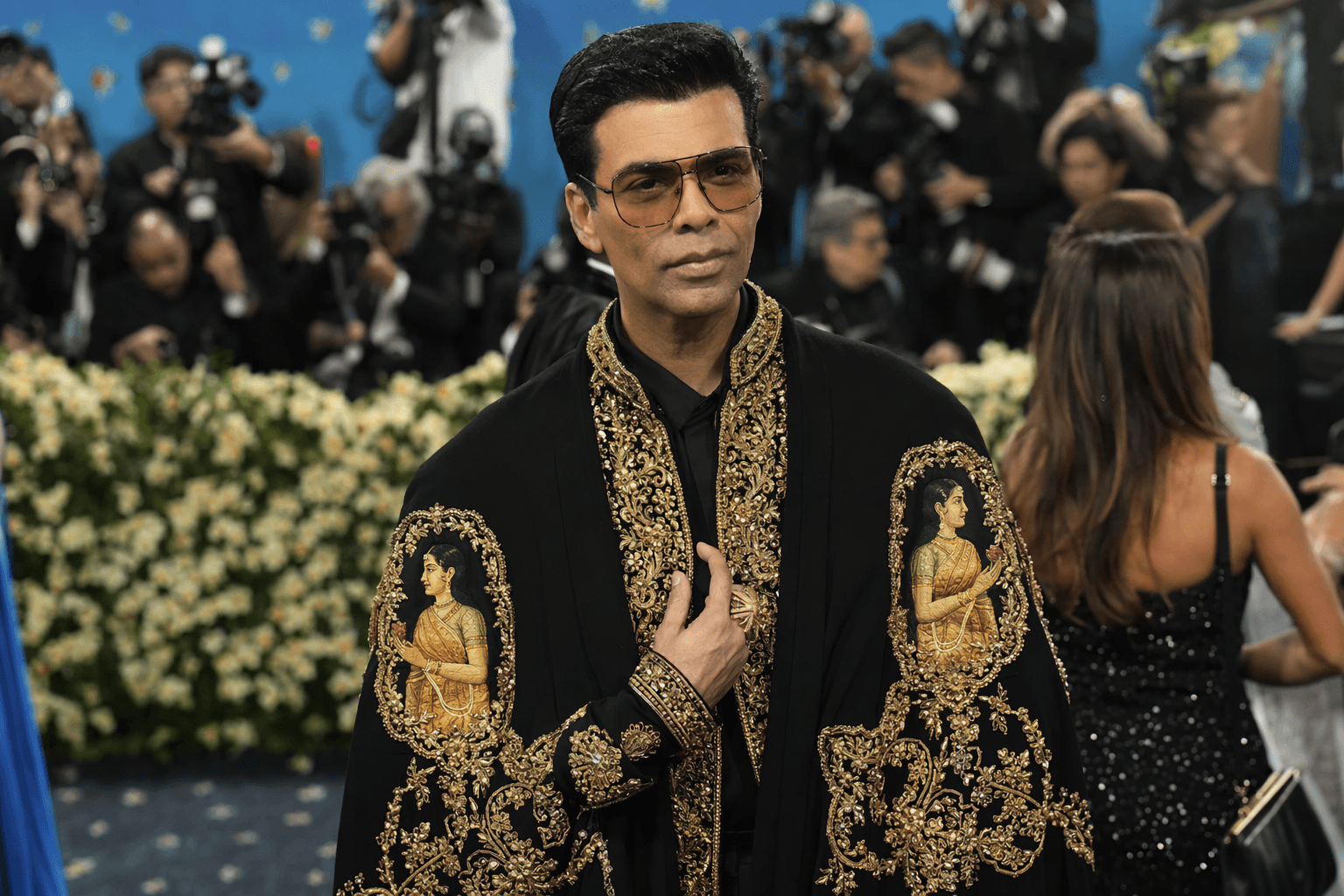
For collectors of vintage jewelry, the styling offered a clear lesson. Worth is not only about sparkle or scale; it is about traceable workmanship, named inspiration and the patience required to make something by hand. Johar’s look placed Raja Ravi Varma, zardozi and hand-painted detailing in the foreground, then paired that visual history with accessories and tailoring that supported the story instead of overwhelming it. In a season crowded with spectacle, the strongest message from Johar’s debut was that provenance can read as power, and that Indian craft now stands on the Met’s biggest stage as a global luxury language.
Know something we missed? Have a correction or additional information?
Submit a Tip