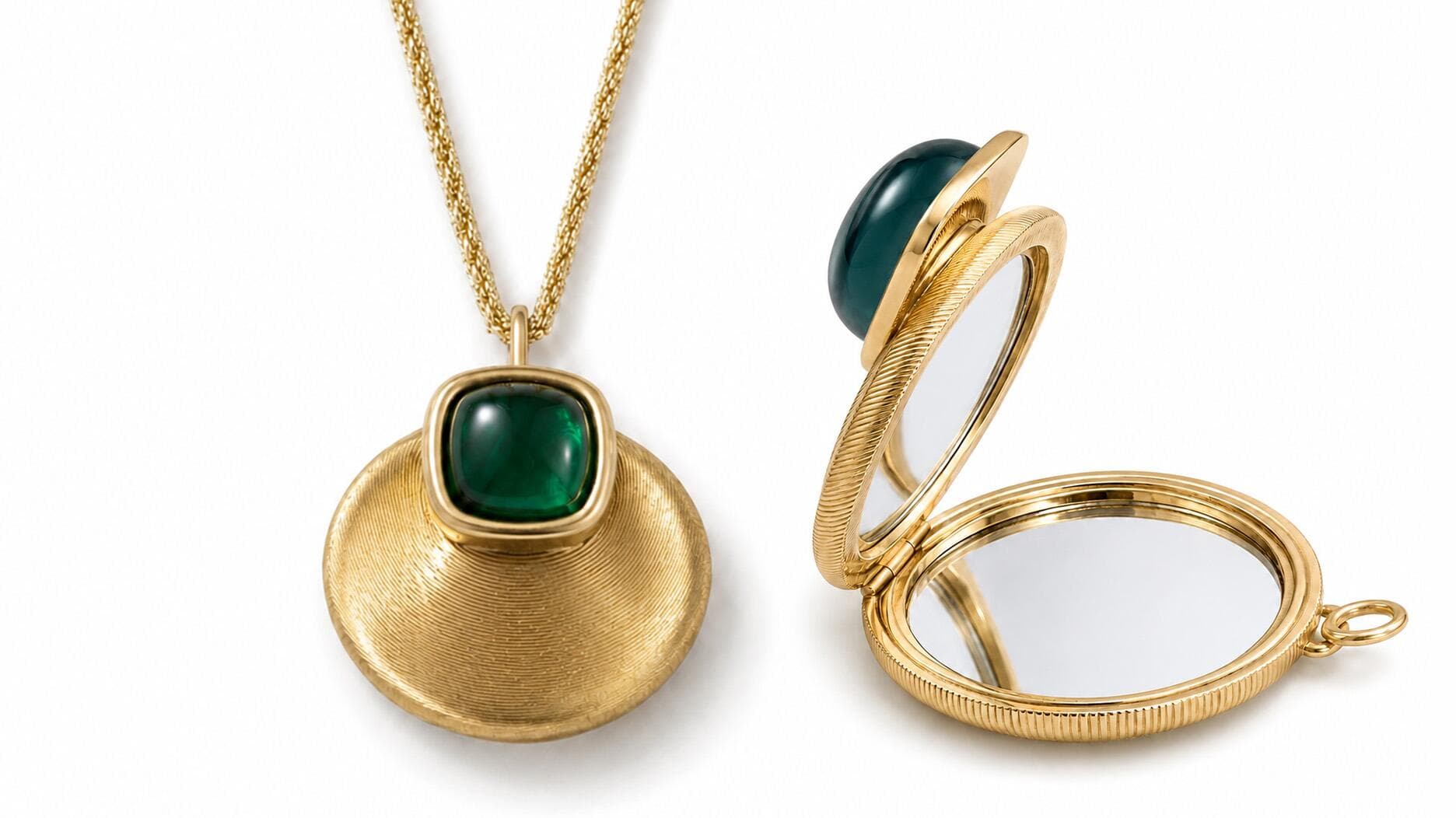
Spring 2026 jewelry turns to talismanic amulet necklaces and coins
Amulet necklaces are replacing delicate chains with coins, shells, and medallions that feel personal, collectible, and ready for layering.
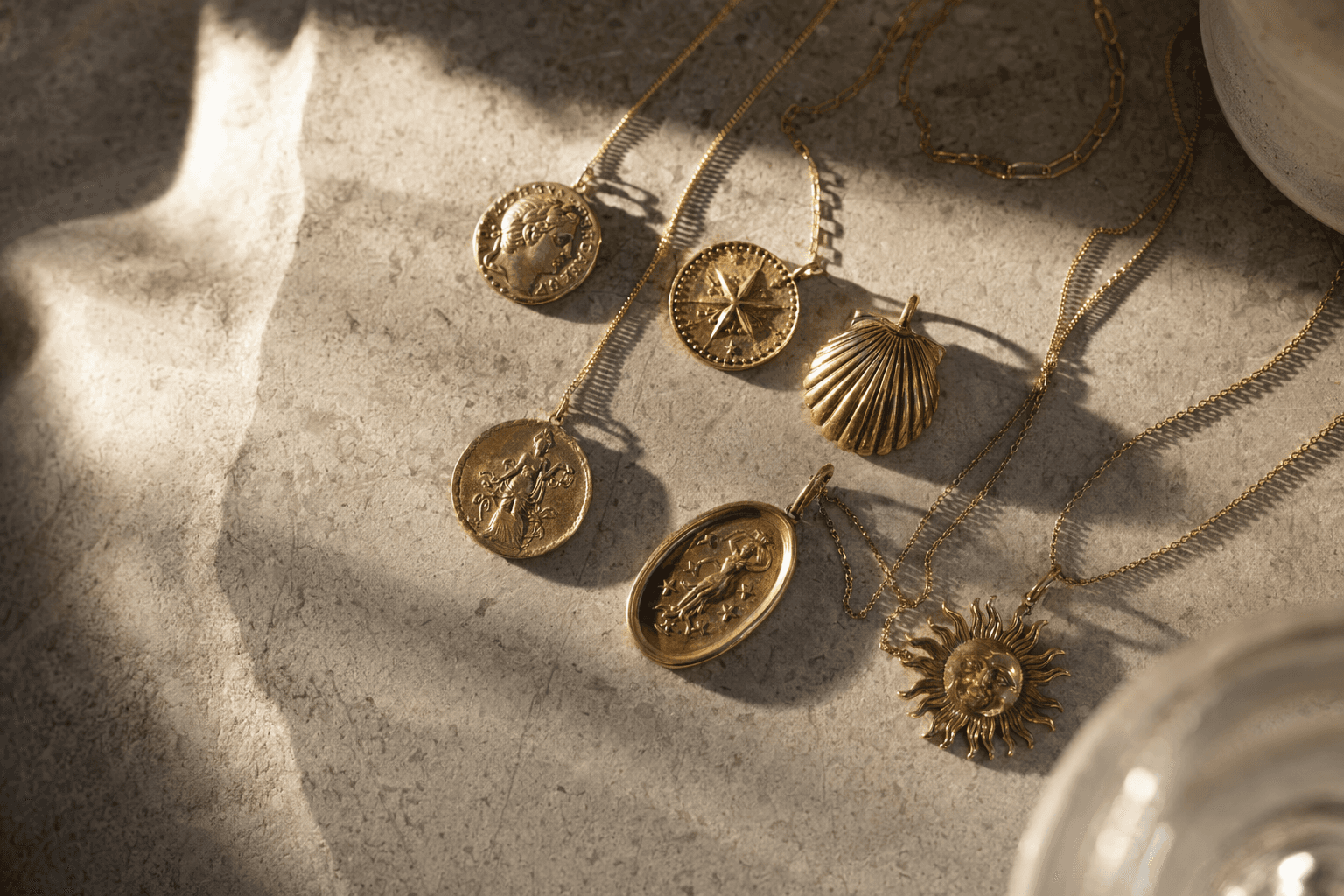
The talisman returns
The spring 2026 jewelry mood has moved decisively away from barely-there chains and toward pieces with presence. Amulet necklaces, especially those built around sculptural pendants, shells, and gold coins, are back in the spotlight because they do more than decorate a neckline: they imply memory, luck, and identity. That makes them feel like jewelry with a story already attached, which is exactly why they read as fresh in a season still craving ease.
The appeal is not simply size. It is symbolism. Runway jewelry this season leaned into heirloom-like and statement pieces, the kind of adornment that feels collected over time rather than bought in a rush. WWD described the broader spring 2026 mood as one of “geometric interplays, sinuous lines, chunky volumes, a dash of color” and “not-your-grandma’s pearls,” a vocabulary that explains why amulets and medallions now feel right again instead of overly formal.
What the runways made clear
At Ralph Lauren, Tory Burch, and Hermès, the strongest jewelry moments centered on sculptural pendants, shells, and gold coins. Those motifs matter because they sit at the intersection of ornament and object: the coin suggests history, the shell suggests the sea and antiquity, and the pendant gives the whole piece a focal point that can be worn over a simple knit or shirt. The result is less dainty and more deliberate.
Sophie Buhai and Jennifer Behr are seeing stronger demand for longer pendant silhouettes that feel personal, collectible, and easy to layer over simple clothing. That detail matters for anyone shopping vintage now, because the new preference is not for a single elaborate statement necklace worn only with evening clothes. It is for pieces that can live with a white tee, a crisp button-down, or a plain black dress and still feel intentional.
The season’s styling also makes room for contrast. A coin pendant looks sharper against a bare collarbone than it does inside a heavy layered necklace pile, and a shell or medallion gains weight when the rest of the outfit stays minimal. That tension between plain clothing and meaningful jewelry is exactly what gives the amulet trend its modern edge.
Why the market is leaning into meaning
The appetite for talismanic jewelry is not happening in a vacuum. McKinsey’s State of Fashion 2026 says executives most often used the word “challenging” to describe the year ahead, with tariffs cited as the number-one hurdle and 46 percent of surveyed fashion executives expecting conditions to worsen. Against that backdrop, jewelry stands out because it still reads as lasting value, not just seasonal turnover.
That helps explain why buyers are drawn to pieces with “depth and purpose,” even when the overall mood is cautious. WWD’s Paris Fashion Week coverage also framed the season as a reset for the industry, with a new focus on design, craftsmanship, and creativity. Jewelry fits that reset neatly: it is smaller than a coat or bag, but often richer in material and symbolism, which makes it easier to justify emotionally and financially.
The wider luxury conversation points in the same direction. Alexis Nasard has argued that lab-grown diamonds and a stronger embrace of culture and design trends will be important as jewellery continues to outshine fashion in consumer interest. Whether the stones are natural, lab-grown, or entirely metal-driven, the takeaway is the same: buyers want pieces that feel considered, not generic.
The commercial race around symbols
Pandora’s Talisman collection, launched in 2025, pushed the category further into the mainstream with coin-inspired pieces and Latin inscriptions. That move makes clear that talismanic jewelry is not a niche mood board idea but a live commercial category, one that now competes directly with more established medallion and charm aesthetics. The language of symbols has become a product strategy.
The category has also become legally crowded. Foundrae filed suit in federal court in New York in February 2026, alleging that Pandora’s Talisman Collection infringed its copyright-protected medallion designs. However that case resolves, it shows how closely the trend is tied to public-domain-looking imagery such as celestial motifs, crossed arrows, and coins. In other words, the line between inspiration and imitation is thin, and the market knows it.
For readers, that legal fight is a useful reminder: the most compelling talisman jewelry often feels archetypal because it borrows from symbols that have been worn for centuries. The best examples do not need a logo to feel recognizable. They need a strong silhouette, believable weight, and a motif that carries visual meaning at a glance.
How to source the look secondhand
Secondhand is where this trend becomes especially satisfying, because vintage already understands the emotional logic behind amulets. When you are hunting for the look, focus on categories that have always carried meaning close to the body: coin pendants, shell motifs, lockets, medallions, and sculptural gold charms. These pieces often layer beautifully because each one was designed to be seen as an object in its own right.
- Raised coin faces with crisp relief, not flat decorative disks
- Shells with visible ribbing or dimensional curves
- Lockets with secure hinges and smooth interior compartments
- Medallions with engraving, repoussé work, or symbolic borders
- Sculptural gold charms with enough weight to sit properly on the chain
Look for period cues that signal authenticity and craftsmanship:
Older pieces often feel most convincing when the metal shows gentle wear at the high points, the edges are hand-finished, and the bail or jump ring is proportioned to the pendant rather than hidden. Victorian lockets, midcentury medallions, and 1970s gold charms all map well onto the trend because they were made to be personal first and decorative second.
What makes a vintage amulet necklace worth the investment
The strongest pieces are the ones that still feel elegant without trying too hard. A good medallion or coin pendant should have balance in its proportions, a chain that supports the pendant without overpowering it, and a motif that looks as relevant over a sweater as it does with evening clothes. That versatility is part of the value now.
In the end, the spring 2026 amulet necklace trend is less a departure than a revival. It brings back the antique logic of talismanic adornment, then polishes it for a modern wardrobe that wants character, craftsmanship, and a little bit of private mythology.
This article was produced by Prism’s automated news system from verified source data, official records, and press releases, then run through automated quality and moderation checks before publishing. The system is built and supervised by the people who set the standards it runs under. Read our full AI policy.
Did this article answer your question?