Vintage resin and chunky beads define summer 2026 jewelry trend
Chunky beads and vintage resin are the summer 2026 code, but the smartest buys are secondhand strands, 1980s bangles, and runway-era chokers with visible provenance.
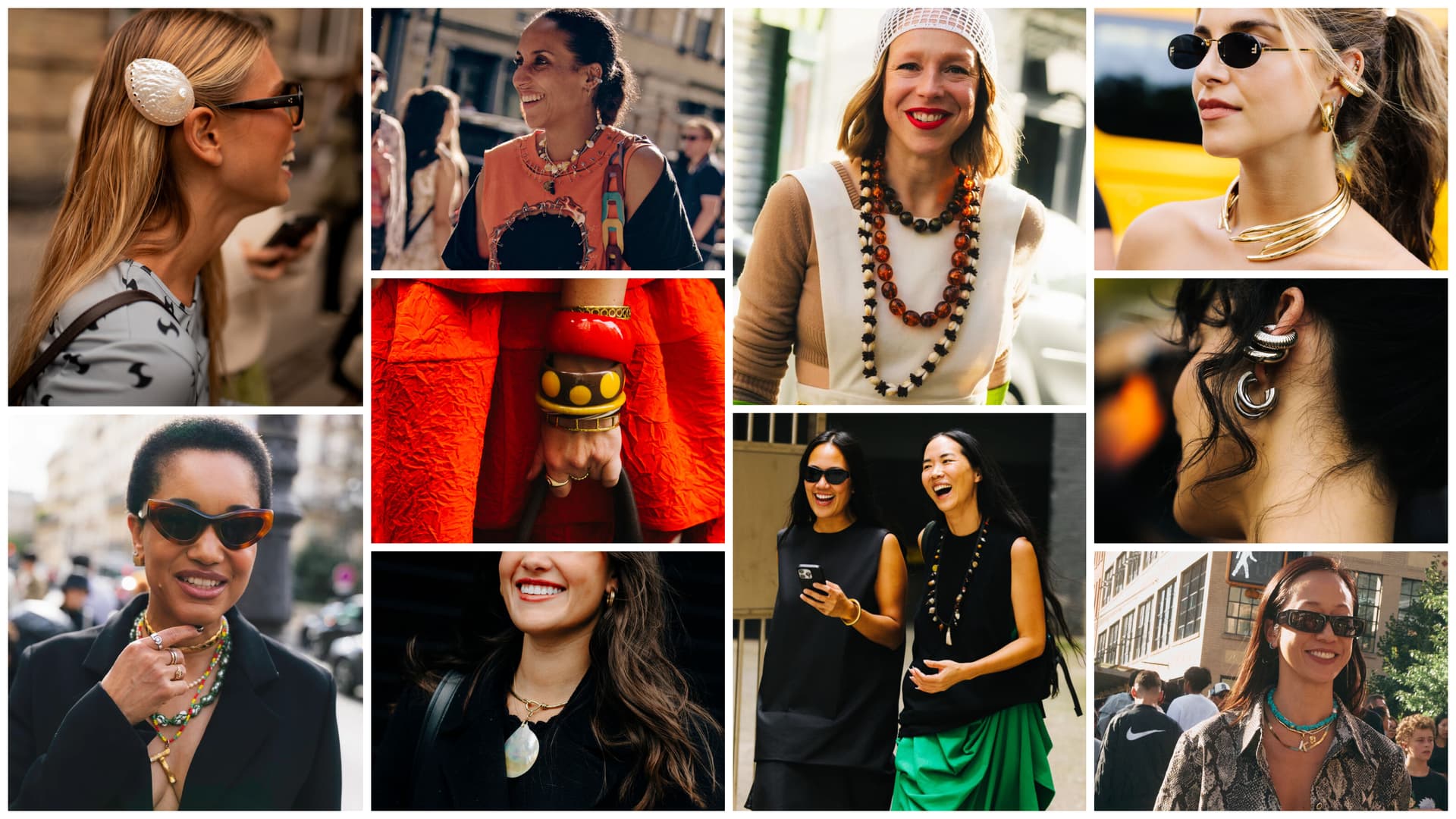
Hold a strand of beads up to the light, and the summer 2026 story comes into focus fast: jewelry is getting bigger, more tactile, and more personal, but the best versions still feel curated rather than cluttered. This season’s shift toward curated maximalism is being built from pieces that look discovered, not assembled in haste, which is exactly why vintage is the sharpest way to shop it.
How to buy the trend secondhand
The easiest way into the look is to search like a collector, not a trend follower. The strongest terms are the ones that name both silhouette and material: vintage resin necklace, chunky bead strand, bangle stack, statement choker, hoop ear cuff, turquoise bead necklace, glass bead necklace, wooden beads, ceramic beads, corded tassel, and golden charm strand. Add era markers when you can, because a 1980s bangle stack reads very differently from a 1990s runway choker or a mid-century turquoise piece.
Search terms that actually help
• vintage resin • chunky beads • 1980s bangles • 1990s choker • mid-century turquoise • glass bead necklace • wooden bead strand • hoop ear cuff • gold charm necklace • signed costume jewelry
What to prioritize is equally important. Resin should have depth, not the flat, toy-like look of modern plastic; glass beads should have weight and a cooler hand; turquoise should be mounted with care, not simply glued into a fashion setting. If you want the trend to feel expensive, choose pieces with real clasp detail, hand-finishing, or maker’s marks, because the difference between a collectible object and a seasonal accessory often lives on the back of the necklace, not the front.
Materials worth chasing
• vintage resin for its density and color depth • glass beads for weight and shine • wood and ceramic for a more artisanal feel • turquoise for color with real provenance • gold-tone charms for movement and warmth
The common mistake is buying a piece that is merely large. Summer 2026 is not about bulk alone; it is about character. A strand can be oversized and still fall flat if it lacks texture, variation, or evidence of age.
Chunky beads, but the right kind
Marie Claire’s summer trend line is built around strands featuring gemstones, vintage resin, marble, and golden charms, and that combination is the clearest shopping clue of the season. Look first to the later 20th century, when costume jewelry and artisan beadwork leaned into bigger forms: the 1970s and 1980s are especially fertile for chunky resin, lucite, and glass, while earlier beaded statements can bring a softer, less obvious glamour. Those pieces deliver the trend without looking as if they were bought yesterday.
Designers have also made beadwork feel polished again. Chanel under Matthieu Blazy, Celine under Michael Rider, and Henry Zankov all put beaded jewelry back on the runway in ways that felt refined rather than crafty, which matters because it confirms what vintage shoppers already know: the right bead strand should sit between sculpture and adornment. A modern fashion version may mimic the shape, but an original vintage piece usually has more nuanced stringing, slightly irregular bead spacing, or a clasp that tells you it was built for a different wardrobe.
When you inspect a bead necklace, lift it and feel the weight. Older resin often has a smoother, denser presence than contemporary molded plastic, and glass beads should not feel suspiciously light for their size. If the strand is knotted, the knots should make visual sense and show the hand of the maker; if it is strung on wire, check that the finish is consistent with the era, because a 1970s or 1980s piece will usually read differently from a contemporary reissue.
Bangles, chokers, and the power of a close fit
Bangle stacks are one of the most practical ways to wear the trend secondhand, especially if you want a look that feels easy with summer clothes. The strongest vintage versions come from the 1980s, when resin, metal, and high-gloss finishes were often worn in multiples. Search for wide bangles with a little surface wear, because a perfect, factory-fresh finish can flatten the whole idea of collecting.
Chokers are the season’s other pressure point. Marie Claire’s choker coverage singled out Keke Palmer in a vintage Dior necklace based on a circa-Fall 1998 John Galliano runway design, and the exact piece reportedly sold for $2,355 on 1stDibs. That price tells you something useful: the market rewards documented fashion-era chokers with clear lineage, especially when the design comes from a recognizable house and a strong runway moment.
For original chokers, examine the clasp first. A true vintage piece may show a fold-over clasp, a spring ring, or a metal structure that feels period-correct rather than newly fabricated. If the piece is fine jewelry, hallmarks matter: purity stamps, metal content, and signatures should all align with the story the piece is telling. If it is costume, a signed plaque or period-accurate construction becomes the proof of life.
Turquoise, ear cuffs, and the material mood of summer
Turquoise is part of the same move away from minimal, polished accessories and toward jewelry that feels collected and expressive. Mid-century turquoise pieces are especially useful here because they bring color with architecture: think cabochons, silver mounts, and settings that frame the stone instead of burying it. The appeal is not just the blue-green tone; it is the way turquoise interrupts an otherwise simple summer wardrobe with something earthier and more storied.
The broader 2026 material palette also includes wooden, ceramic, and glass beads, along with corded tassels and weighty resins, which makes vintage shopping feel pleasantly open-ended. That range is a gift, because it lets you mix polished and rustic surfaces without losing the sophistication of the look. A glass-bead strand with a gold charm, or a bead necklace interrupted by marble-like elements, can feel more current than a plainly “new” piece because it already understands contrast.
Hoop ear cuffs and sculptural clip-ons belong in the same conversation. Search for vintage ear cuffs, clip-on hoops, and ear climbers if you want the silhouette without committing to a piercing, and check the mechanism carefully. The best ones close securely, sit flush, and look intentional from every angle, while modern versions often sacrifice that heft for convenience.
Why vintage is leading the conversation
This shift is not happening in a vacuum. Marie Claire says the trend is being shaped by street style in Paris, Milan, and New York, where jewelry is finishing outfits that are otherwise kept minimal for hot weather. Fashionista describes the 2026 mood as sculptural, statement-making, and personal, with people wanting pieces that feel “collected, expressive and a little unexpected,” which is exactly the feeling good vintage delivers.
The resale market is reinforcing that appetite. JCK pointed to nearly 7,000 attendees at the NYC Jewelry, Antique, & Object Show in November 2025, then noted that KIL Promotions added a January edition for Jan. 23 to 25 at the New York Hilton Midtown after the November show sold out. At the same time, global tariff shifts in 2025 pushed primary-market prices higher across handbags, watches, and fine jewelry, which only strengthened the case for buying on the secondary market. When new prices climb and the silhouettes of the season already look borrowed from another decade, vintage stops being a detour and becomes the most coherent way to dress for summer 2026.
The smartest pieces now are the ones that can be read like an archive: a clasp, a stamp, a bead with age, a turquoise stone with a real setting, a choker with runway history. That is where the season’s polish lives, in objects that carry proof of having been worn before.
This article was produced by Prism’s automated news system from verified source data, official records, and press releases, then run through automated quality and moderation checks before publishing. The system is built and supervised by the people who set the standards it runs under. Read our full AI policy.
Know something we missed? Have a correction or additional information?
Submit a Tip