Adams County Amish Country drives tourism growth and local spending
Wheat Ridge is more than a scenic lane: Adams County says the Amish community now spans over 96 households and feeds a tourism economy that supported 732 jobs in 2023.
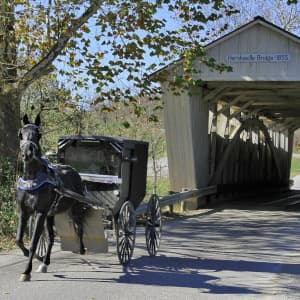
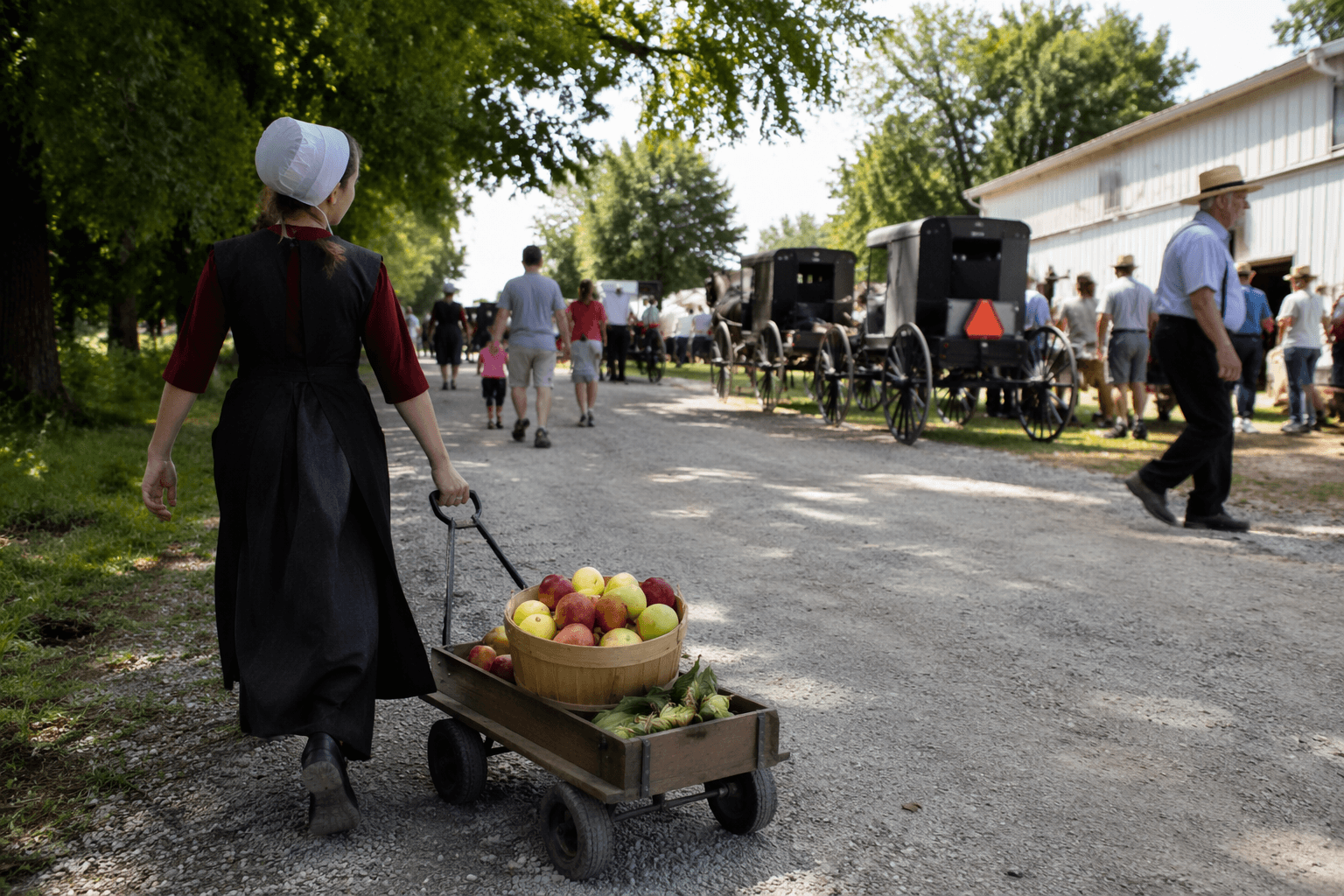
Wheat Ridge is one of Adams County’s clearest economic corridors, where Amish households, family businesses, and visitor spending meet on the same stretch of road. The Adams County Travel & Visitors Bureau says the community began in 1976 and has grown to more than 96 households, turning what was once a small settlement into a visible part of the county’s tourism system. Along Wheat Ridge Road, visitors see buggies, horses, children on scooters, babies in wagons, and clothes drying in the air, but they also find a working market built around bakeries, furniture, shoes, saddlery, and other services.
A county tourism engine, not just a roadside attraction
The difference between Adams County Amish Country and a generic scenic drive is scale and structure. The county’s 2023 visitor guide says tourism is supported by a 3 percent lodging tax, and it says six new lodging establishments were added to the map that year. That matters because the spending does not stop at the edge of Wheat Ridge Road; it circulates through rooms, meals, retail purchases, and attraction visits across Adams County.
TourismOhio’s county impact figures put that into dollar terms. Tourism spending reached $27.5 million in 2022 and $29.3 million in 2023, with a total economic impact of $50.5 million in 2023. The same data set shows tourism-supported wages of $21.1 million, 732 tourism-related jobs, and tourism accounting for 6.4 percent of all county jobs. For a rural county, those numbers make tourism a material part of the local economy, not a side benefit.
Where visitor dollars go on Wheat Ridge Road
The county’s points-of-interest map gives the corridor its practical shape. Yoder’s Furniture, Bakery & Bulk Foods, Miller’s Bakery, Furniture & Bulk Foods, Murphin Ridge Building Supplies, Raber’s Shoes & Saddlery, and CCL Bicycle are the kinds of businesses that turn a visit into spending. A visitor may come for the scenery, but the purchases tend to be concrete: bread, bulk foods, furniture, work boots, saddles, hardware, and bicycles.
That retail mix is what makes Wheat Ridge different from a drive that simply offers views. The corridor functions as a cluster of household-run enterprises, many of them tied to daily needs and durable goods rather than souvenir trade. In practical terms, visitor money lands in bakeries and showrooms, not only in photo stops.
The families behind the corridor
A 2024 local report identified the Miller and Yoder families and the Amish community as the engines that drive tourism in Adams County. Daniel Miller, described there as a longtime board member, represents how closely the corridor’s businesses and civic leadership overlap. His family’s business grew from a bakery started in 1976 into bulk foods, two furniture showrooms, and other farm-related products, a trajectory that mirrors the broader evolution of Wheat Ridge itself.
That history matters because it shows the corridor was built from local enterprise, not from outside development. The businesses that line Wheat Ridge Road did not arrive as a packaged tourism district; they grew out of families serving a rural customer base and then absorbed steady visitor traffic as Adams County’s reputation spread.
How the county promotes the district
The Adams County Travel & Visitors Bureau says it was created in 1998 and is funded by bed-tax dollars as a separate nonprofit 501(c)(3). County government says the bureau took on organizing the Adams County Amish Bird Symposium in 2010, which shows that tourism promotion in Adams County is an institutional function, not an occasional marketing effort. The bureau also says it promotes the county through magazine articles, radio shows, trade shows, and paid advertising.
That marketing reaches beyond Amish Country alone. The county’s 2023 guide says tourism promotion covers attractions, events, lodging, dining, historical sites, nature preserves, parks, forests, wildlife areas, outdoor recreation, and the Amish community itself. In other words, Wheat Ridge sits inside a broader county strategy that treats rural heritage, outdoor access, and overnight stays as one connected market.
The Bird Symposium and the corridor’s community life
The Amish Bird Symposium gives the corridor a second identity beyond shopping. The bureau traces the event to an idea in the fall of 2003 by Amish resident Roman Mast. The first symposium in 2004 drew over 100 people, and when it moved to Yoder Log Homes in 2005, it drew a sellout crowd of more than 240. The bureau says the event now uses a venue with capacity for 300 people.
That history shows how the community’s public life has grown alongside its business base. The symposium is not a tourist import dropped onto Wheat Ridge Road; it emerged from the same social and family networks that shape the area’s stores and markets. It also gives Adams County a recurring event that brings people back for more than one season.
Schools, benefits, and the local calendar
Wheat Ridge’s economy also connects to education and fundraising. A 2015 local report on the annual Amish school benefit at Miller’s Bakery said several hundred people came from southern Ohio, the Cincinnati and Dayton areas, and northern Kentucky. The event raised money for tuition at Scenic Ridge School, one of four Amish schools in the Wheat Ridge/Unity area.
That school connection is one reason the corridor feels like a living community rather than a tourism strip. The same families that sell bread, furniture, and farm goods also support schools and community events, so spending in the area circulates through a network of businesses and institutions. Visitors do not just pass through Wheat Ridge; they enter an economy shaped by households, classrooms, and seasonal gatherings.
What Adams County gets from Wheat Ridge
The county’s tourism numbers explain why Wheat Ridge matters beyond its own road signs. Visitor spending rose 15 percent since the prior report in the county’s 2023 guide, and the addition of six lodging establishments suggests that Adams County is building capacity to keep more of that spending local. More rooms, more events, and more repeat stops mean more dollars moving through West Union and the surrounding rural economy.
Wheat Ridge works because it is both specific and scalable. The buggies and clotheslines still define the landscape, but the county has turned that landscape into an organized tourism asset, one that supports jobs, wages, taxes, and family-run commerce year-round.
This article was produced by Prism’s automated news system from verified source data, official records, and press releases, then run through automated quality and moderation checks before publishing. The system is built and supervised by the people who set the standards it runs under. Read our full AI policy.
Know something we missed? Have a correction or additional information?
Submit a Tip