Adams County residents press lawmakers over hyperscale data centers
Adams County residents took their data center fight to Columbus, as Nikki Gerber and others pressed lawmakers over land, water and local control.

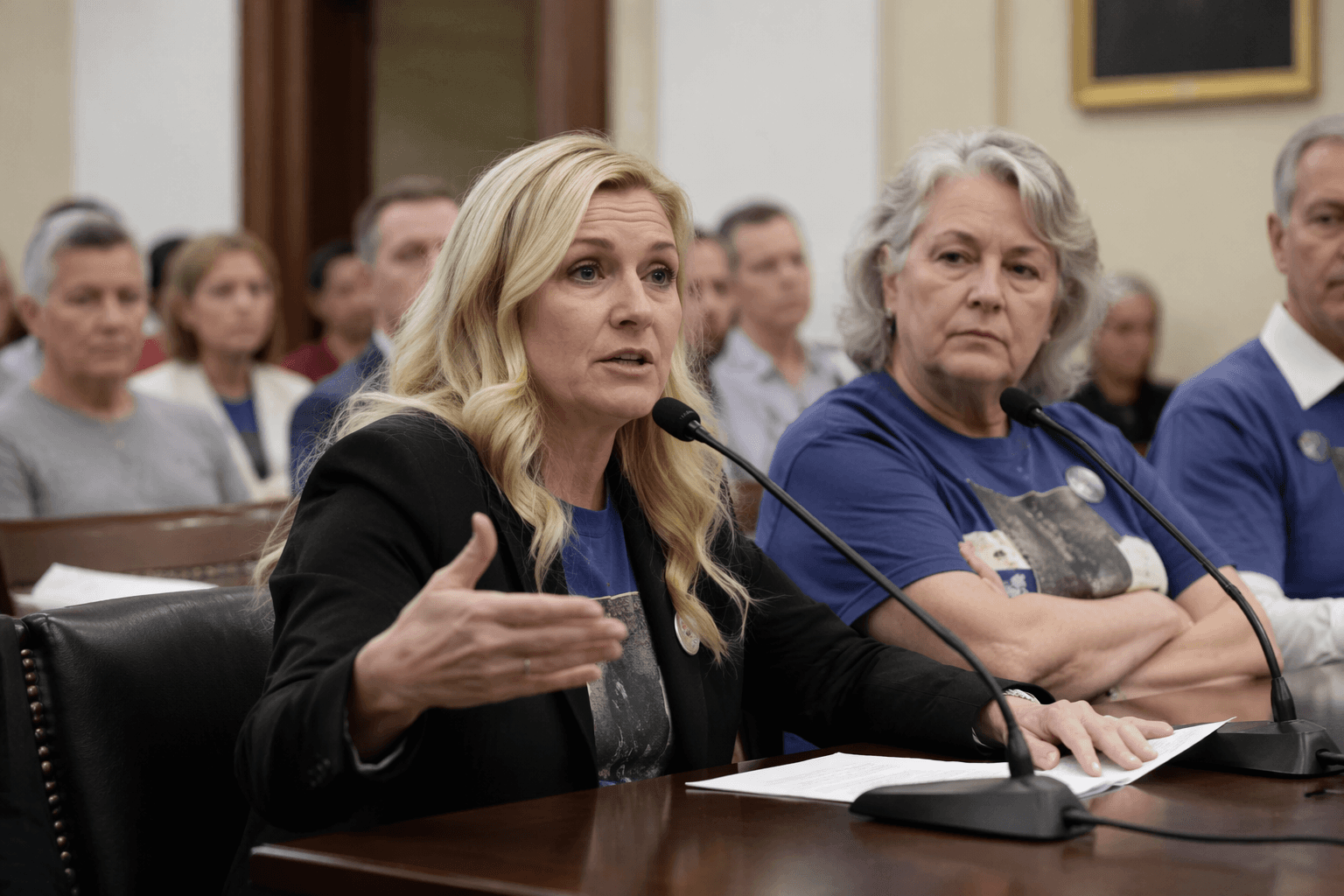
Adams County’s fight over hyperscale data centers reached the Ohio Statehouse on June 1, as residents carried their land, water and local-control worries from the county commissioners’ room to a general public hearing in Columbus. Nikki Gerber of MoonDoggie LiVeree told lawmakers the objections were about much more than politics, ending her testimony after more than a week of organizing around the issue.
The Adams County delegation was hard to miss. House committee materials listed Gerber, Austin Baurichter and others tied to Conserve Ohio and Adams County among the witnesses, and Emily Harper was one of 35 people who gave verbal testimony that day. Jessica Adams Baker, an Adams County native who now lives in Williamsburg, also was among those present. Gerber had tried to meet with Sen. Brian Chavez during a May 20 visit to the Statehouse but was not granted an audience, though she did speak with Sen. Terry Johnson. At the hearing, she said, “We have already established there are too many unanswered questions.”
The local backlash did not begin in Columbus. On Feb. 9, an overflow crowd filled an Adams County Board of Commissioners meeting after reports of activity at the former DP&L Stuart Station property raised fears that a data center could come to the county. Commissioners Barbara Moore Holt, Kelly Jones and Jason Hayslip said then that no company had submitted a formal site plan or incentive request.
More recently, reporting in early June said Amazon representatives had approached the county about Sprigg Township, but the contact was described as preliminary and limited. For many residents, that was enough to keep the pressure on, because the concern has always been bigger than one site. The debate has centered on electricity demand, water use, nondisclosure agreements and the question of who should control industrial-scale development: local governments, utilities or the state.
That larger fight has moved quickly. Petitioners seeking a constitutional amendment to prohibit new data centers over 25 megawatts won unanimous certification from the Ohio Ballot Board on April 3, opening the door to signature gathering. Organizers from Adams and Brown counties reportedly collected about 1,800 signatures in eight days before delivering them to the Ohio Attorney General’s Office.
For Adams County residents, the issue has become a defense of the Appalachian landscape, wells, springs and open space that define life in rural southern Ohio. The Ohio House Select Committee on Data Centers moved at the same pace, with meetings set for May 27, June 1, June 4, June 8 and June 11, showing how quickly a county-level alarm became a statewide policy battle with long-term consequences for land use, tax revenue and local control.
This article was produced by Prism’s automated news system from verified source data, official records, and press releases, then run through automated quality and moderation checks before publishing. The system is built and supervised by the people who set the standards it runs under. Read our full AI policy.
Did this article answer your question?