Adams County seniors urged to eat more protein, stay healthy and independent
Protein is a muscle-saver after 50, and Adams County seniors can stretch budgets with eggs, beans, yogurt and local meal sites.
Why the column landed now
The Adams County Senior Council's latest protein column lands on a truth many families feel at the kitchen table: "When we're older, our body doesn't use protein as efficiently as it once did." The People’s Defender piece, written by Teresa Carr and presented as an excerpt from the National Council on Aging, points older readers toward a simple goal that carries real weight: enough protein to stay healthy and independent. NCOA says more than 1 in 3 people over 50 miss daily protein needs, and for a 150-pound older adult, that can mean aiming for about 68 to 82 grams a day.
That matters because healthy eating is a cornerstone of healthy aging, and the numbers on later-life health make the stakes clear. CDC FastStats says 24.3% of U.S. adults 65 and older reported fair or poor health in 2024, 9.4% had any difficulty with self care, and 47.8% had diagnosed arthritis. Protein helps maintain muscle mass and strength, and it helps people recover after illness or injury, which is why nutrition guidance is really about function, not just food.
How much protein to aim for
For most older adults, the practical target is 1 to 1.2 grams of protein per kilogram of body weight each day. The Administration for Community Living says a good rule of thumb is 25 to 30 grams at a meal, and it notes that people with kidney disease should check with a clinician before increasing protein. That is the kind of number that turns protein from a vague wellness idea into a grocery list and a plate plan.
A grocery-list lens for Adams County
USDA guidance puts seafood, lean meats and poultry, eggs, beans and lentils, nuts, seeds and soy in the protein foods group, and that makes the real question not whether to eat protein, but which version fits your budget, teeth, schedule and ride situation. The smartest cart usually mixes shelf-stable staples with a few fresh items, and Adams County already has places where that can happen close to home.
- Eggs and dairy: Eggs are one of the easiest protein foods to use at breakfast or supper because they cook quickly and work in scrambles, casseroles and egg salad. The federal guidelines count 1 egg as 1 ounce-equivalent of protein foods, and 1 cup of milk or yogurt counts as a dairy serving. The Adams County Farmers Market lists eggs among its weekly offerings, which gives shoppers a local option when they want something familiar and simple.
- Beans and lentils: This is where budgets stretch furthest. The Dietary Guidelines count 1/4 cup cooked beans or tofu as 1 ounce-equivalent, and NCOA says beans, lentils and other plant proteins generally cost less than meat while adding heart-healthy fiber. Canned beans, dry beans and lentil soup also fit neatly into soft-texture meals for anyone who struggles with chewing.
- Fish and seafood: Fish brings high health value when you want protein that does more than fill a plate. The FDA says fish can have heart-health benefits as part of a healthy eating pattern, and the Dietary Guidelines place seafood in the protein foods group. It is often more expensive than beans or eggs, but it is a strong choice when you want variety and a protein that fits into quick meals.
- Lean meats and poultry: Chicken, turkey and lean beef give complete protein and key nutrients, but they usually cost more than beans or eggs, so the trick is to buy lean cuts and use smaller portions. The federal older-adult dietary guidance specifically points to lean meats and chicken, and the Adams County Farmers Market lists beef and pork among its local offerings, with SNAP accepted there.
When chewing, swallowing or appetite becomes the barrier, the answer is not to give up on protein. NCOA says there are affordable ways to boost intake even for people with chewing or swallowing challenges, and the National Institute on Aging recommends adding seafood, dairy or fortified soy products along with beans, peas and lentils to meals. In practice, that can mean yogurt, scrambled eggs, bean soup or a soft fish salad instead of a meal that feels hard to manage.
Where Adams County turns the advice into dinner
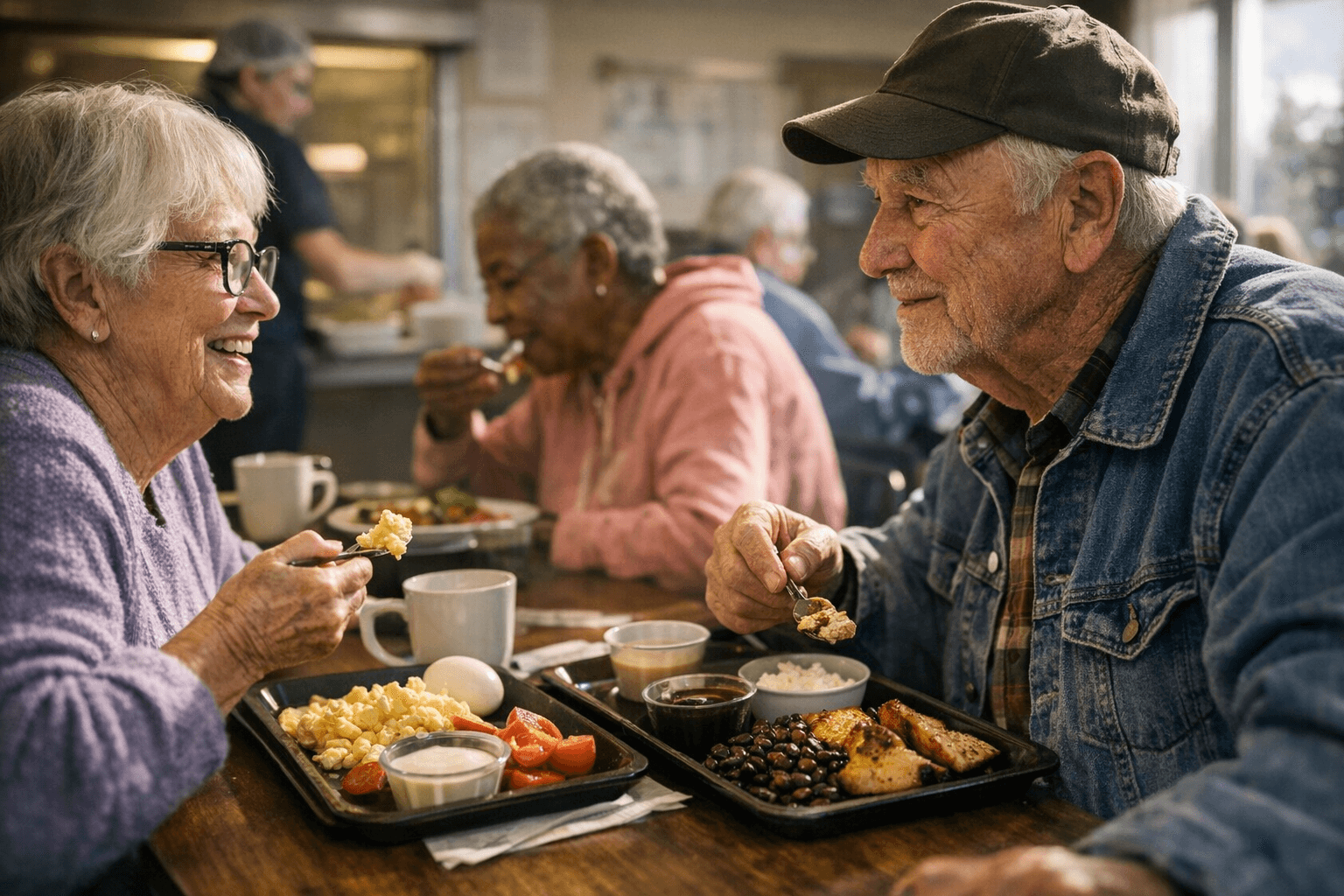
ABCAP's Senior Nutrition program ties the protein message to real help. It serves hot congregate lunches at meal sites in West Union and Seaman for adults 60 and older, offers home-delivered meals to homebound seniors, and says a small donation helps cover costs. In Adams County, the West Union site is at 107 E. Walnut St. and the Seaman site is at 17806 State Route 247, both operating Monday, Wednesday and Friday from 10 a.m. to 2 p.m. The program is built to help seniors stay in their homes longer, which is exactly why protein matters.
The Adams County Health and Wellness Coalition also keeps a GIS map of food resources in the county, a useful local shortcut when families are trying to match budgets to food access. For seniors, caregivers and adult children helping from a distance, that kind of map can make the difference between guessing and knowing where the next protein-rich meal is coming from.
The larger lesson from the Senior Council column is that protein is not a gym trend. It is part of preserving muscle, recovering from illness or injury and holding onto independence, which is why a grocery list built around eggs, beans, yogurt, fish and lean meats can be a public-health tool as much as a meal plan. In Adams County, that tool works best when it is backed by local meal sites, local markets and the steady work of staying fed well enough to stay at home.
This article was produced by Prism’s automated news system from verified source data, official records, and press releases, then run through automated quality and moderation checks before publishing. The system is built and supervised by the people who set the standards it runs under. Read our full AI policy.
Did this article answer your question?


