Adams County seniors urged to maintain healthy eating habits
As appetite, medications and budgets shift with age, Adams County seniors can lean on local meal and transportation help to keep nutrient-rich food on the table.
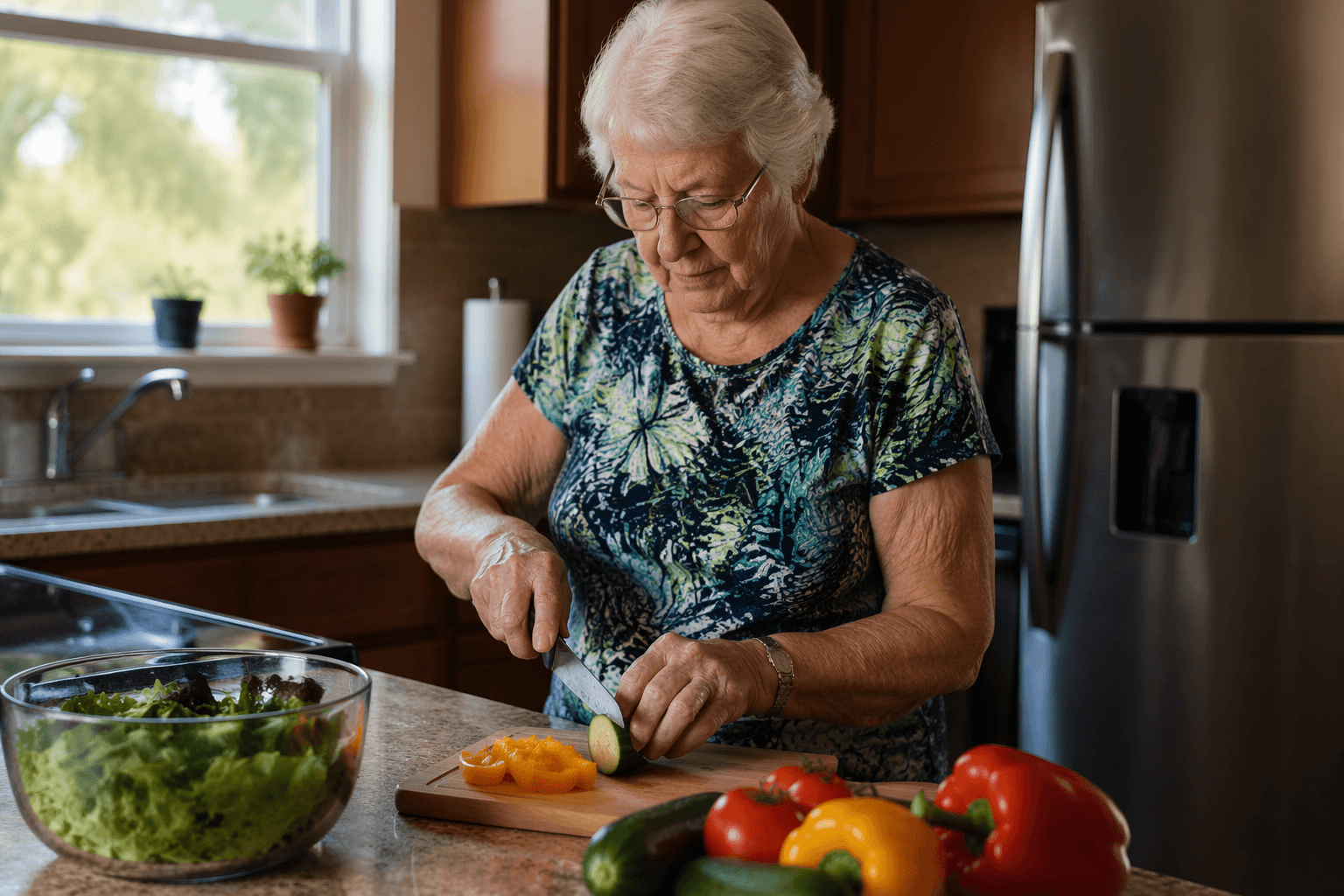
Teresa Carr’s July 15 Adams County Senior Council column, “Healthy eating for older adults,” keeps the advice practical: keep eating a nutrient-rich diet and choose foods high in protein, vitamin D, B12 and folic acid. A smaller appetite, more prescriptions, hydration gaps and a fixed grocery budget can make healthy eating harder as Adams County residents age.
What the column is pointing readers toward
The column draws on a Northern Ireland public-health nutrition guide and points readers to the Eatwell Guide as a visual model for the kinds of food people should be eating. The message is about balance, variety and getting the nutrients that become harder to keep up with when appetite drops or cooking for one becomes the norm.
Healthy meal planning can help older adults maintain a healthy weight and get the nutrients they need, and the U.S. Department of Agriculture’s 2020-2025 dietary guidelines include older adults as a specific focus. The National Council on Aging links good health and financial wellness to independence, which is why a tight budget can turn food choices into a health issue, not just a shopping issue.
Why age changes the nutrition equation
Medication use is one reason meals can change after 60. The National Institute on Aging’s medication guidance covers why: aging can change the way the body breaks down or removes certain drugs, so medicines may stay in the body longer than they did when people were younger. That can affect appetite, energy and how comfortable meals feel, especially when several prescriptions are taken together.
Hydration is the other piece older adults and caregivers often miss. Nutrition and hydration are both essential to health and quality of life, and for a senior who is eating less, even mild dehydration can make the day feel harder. If meals are smaller, the liquids alongside them matter more, not less.
Protein deserves special attention because it supports immunity, muscle maintenance and physical function in older adults. The ACL National Resource Center on Nutrition & Aging also notes that muscle mass decreases with age and that sarcopenia may increase protein needs, which is one reason a meal that is mostly toast or crackers is not enough for someone whose strength, balance or mobility is slipping.
How Adams County’s senior network can help
Adams County already has a support system built around the kinds of problems that get in the way of regular meals. The Adams County Senior Citizens Council, Inc. operates transportation services and homecare services, and its West Union office at 10835 State Route 41 lists the phone number 937-544-3979. Its website also points readers to a weekly news column, making it a natural first stop when the issue is not just food, but how to reach food, a clinic or a pickup site.
If meal delivery is the barrier, Adams-Brown County nutrition services can be reached at 937-378-6041, the contact number listed by the Ohio Department of Aging. ABCAP’s Meals On Wheels Seaman Site also serves as the sole provider of hot, ready-to-eat home-delivered meals in Adams and Brown counties, with menus approved by a registered dietician and deliveries on Monday, Tuesday, Thursday and Friday. ABCAP’s senior services office is in Georgetown at 406 West Plum Street.
Transportation can be the piece that makes those services usable. FRS Transportation lists an Adams County number at 937-779-3212, with dispatch Monday through Friday from 6 a.m. to 8 p.m. and Saturday from 8 a.m. to 5 p.m. Adams Brown Mobility Management also keeps county transportation resources in one place when the real problem is not willingness to eat well but getting to the store, the clinic or the meal site.
A practical reset for caregivers and seniors
The easiest way to use this advice is to make one meal decision and one support decision at the same time. If a relative is skipping meals, the first question is whether they are eating enough protein and drinking enough fluids. The second question is whether transportation, home-delivered meals or homecare services could remove the barrier that is keeping food out of reach.

A simple checklist for Adams County households:
- Build meals around the Eatwell Guide’s basic food groups instead of grazing all day on low-energy snacks.
- Put protein on the plate at regular meals, because it supports muscle and function as people age.
- Keep vitamin D, B12 and folic acid in mind when choosing foods.
- Treat low appetite, a new medication list, weight loss or repeated missed meals as reasons to ask a GP or get blood work before leaning on supplements.
- Use local support when shopping, cooking or driving becomes the sticking point.
This article was produced by Prism’s automated news system from verified source data, official records, and press releases, then run through automated quality and moderation checks before publishing. The system is built and supervised by the people who set the standards it runs under. Read our full AI policy.
Did this article answer your question?