Adams County’s covered bridges preserve history across rural roads
Adams County’s 37 documented covered bridges make rural roads into a living history route, and the Kirker span shows how preservation now shapes what survives.
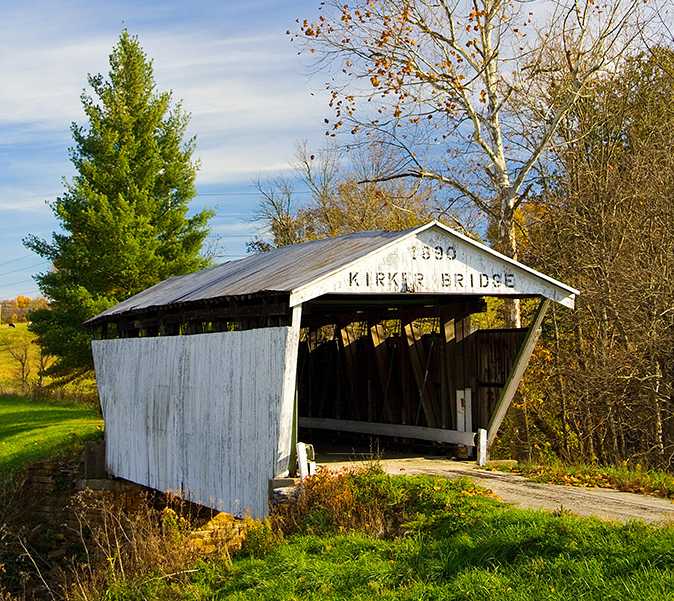
Adams County’s covered bridges are more than photo stops: BridgeHunter lists 37 of them, and the Governor Kirker Covered Bridge in Liberty remains one of the county’s clearest preservation landmarks. In a landscape shaped by hills, creek crossings, and township roads, that concentration turns ordinary travel into a record of how the county moved people, goods, and daily life for generations.
Why Adams County’s bridges still matter
Covered bridges were never built as decoration. They were practical timber crossings, with roofs and sidewalls added to shelter the structure from Ohio weather and extend its life. TrekOhio’s history note says that protection could stretch a wooden bridge’s lifespan from as little as 10 years to as long as 80 or 100 years, which is why the design became so closely tied to rural transportation.
That engineering history is visible across Adams County because the bridges are scattered along the road network rather than gathered in one place. Liberty, West Union, Peebles, and surrounding townships developed around crossings as much as around main streets, rail lines, or highways. The result is a countywide bridge landscape that still serves weekend tourism, local pride, and preservation decisions at the same time.
The Governor Kirker Covered Bridge is the clearest anchor
The Governor Kirker Bridge gives the county’s bridge story a precise, documented center. LostBridges identifies it as OH/35-01-10 in Adams County, and BridgeHunter lists it as the Kirker Covered Bridge, built in 1890, 63 feet long, with one span, and closed to all traffic.
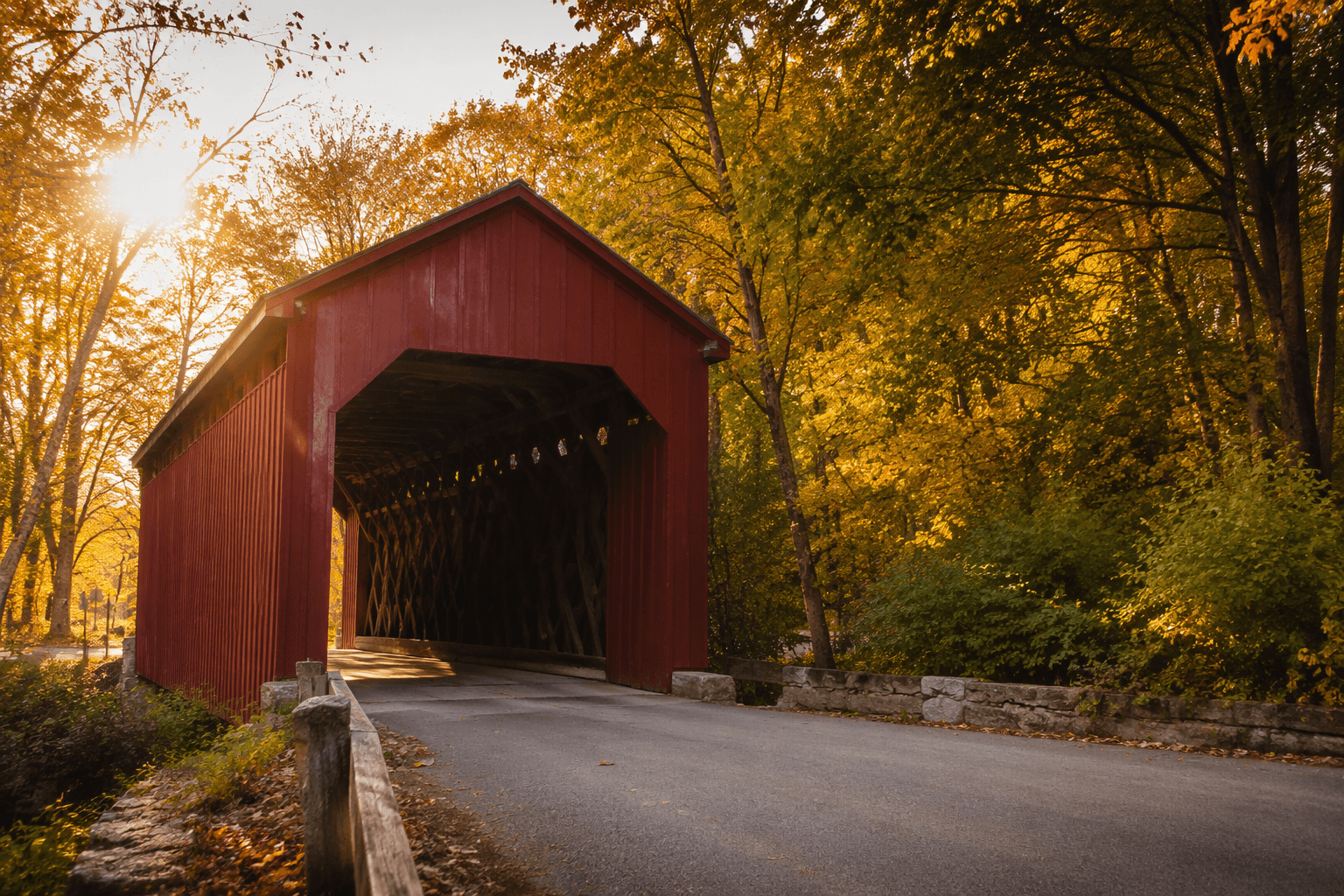
Those details matter because they show how a single span can sit at the intersection of history and public attention. A bridge that is closed to vehicles still carries identity, and in Adams County it also carries responsibility, since every covered bridge represents both an artifact and a maintenance challenge. The Kirker bridge has become one of the places where that challenge is easiest to see.
The preservation stakes sharpened after tornado damage in April 2024. A local update later noted that the Kirker Covered Bridge near West Union now has a brand-new roof, completed September 5, 2025, marking the first major step in restoring the landmark. That kind of repair is not cosmetic. For a covered bridge, the roof is part of the preservation system that helps the timber structure endure.
How to read the county’s bridge landscape
BridgeHunter’s Adams County page does more than count bridges. Its listing fields, including bridge name, status, year built, and span length, turn the county into something like an outdoor catalog of transportation history. Once you know what to look for, the details tell you whether a bridge is open, closed, or under restoration, and how large or small each crossing is compared with the next one.
That matters for anyone planning a slow drive through the county. A bridge itinerary here is not a museum itinerary with fixed walls and hours. It is a rural-road route where each crossing sits in the same living landscape that still supports daily travel, farm access, and township traffic patterns. The bridges are part of the county’s infrastructure memory, not separate from it.
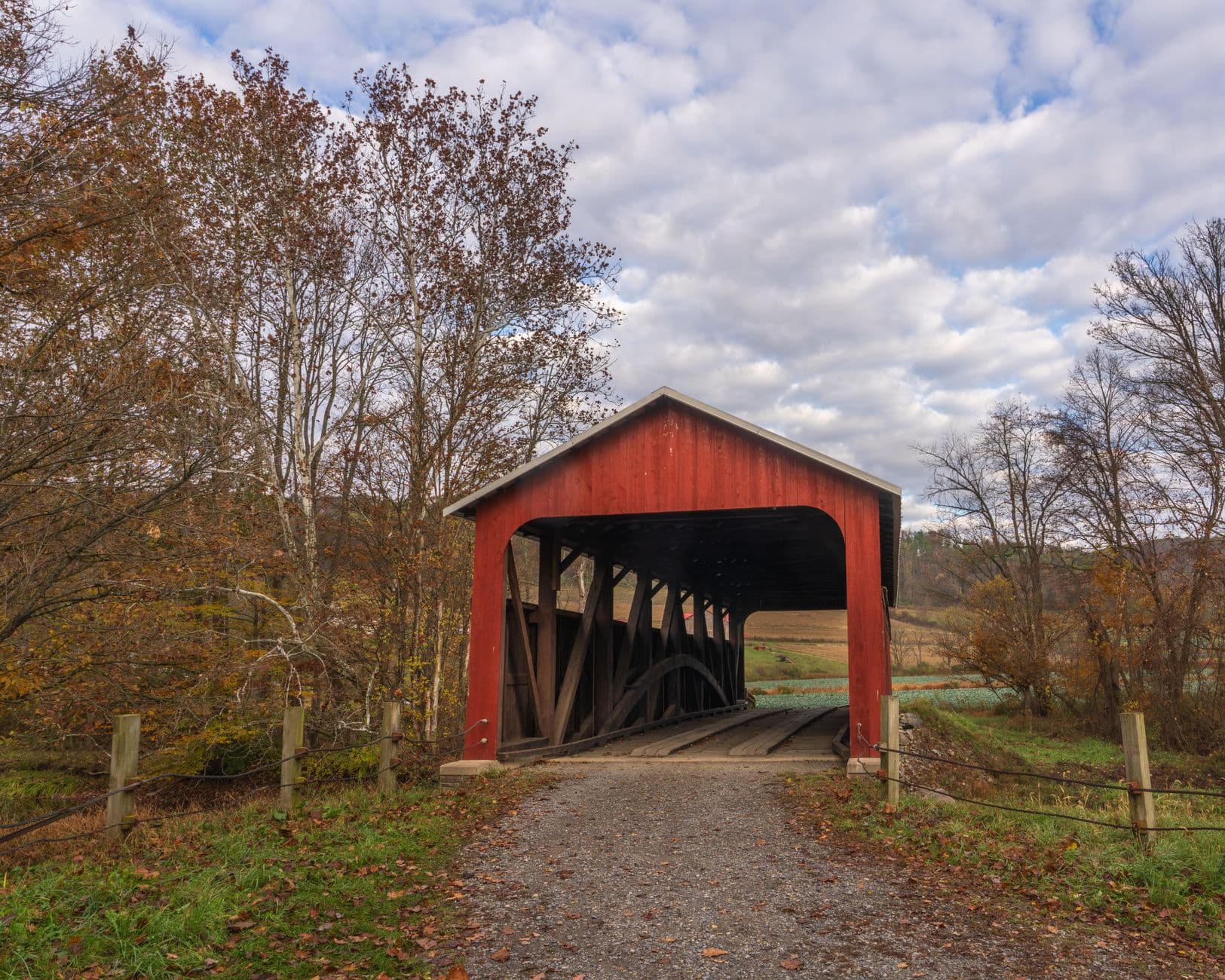
A few of the most useful things to notice on the road:
- the year built, which shows how far back the county’s timber bridge era runs
- the span length, which reflects the scale of the creek or roadway it once had to cross
- the status, which shows whether a bridge is still carrying traffic or preserved as a historic structure
- the setting, because Adams County’s hills and waterways explain why so many short-span bridges were needed in the first place
A rare county count, not just a roadside curiosity
The figure that makes Adams County stand out is the total itself: 37 covered bridges. In one rural Ohio county, that is an unusually dense concentration and a clear sign that bridge-hunting here is part of the area’s historical fabric, not a niche pastime. The bridges are not isolated one-offs; together, they tell the story of local settlement, road building, and the practical decisions that shaped where people could move and live.
That density also helps explain why the county’s bridges still attract attention beyond Adams County lines. Weekend visitors are not just looking for scenery. They are seeing a landscape where transportation history is still visible on public roads, and where the survival of one bridge often reflects the survival of a larger set of local choices about upkeep, repair, and respect for old infrastructure.
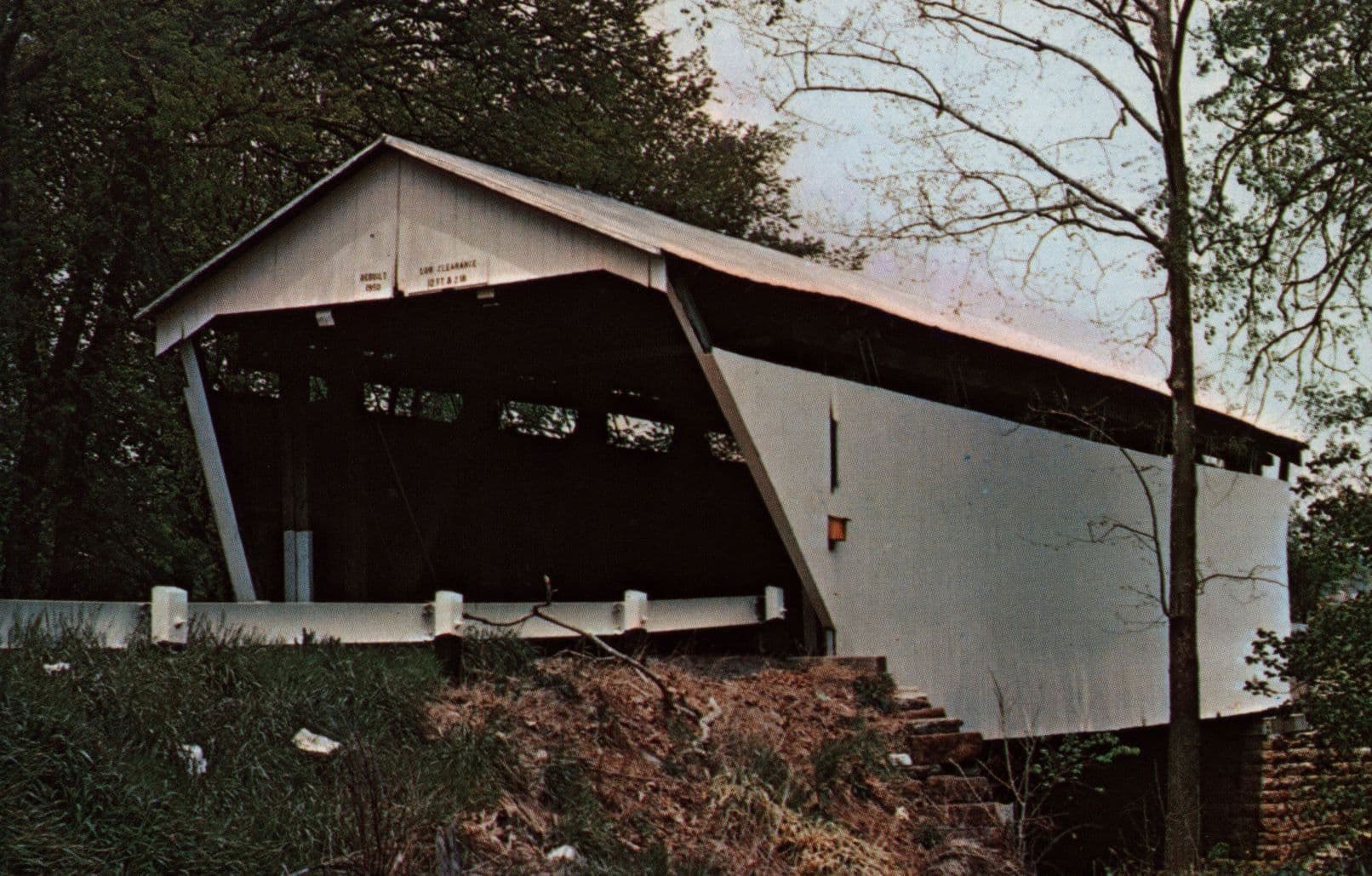
Adams County in the southern Ohio bridge region
Adams County is also part of a larger southern Ohio covered-bridge corridor. Covered Bridges of the Southern Region of Ohio includes Adams, Athens, Brown, Butler, Clermont, Clinton, Hamilton, Highland, Jackson, Lawrence, Madison, Ross, and Vinton counties. That regional context matters because it shows Adams County is not an isolated exception. It is one of the counties where the covered-bridge tradition remained strong enough to define the landscape.
Still, Adams County stands out even within that broader region because of the number of bridges documented here and the prominence of the Kirker span as a preservation case. The county’s bridges are reminders that rural infrastructure can become a community asset long after its original transportation role changes. They still shape how the county is seen, how its back roads are traveled, and how residents decide what should be protected next.
In Adams County, a covered bridge is never only a historic object. It is a piece of local geography, a marker of engineering history, and a reminder that preservation choices determine whether the county keeps the rare bridge landscape it still has.
This article was produced by Prism’s automated news system from verified source data, official records, and press releases, then run through automated quality and moderation checks before publishing. The system is built and supervised by the people who set the standards it runs under. Read our full AI policy.
Did this article answer your question?