John P. Parker House in Ripley highlights Black history and Underground Railroad legacy
Parker House is Ripley's clearest link to Black enterprise and the Underground Railroad, with seasonal visits at 300 Front Street and a live NPS study still shaping its future.
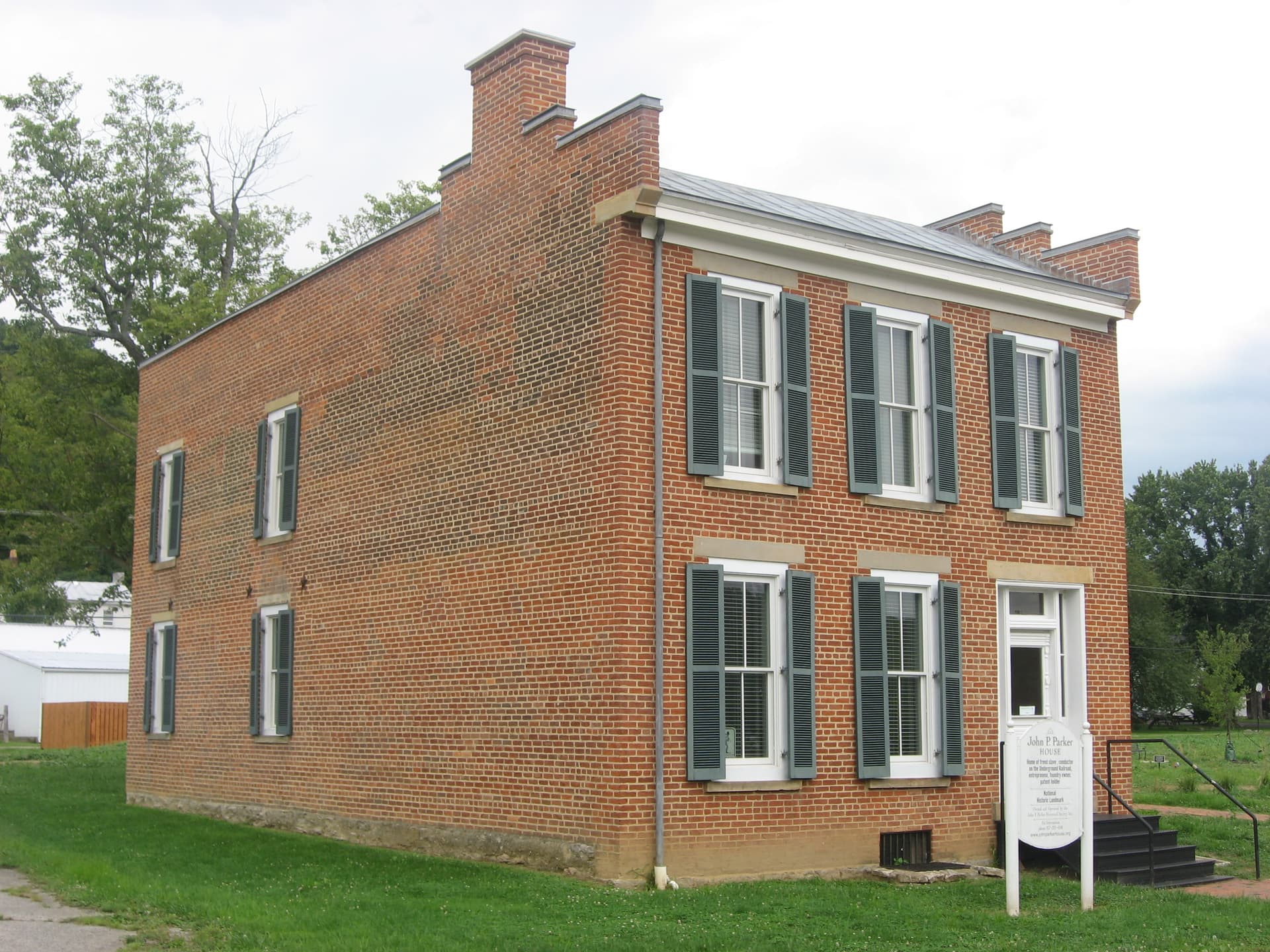
The John P. Parker House at 300 Front Street in Ripley gives southern Ohio a rare landmark where Black entrepreneurship, invention, and Underground Railroad resistance all meet in one place. The house is open seasonally from May through October, so families, students, and history visitors can still see a real site tied to the river town’s past, not just read about it in a book.
A Ripley landmark with three stories at once
At 300 Front Street, the John P. Parker House is more than a preserved residence. Ripley Heritage, Inc. identifies it as a National Historic Landmark, and the nomination for the property lists it as privately owned, which makes its public interpretation even more notable. The site is open Friday and Saturday from 10 a.m. to 5 p.m. and Sunday from 1 p.m. to 5 p.m., a practical schedule that makes a seasonal visit possible without turning it into a special trip that only happens once a year.
That matters because Parker’s story does not fit the narrow version of antebellum Ohio history that reduces the region to familiar Civil War-era memory. Ripley’s abolitionist landscape includes the John Rankin House National Historic Landmark, but the Parker House adds a different layer: it shows how one Black resident built a life as a businessman, inventor, and community figure in the same river town that helped move freedom seekers north.
John P. Parker’s life was built, not inherited
John P. Parker purchased his freedom in 1845 and lived in Ripley until his death in 1900. Some accounts say he had been enslaved in Alabama before 1845 and had been apprenticed as an iron molder, and one source says he raised $1,800 to buy his freedom. That combination of labor skill and self-emancipation helps explain why the house matters today: Parker was not simply a witness to history, he was a maker of it.
His foundry stood behind the house, turning the property into a working site of industry as well as residence. Historical sources identify three known patents held by Parker, a rare achievement for an African American man in the 19th century, and later public-history material says he used the foundry to develop and display inventions at regional and national industrial expositions. One account also says the foundry employed white workers, a striking detail that shows how unusual Parker’s economic position was in a segregated era.
That is why the site resonates beyond one biography. The house tells a story of Black technical skill, business ownership, and self-made status that is still too often missing from local memory, even in places with deep river history.
Why the Ohio River made Ripley a gateway
Ripley’s riverfront location gave Parker’s work a broader reach. The Ohio River was a natural crossing point, and local preservation sources describe Ripley as an active Underground Railroad stop because the waterway offered one of the most important routes from enslaved states into free territory. Historian Wilbur H. Siebert is cited as having documented at least twenty-three ports of entry for freedom seekers along the Ohio riverfront, which places Ripley within a larger network of escape routes and safe crossings.
Parker’s role in that network is often described in concrete numbers. Historical accounts tie him to the escape of about 400 enslaved people through Ripley, and one commonly repeated account says he helped 400 people who were bound together with shackles. Those figures are part of why the house is so important: the site represents freedom-seeking not as a vague regional idea, but as a specific set of acts that moved through one Ohio town and one Black-owned property.
For Adams County readers, that makes the Parker House an especially useful local-history stop in the wider southern Ohio corridor. It offers a way to talk about abolition, migration, labor, and Black economic life in the same visit, with the Ohio River landscape still giving the story geographic weight.
Preservation work is still active
The Parker House is not frozen in the past. The John P. Parker Historical Society, Inc. was founded in 1996 to recognize, commemorate, and preserve Parker’s legacy, and the site has been used for public programming such as the 2023 John P. Parker History Camp. That kind of ongoing use keeps the property connected to the community instead of limiting it to formal commemoration.
The National Park Service has also kept the site under active study. A reconnaissance survey was completed in April 2018, and later study materials included a special resource study with a public comment period that ran from July 11 to September 8, 2024. The in-person public open house for that study was scheduled for July 25, 2024, at the Union Township Public Library Annex, 19 Main Street, Ripley, OH 45167, with presentations at 5:30 p.m. and 7:00 p.m.
A 2023 public-history update said the John P. Parker House was moving closer to becoming part of the National Park Service, and the federal study materials show why that conversation continues. The site already carries National Historic Landmark status, but the broader evaluation points to something more: Parker’s house is being treated not just as a local preserved home, but as a place with national interpretive value in the story of Black freedom, invention, and enterprise.
The result is a Ripley landmark that still does real work. It brings the Underground Railroad into view, but it also shows how a Black entrepreneur built, patented, employed, and resisted in the same place where he lived, making the Parker House one of the strongest surviving links between Adams County-area heritage tourism and the larger history of Ohio’s river towns.
This article was produced by Prism’s automated news system from verified source data, official records, and press releases, then run through automated quality and moderation checks before publishing. The system is built and supervised by the people who set the standards it runs under. Read our full AI policy.
Did this article answer your question?