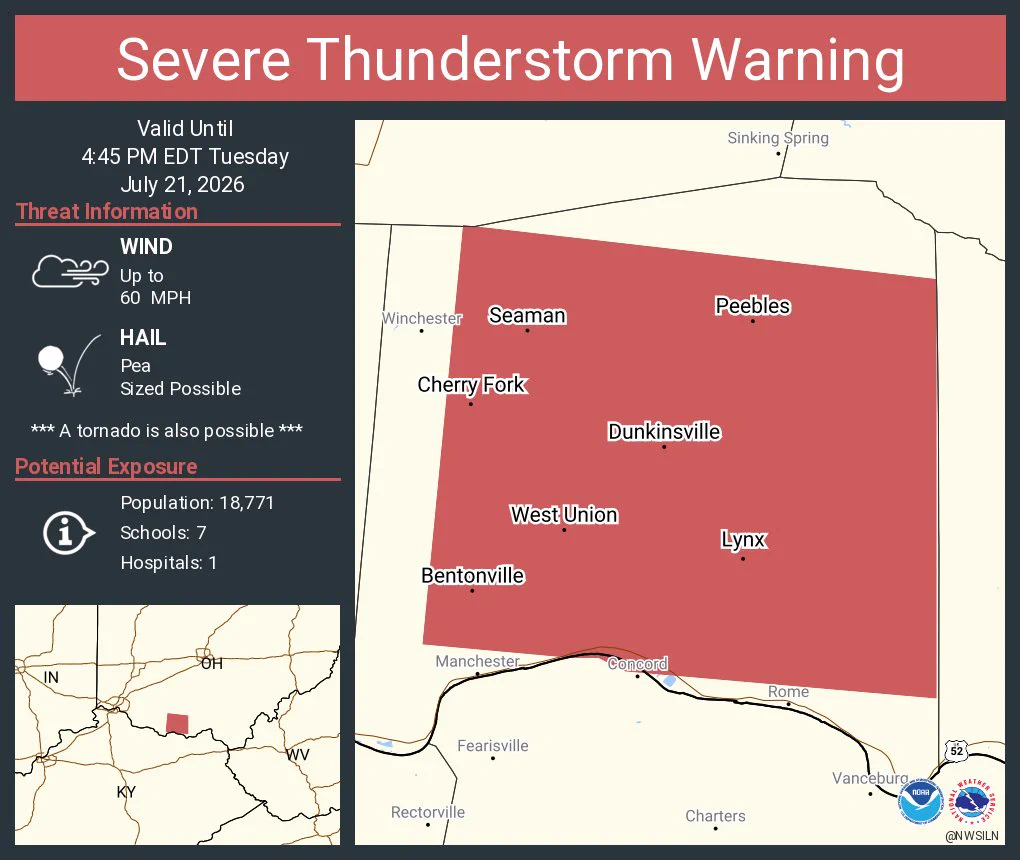
Serpent Mound draws visitors to Adams County’s historic landscape
Serpent Mound is more than a photo stop: it is Adams County’s best-known earthwork, open at 3850 State Route 73 with $8 parking and a protected path that keeps visitors off the mound.

Serpent Mound sits near Brush Creek and the Locust Grove area, where Adams County’s most recognizable earthwork still anchors the county’s heritage story. Managed by the Ohio History Connection and operated by the Arc of Appalachia Preserve System, the site at 3850 State Route 73 in Peebles is reached as a preserved cultural landscape, not a casual roadside pull-off. The access rules, the geology, and the archaeology all shape why residents keep sending visitors there.
A landmark that still defines Adams County
The Adams County Travel & Visitors Bureau describes Serpent Mound as one of the few effigy mounds in Ohio and says it is the largest and finest serpent effigy in the United States. The Ohio History Connection goes even further, calling it the largest prehistoric effigy mound in the world and a National Historic Landmark. Those labels matter locally because they place Adams County in a very small group of places with a nationally significant Native earthwork at the center of its public identity.
That recognition is not just about prestige. It gives the county a landmark that helps explain why travelers come here for more than scenery, and why the site remains part of Adams County’s tourism story year after year. The travel bureau also frames the mound as a place to learn about the earthwork itself and the geology around it, which makes the visit about landscape as much as history.
What the shape tells you before you ever read a sign
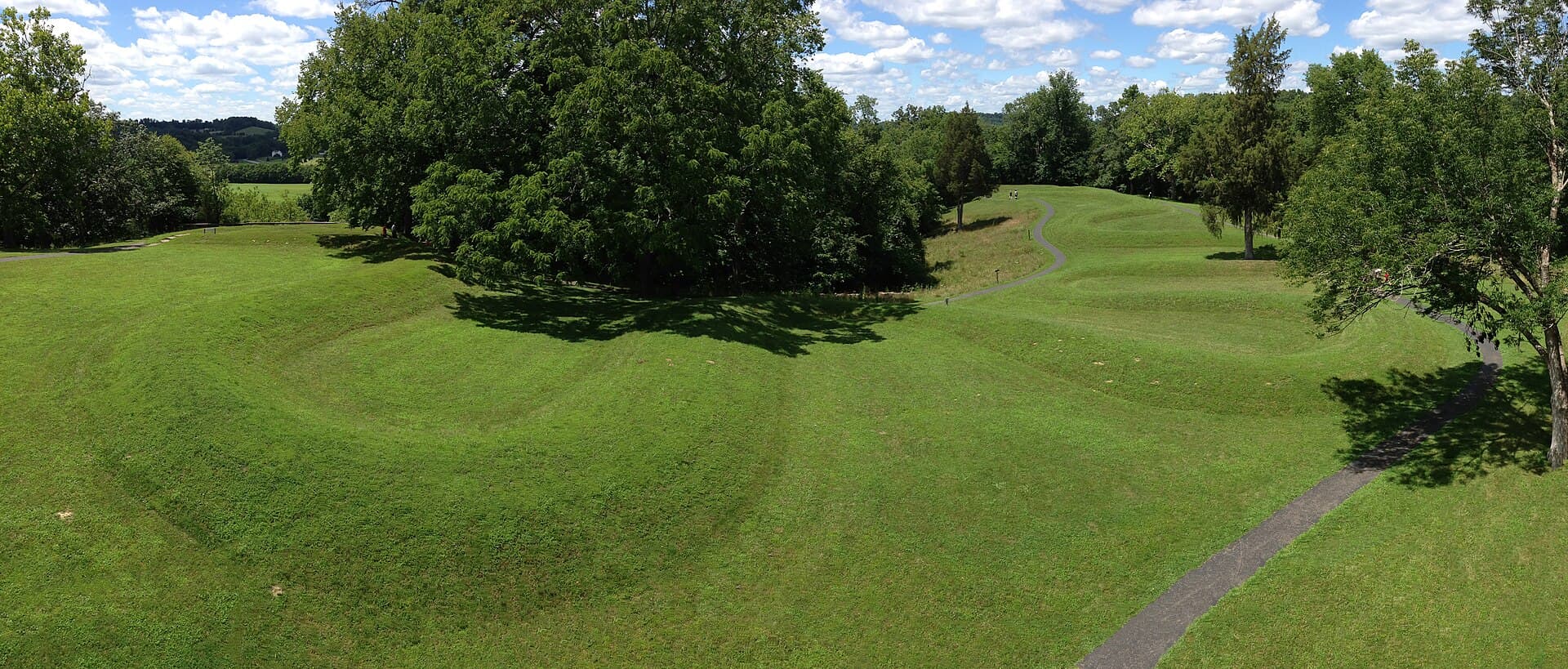
A 1964 Ohio Historical Society brochure described Serpent Mound as an embankment of earth nearly a quarter of a mile long, with the body extending in seven deep curves and an oval wall of earth inside the jaws. That description still gives visitors a useful way to picture the site before they arrive: this is not a small ceremonial feature tucked into a field, but a large, deliberate earthwork that changes with the slope of the land.
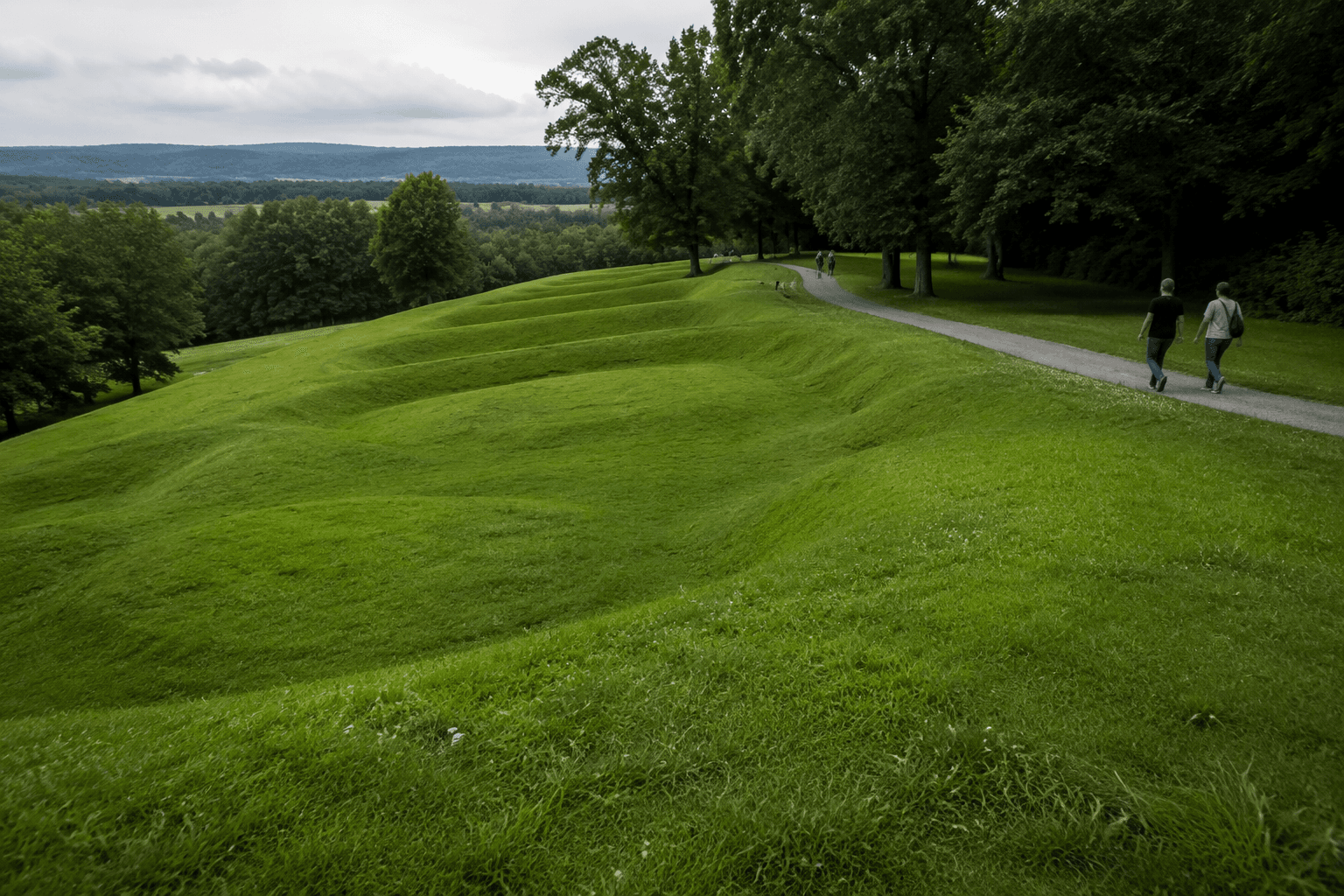
The mound’s form is what makes it such a strong repeat-visit destination. Even when someone has seen the overview once, the site rewards a closer look because the shape reads differently from different points along the path. The best visits are the ones that slow down enough to connect the visible curves with the larger questions the mound raises about ancient engineering and the people who built it.
The unanswered question at the center of the site
The builders of Serpent Mound have long been debated, and that debate is part of why the site still draws serious attention. Ohio History Connection history pages note that the mound was first recorded and surveyed in the mid-19th century by settlers of European descent, which means the site entered written history long after it was already part of the landscape. An Ohio History Connection article published May 3, 2011, revisited the ongoing question of how old the mound is and why researchers keep returning to it.
Ohio State’s Earthworks page adds another important piece: Serpent Mound was built several hundred years after the Hopewell-era sites and is the largest documented surviving example of an ancient effigy mound in the world. One Ohio History Connection page also says Fort Ancient builders may have dug into buried remains of Adena cooking fires while excavating earth for the mound. Taken together, those details show why the site cannot be reduced to a single era or a simple origin story.
The geology beneath the earthwork matters too
Serpent Mound’s setting is part of its public value. The Ohio Department of Natural Resources says the Serpent Mound Impact Structure is approximately 8 miles in diameter and resulted from an asteroid or comet impact. Other geology sources in the record place that disturbance across Adams, Highland, and Pike counties, which is why the mound is often discussed as a cultural monument set in a scientifically unusual landscape.
That intersection of earthwork and geology gives Adams County a story few places can tell. Visitors are looking at an Indigenous construction within a landform that itself has drawn scientific interest for decades. The result is a site that speaks to archaeology, land science, and regional identity at the same time, and that helps explain why the mound remains relevant long after the first road sign turns up State Route 73.
How to visit without damaging the site
The practical side of a trip is straightforward, and the rules are part of the experience. A National Park Service brochure lists the address as 3850 State Route 73, Peebles, Ohio 45660, and says parking is $8 per car. The same brochure instructs visitors not to walk on the earthworks or leave the asphalt path, a reminder that this is a protected memorial rather than a place to roam freely.
That protection shapes the way locals and out-of-county visitors encounter the site. The preserved path keeps foot traffic off the mound itself while still allowing people to see the curves, the landform, and the surrounding setting. For families, students, history travelers, and anyone driving through Adams County, that makes the stop useful in every season, whether the goal is archaeology, geology, or simply understanding why this corner of Ohio carries so much of its identity in one landscape.
Serpent Mound endures because the rules, the research, and the setting all point in the same direction: preserve the earthwork, interpret the land around it, and keep Adams County’s most famous historic landscape from becoming just another lookout.
This article was produced by Prism’s automated news system from verified source data, official records, and press releases, then run through automated quality and moderation checks before publishing. The system is built and supervised by the people who set the standards it runs under. Read our full AI policy.
Did this article answer your question?