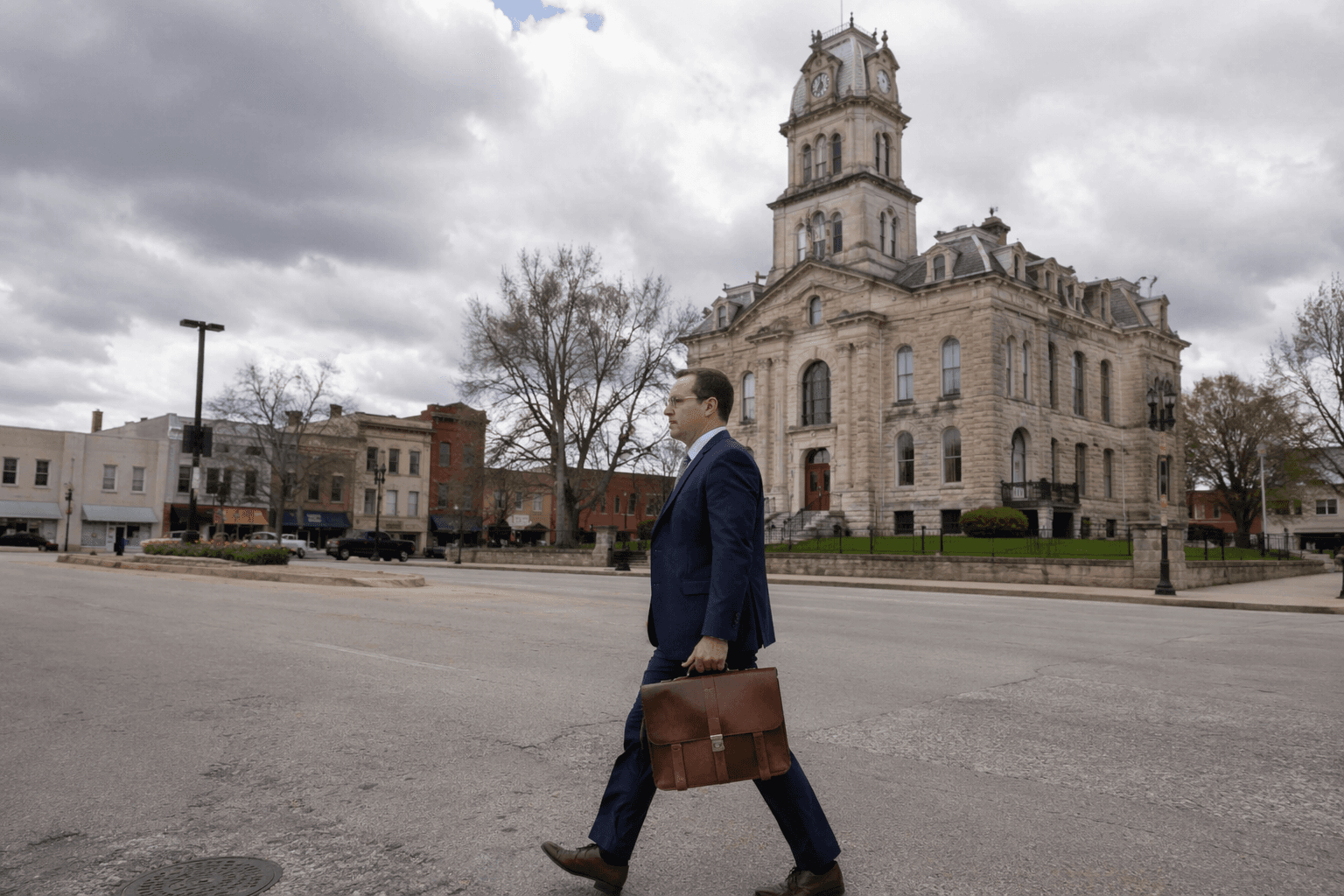
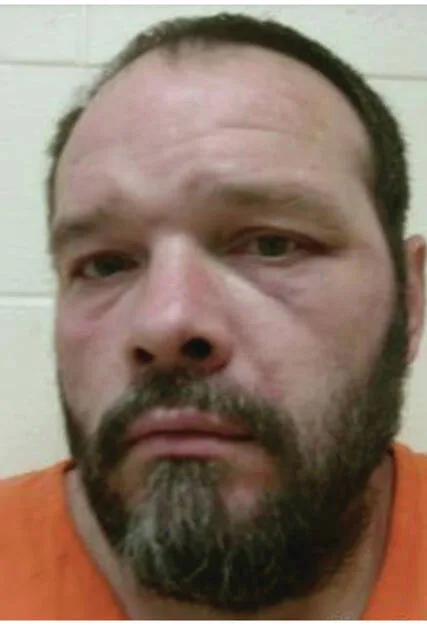
The Afroman trial verdict and what it means: The Hill analyzes officers’ civil suit and free-speech implications
Seven Adams County deputies sought $3.9 million from rapper Afroman; a jury rejected all 13 claims in six hours, and their attorney's hint at "next steps" leaves local taxpayers watching the clock.
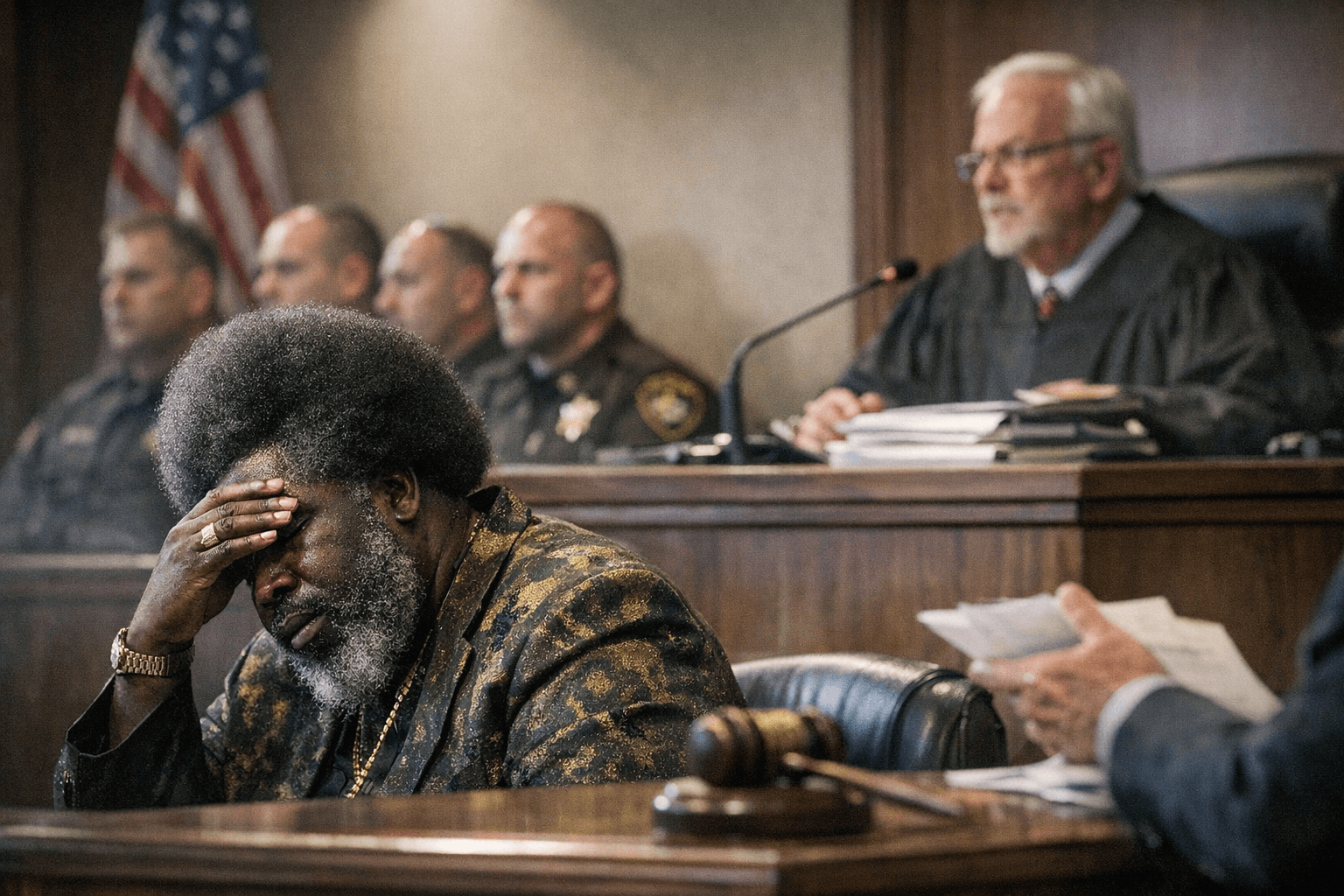
Joseph Edgar Foreman, the 51-year-old Grammy-nominated rapper known as Afroman, walked out of the Adams County Court of Common Pleas in West Union on the evening of March 18, 2026, wearing a fur coat over an American flag-patterned suit, and delivered a verdict of his own: "I didn't win, America won. America still has freedom of speech. It's still for the people, by the people." Inside the courthouse roughly twenty minutes earlier, retired Darke County judge Jonathan P. Hein had read the jury's decision aloud: "In all circumstances, the jury finds in favor of the defendant." All 13 counts. Zero liability.
For Adams County residents, those two sentences carry consequences that extend well beyond Afroman's music career.
The case that put West Union on the national map
The lawsuit trace back to August 2022, when Adams County sheriff's deputies executed a search warrant at Foreman's home in West Union as part of an investigation into possible drug trafficking and kidnapping. No charges were ever filed against Foreman. He testified that the raid caused significant damage to his property, including a broken gate and front door, and that his children, then ages 10 and 12, were traumatized by what they witnessed. He also alleged that $400 was missing when deputies returned cash seized during the search.
Foreman's response was to do what he has always done: make music. Using his own home security footage of the raid, he created a series of videos mocking the officers involved. The most widely circulated, "Lemon Pound Cake," features a deputy appearing to linger over a lemon pound cake sitting on Foreman's kitchen counter. That video alone accumulated more than 3 million views on YouTube. Other content went further, with Foreman making explicit, personally targeted remarks about Deputy Lisa Phillips and repeatedly referring to Deputy Brian Newland as a pedophile, a characterization Newland forcefully denies.
The lawsuit: $3.9 million and 13 counts
In March 2023, seven Adams County sheriff's deputies filed a civil lawsuit against Foreman in Adams County Common Pleas Court. The seven plaintiffs were Lisa Phillips, Shawn D. Cooley, Justin Cooley, Michael D. Estep, Shawn S. Grooms, Brian Newland, and Randolph L. Walters Jr. Together, they sought $3.9 million in damages across 13 counts: defamation, invasion of privacy, false light, unauthorized use of their likenesses for commercial gain under Ohio Revised Code Chapter 2741 (the state's right-of-publicity statute), and intentional infliction of emotional distress.
The distribution of those claims speaks to how differently each deputy experienced the fallout. Deputy Phillips requested the highest individual award at $1.5 million. Deputies Newland and Walters each sought $1 million. The remaining deputies divided the rest. Their attorney, Robert Klingler, framed the case to the jury as one about "false accusations," arguing that an unfair search warrant execution does not justify "telling intentional lies designed to hurt people."
Two and a half days of testimony
The trial ran from March 16 through 18 at the Adams County Court of Common Pleas. Deputy Newland testified that Foreman's repeated characterization of him as a pedophile forced him to leave what he called his "dream job" at the sheriff's office. Deputy Phillips wept on the stand as the explicit videos targeting her were played for the jury. Deputy Shawn Cooley, who is now retired, testified that strangers had sent him "hundreds of poundcakes at work" and that he had been recognized and taunted while working cases in other jurisdictions.
Foreman took the stand on March 17, still wearing the American flag suit and aviators that had become his unofficial courtroom uniform. He argued that the deputies are public figures, that his lyrics and visuals were over-the-top satire that no reasonable person would take as literal statements of fact, and that he created the content in part to recoup costs from the property damage the raid caused. The most consequential testimony for the defense, however, came from Rhonda Grooms, the ex-wife of plaintiff Deputy Shawn Grooms. Grooms testified that the deputies themselves had not taken the original "Lemon Pound Cake" song literally and had been "laughing and joking about it" after its release.
What the jury rejected, and why it matters
After roughly six hours of deliberation, the jury of 10 returned a complete defense verdict on all 13 counts. CNN reported that the court accepted the argument that Foreman's over-the-top lyrics "could not reasonably be taken as literal statements of fact," a standard drawn from longstanding First Amendment protections for parody and satirical commentary directed at public officials. Courts have historically extended broader speech protections when the target is a public servant acting in an official capacity, and Foreman's attorneys argued the case was a straightforward First Amendment matter from the moment it was filed.
The speed of that deliberation matters as much as the outcome. Six hours after a 2.5-day trial is not a jury that agonized; it is a jury that found the legal case thin. The Independent Institute, in analysis published in the days following the verdict, observed that had the deputies prevailed, "it would have signaled that documenting government conduct and criticizing police could come at a steep price." That signal did not go out from West Union's courtroom.
What comes next: appeals, costs, and unanswered questions
Attorney Robert Klingler, speaking to NPR after the verdict, said the deputies would "review the verdict and consider any appropriate next steps." That phrasing is not a concession; it is the standard language that precedes a decision about whether to appeal. An appeal in Ohio civil cases would proceed to the Fourth District Court of Appeals, and if pursued, would extend the litigation timeline by at least a year, potentially longer, while generating additional legal costs on both sides.
For Adams County residents, the question of who bears those costs deserves scrutiny. The deputies filed as private plaintiffs, not in their official capacity, so the county is not a direct party to the litigation. But the case emerged from official conduct, the 2022 search warrant execution, and the sheriff's office's institutional credibility has been part of the subtext throughout. No named official from the Adams County Sheriff's Office has announced any policy review or internal assessment of the raid that started this chain of events. That silence, three and a half years after the search and two weeks after a nationally covered verdict finding no basis for the deputies' claims, is itself a form of institutional response, and one that civil liberties advocates are likely to track.
The national noise that landed on the wrong county
The case's viral reach created a concrete operational problem for law enforcement offices that share the Adams County name. The Adams County Sheriff's Office in Colorado was compelled to post a public notice confirming that it had received "a flood of social media comments, DMs, and phone calls" about the Afroman defamation trial, and clarifying that it was the Colorado office, not the Ohio one. The post was equal parts absurd and instructive: a two-and-a-half-day civil trial in West Union, Ohio generated enough national attention to overwhelm a sheriff's office in a different state.
Coverage came from NPR, CNN, CBS News, ABC News, Rolling Stone, and Billboard. The "Shots Fired" podcast, a law-enforcement-focused program, noted that the deputies' decision to sue may have backfired badly, amplifying the reach of Foreman's videos rather than suppressing them. That assessment has proven accurate: "Lemon Pound Cake" surged to number two on music charts in the days following the verdict in late March 2026, more than three years after its original release.
The precedent Adams County is now attached to
The Hill's analysis of the verdict situates it in a national conversation about whether local governments and their employees can use civil litigation to chill online criticism of official conduct. The concern is not theoretical: when seven public employees collectively seek $3.9 million from a private citizen for using his own home security footage and writing satirical songs about a raid that produced no charges, the litigation itself carries a warning to anyone who might document police activity and share it publicly. The jury's answer in West Union was unambiguous.
Whether the deputies pursue an appeal, and whether any new sheriff's office policies emerge from the scrutiny the raid has attracted, will determine whether March 18, 2026, was the conclusion of this story or simply its most recent chapter. Civil-liberties advocates and public-safety officials across Ohio will be watching what Adams County does next with equal attention.
This article was produced by Prism’s automated news system from verified source data, official records, and press releases, then run through automated quality and moderation checks before publishing. The system is built and supervised by the people who set the standards it runs under. Read our full AI policy.
Did this article answer your question?