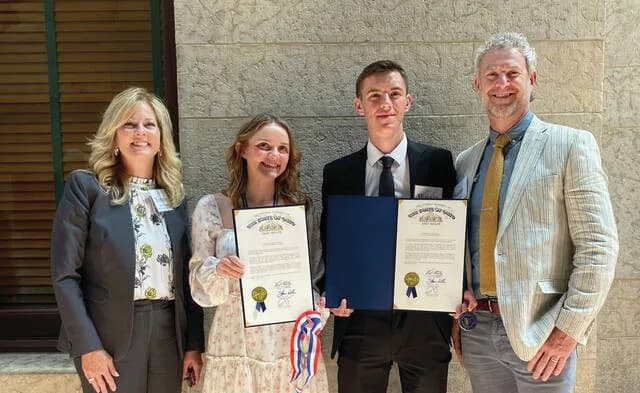
West Union High Forge program links STEAM learning to community projects
Randi McFarland-Franklin’s visit showed West Union High’s Forge is already turning STEAM lessons into county-useful skills, not just school projects.
From school project to workforce pipeline
Randi McFarland-Franklin’s visit to West Union High School put a sharper spotlight on a question that matters well beyond the classroom: is Adams County building the kind of talent local employers can actually use? At The Forge, the answer starts with hands-on STEAM work that turns student ideas into products with real value for the school and the community.
That is why the visit mattered. McFarland-Franklin, the business coordinator for the Adams County Chamber of Commerce, saw students at work in a space that is designed to connect learning with practical outcomes. The Chamber’s mission, which centers on business success, sustainable development, economic growth, and advocacy, makes that connection especially important. In a county where keeping young talent close to home is part of long-term stability, The Forge is beginning to look less like an elective and more like a workforce-development step.
What students are making at The Forge
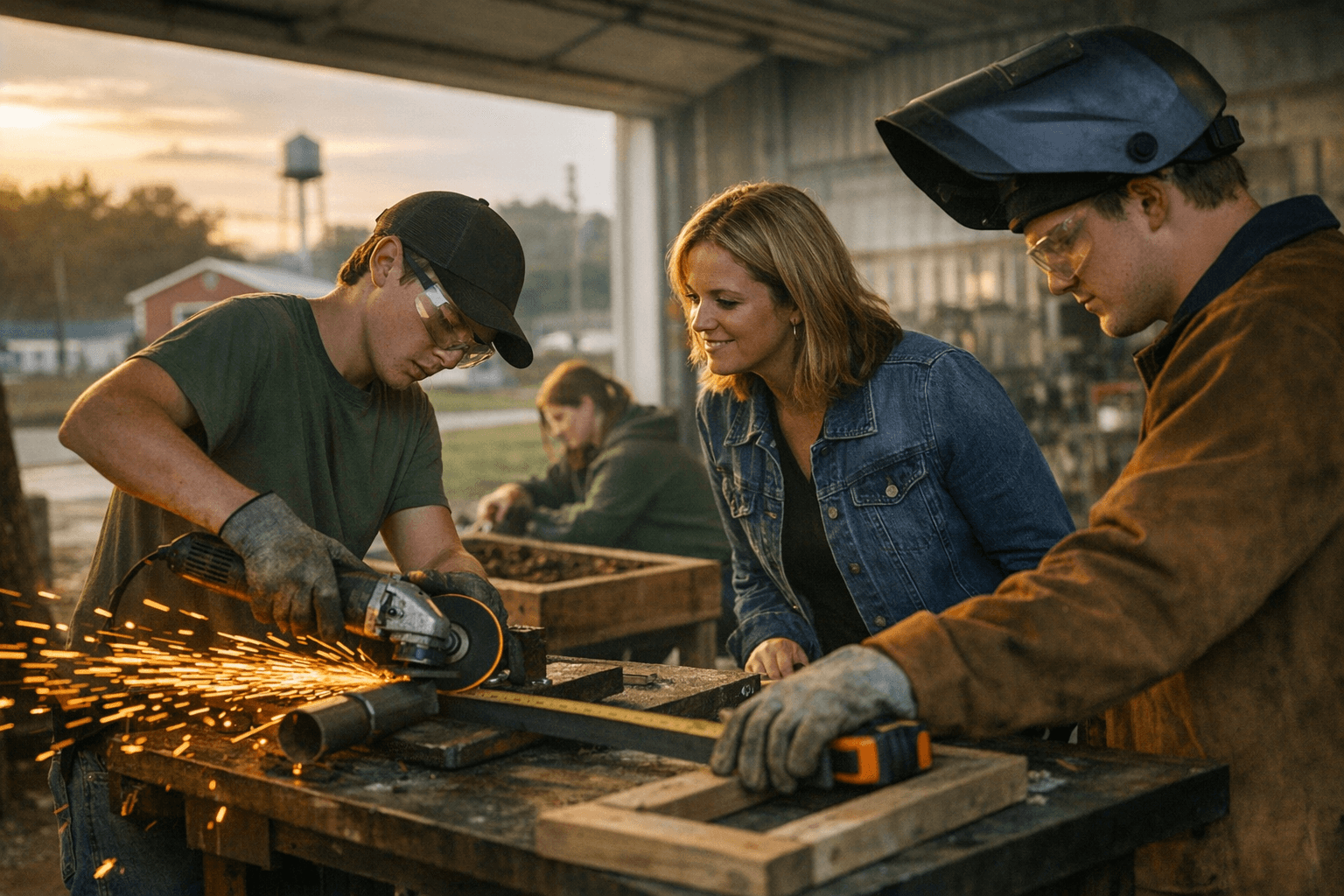
Under instructor Aaron McCann, students are not only learning STEAM concepts, they are using them. The projects highlighted during the visit show the range of that work: t-shirts for Drug-Free Schools, 3-D printed items for 4-H, and a working prop for the school’s upcoming theater production. Each one points to a different kind of skill, from design and fabrication to problem-solving and follow-through.
That mix matters because it mirrors the way real jobs work. A student who can plan a project, use equipment carefully, work with a team, and deliver something that serves an actual purpose is building habits that travel well into the labor market. In a small county, that kind of experience can help bridge the gap between school and the first job, especially when local businesses are looking for dependable workers who can learn by doing.
The beauty of the program is that the products are not abstract. They are visible, useful, and immediate. T-shirts can support prevention efforts. 3-D printed items can strengthen youth programming. A theater prop can help a production come to life. That kind of work gives students a reason to care about precision, because their projects are not disappearing into a notebook or a test score.
Why the Chamber is paying attention
The visit was coordinated by Chamber board members Mat Reno and Amy Jo Queen, along with Chamber member Lisa Scott, who invited the Chamber to see the program in action. That kind of involvement signals that business leaders are not just observing education from a distance. They are looking for places where schools are helping build a future workforce.
McFarland-Franklin said she left inspired by the students’ creativity and the innovative learning taking place at West Union High School. That reaction matters because it shows the Chamber sees value in programs that produce local talent. For employers, a makerspace like The Forge can become an early glimpse of the next generation of workers, students who may one day need jobs, internships, apprenticeships, or mentorships right here in Adams County.
The bigger story is not simply that a chamber leader visited a school. It is that business and education are starting to overlap in a more deliberate way. When a school program produces work that serves civic groups, extracurricular needs, and school functions, it becomes easier to see how student learning can feed community needs at the same time.
How The Forge fits West Union High’s STEAM push
The Forge did not appear out of nowhere. West Union High School announced on March 13, 2025 that STEAM classes were coming to the high school for the 2025-2026 school year, and later described The FORGE as a new makerspace that staff and administrators had worked on over the summer. That timeline matters because it shows the program was intentionally built, not added as an afterthought.
The school’s STEAM offerings also include a course called Fixer Upper, which reinforces the district’s move toward practical, hands-on learning. West Union High School, at 97 Dragon Lair Drive in West Union, is clearly leaning into applied education rather than relying only on traditional classroom instruction. The Adams County Ohio Valley School District has said it is preparing scholars for the 21st century, and The Forge gives that goal a concrete form.
That matters for students from all backgrounds. Project-based learning can open doors for kids who thrive when they can build, design, test, and revise instead of simply memorize. It can also make school feel more relevant for students who want to see how classwork connects to real life. In a county where opportunity is often tied to whether young people can find reasons to stay, that relevance becomes a form of equity.
Why 4-H is a natural fit
The 4-H connection is especially telling. National 4-H Council and the USDA National Institute of Food and Agriculture describe 4-H as a hands-on youth development program built around learning by doing, adult mentors, and career readiness. That makes the students’ 3-D printed work for 4-H more than a classroom exercise. It places The Forge inside a broader youth-development tradition that values practical skill, mentorship, and public purpose.
For Adams County, that overlap is important. A student who learns to make something useful for 4-H is also learning how to meet a need, work to a standard, and contribute to a group effort. Those are the same habits that can help a young person succeed in a job, in training, or in further education after high school.
What this means for Adams County
The real test of The Forge will be whether it helps create pathways that extend beyond the school building. If students can keep building the kinds of skills that local employers need, the program could become part of a stronger county talent pipeline, one that helps graduates stay in the region and work in Adams County after graduation.
For now, the signs are promising. The Chamber showed up. The school showed off student work that serves real needs. And The Forge is proving that STEAM education can be more than a buzzword when it is tied to community projects, civic groups, and a clear sense of local purpose. In West Union, that makes the makerspace look like an investment in the county’s future, not just a classroom upgrade.
This article was produced by Prism’s automated news system from verified source data, official records, and press releases, then run through automated quality and moderation checks before publishing. The system is built and supervised by the people who set the standards it runs under. Read our full AI policy.
Did this article answer your question?