500 Students Gather at UNCG for Spanish Diplomacy Simulation on Biodiversity
Middle schoolers from Southern, Turrentine, and Woodlawn debated biodiversity entirely in Spanish at UNCG, joining nearly 500 students from 28 NC schools.
%3Amax_bytes(150000)%3Astrip_icc()%2Felliott-university-center-uncg-56a188103df78cf7726bc9ee.jpg&w=1920&q=75)
Students from Southern Middle School, Turrentine Middle School, and Woodlawn Middle School traveled to UNC Greensboro on March 5 to serve as international ambassadors at Conexiones para la Acción Diplomática, a Spanish-language global diplomacy simulation that drew nearly 500 students from 28 public schools across North Carolina.
The event, now in its fourth year and hosted by Participate Learning, centered on animal wellbeing and protecting biodiversity. Students represented countries from around the world, debated global challenges, and proposed solutions to those issues without ever switching out of Spanish. Some arrived dressed for the role: a few wore suits and ties, or what one teacher affectionately called their "church clothes," while others sported custom polo shirts made specifically for the occasion. But as Participate Learning's own account of the day noted, "even dressed for diplomacy, they were unmistakably middle schoolers: curious, a little chaotic, full of questions, and eager to explore everything around them."
The day began with a campus tour conducted entirely in Spanish, led by UNCG students. Participants then moved through EUC's Cone Ballroom, collecting stamps on "CAD passports" at activity stations spread across the venue. For some of the middle schoolers, it was their first time setting foot on a college campus.
Approximately 50 students from the UNCG School of Education volunteered at the event. Among them were 14 students from the class of Marisa González, a Spanish professor at UNCG, who helped lead the Spanish-language campus tours. González told Enlace Latino NC that the program encourages bilingualism in the state by creating opportunities for both middle school and college students to practice Spanish together.
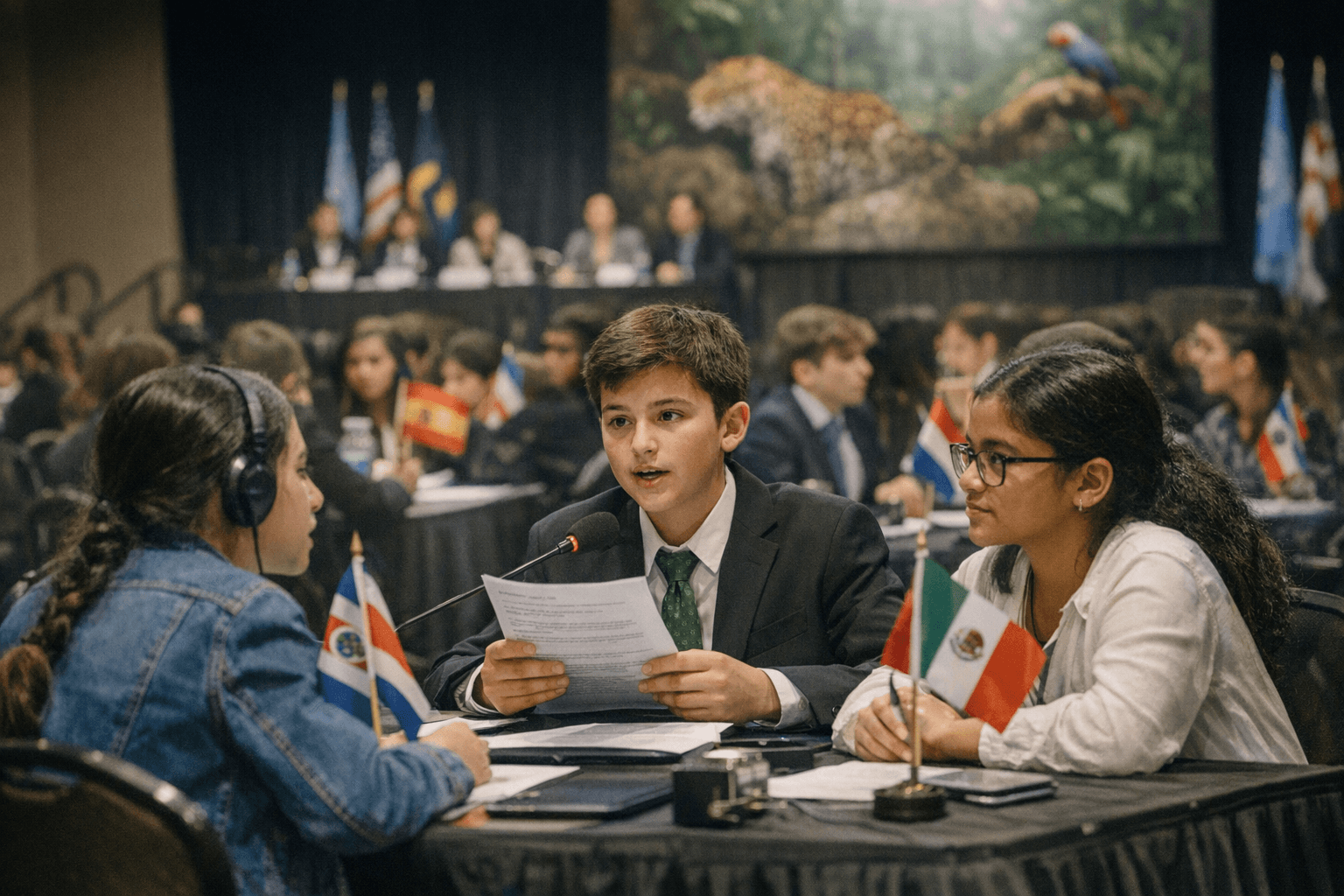
Jason Strauss, senior manager at Participate Learning, described the program's purpose plainly: "The goal is to improve language proficiency with topics that affect all of us, global issues, and for students to complete projects in their schools."
The scale of participation underscores a broader linguistic reality in North Carolina. Only about 12 percent of the state's population speaks two or more languages, according to Participate Learning, yet approximately 27 percent of the middle school students at events like CAD come from Spanish-speaking households, with the majority enrolled in Spanish immersion programs. Most of the 28 participating schools serve rural communities across the state.
What began as an idea attributed to an educator identified only as Rueda has grown, according to Enlace Latino NC, into one of the largest bilingual immersion programs in North Carolina, connecting teachers and students statewide each year.
This article was produced by Prism’s automated news system from verified source data, official records, and press releases, then run through automated quality and moderation checks before publishing. The system is built and supervised by the people who set the standards it runs under. Read our full AI policy.
Did this article answer your question?


