900-home rural Alamance development raises infrastructure concerns
More than 900 homes are proposed in rural southeastern Alamance County, where school lines are being redrawn and planners are weighing growth against strained services.
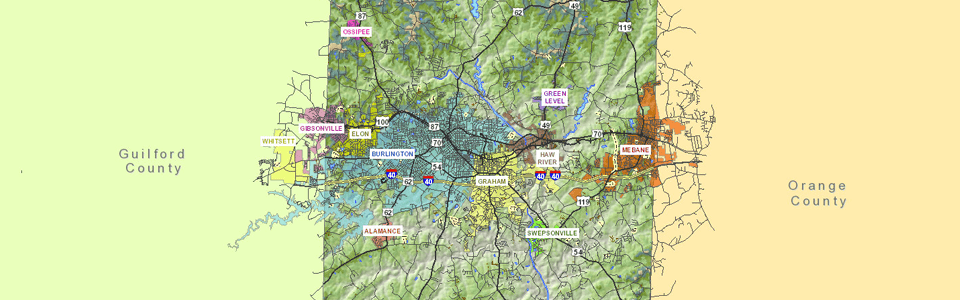
More than 900 homes in two separate projects could push new growth into rural southeastern Alamance County, a corner of the county where the nearest pressure points are already easy to name: NC 119, Gerringer Mill Road, Swepsonville and the school lines that feed Alamance-Burlington School System. The central question is not abstract. It is whether roads, classrooms, water and sewer service, and county-backed public services can absorb that many new households without making an already fast-changing area feel even tighter.
The county’s planning system is built to handle that kind of question, but it is also built around unincorporated land that still has a rural character. The Alamance County Planning Department oversees land development, code enforcement, historic property issues and community development activities in those unincorporated areas. The Alamance County Planning Board, which meets the second Thursday of each month at 7 p.m. in Graham, reviews new ordinances, amendments, subdivision waivers and other long-range land-use matters. On August 18, 2025, planning director Matthew Hoagland presented a staff draft of a countywide land-use map and rural-preservation ordinance to commissioners.
The timing matters because the housing market is still short on supply. One local housing report projected a deficit of 8,206 for-sale homes in Alamance County between 2024 and 2029, along with a shortage of 3,456 rental homes between 2024 and 2029. Another report put the county at 5.27 months’ supply of for-sale inventory in June 2025. VennTerra founder and CEO Shawn Cummings, who has been tied to projects in and around Alamance County, has said he is targeting unincorporated parts of Alamance and nearby counties for development and has described that work as a response to limited supply and the need for more attainable housing.
Even so, the public-side costs of growth are not small. Alamance County’s adopted capital plans say the county is responsible for capital facilities and equipment for county government, the criminal justice system, Alamance-Burlington schools and Alamance Community College. The school system has already been drawing new attendance maps for the 2026-27 school year to address overcrowding tied to county growth, a sign that classroom capacity is already under strain before 900-plus more homes enter the picture.
Alamance County has handled large subdivisions before, including a 285-home project in Swepsonville, a 125-home project off NC 119, a 115-home project along Gerringer Mill Road and the 240-home Bedford Hills subdivision in northeastern Alamance County. This proposal would eclipse each of those examples, and in a county still balancing growth with rural-preservation plans, the size alone ensures the debate will reach far beyond the property lines.
This article was produced by Prism’s automated news system from verified source data, official records, and press releases, then run through automated quality and moderation checks before publishing. The system is built and supervised by the people who set the standards it runs under. Read our full AI policy.
Did this article answer your question?