ABSS board approves $34.8 million in service contracts for next year
Custodial work took the biggest share of ABSS’s new service package, and the district paired it with software, athletic training and trash contracts for 38 schools.
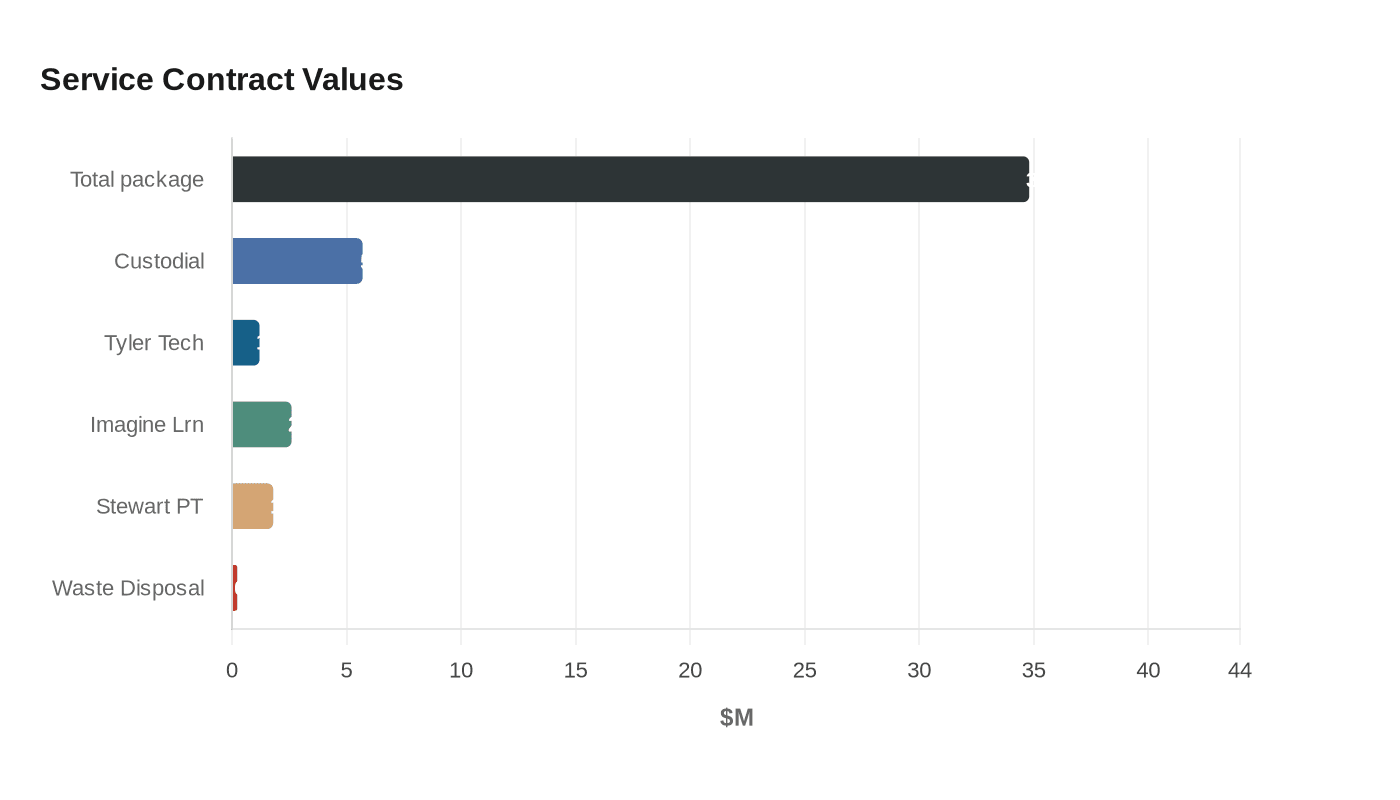
Custodial work took the biggest slice of Alamance-Burlington schools’ new service package, a $5.7 million contract with Melgar Facility Maintenance that helped push next year’s outside-service spending to about $34.8 million. The board approved the full package 7-0 on Monday night, April 30, on its consent agenda, a one-vote block reserved for items considered routine enough to pass without debate.
The money is concentrated in a handful of recurring services that shape daily life across the district. A three-year, county-funded $1.8 million agreement with Stewart Physical Therapy will place athletic trainers at ABSS’s seven high schools. A one-year, $229,365 waste-disposal contract went to Republic Services, and a roughly $1.2 million deal with Tyler Technologies will modernize the district’s business and accounting systems, with ABSS paying about $500,000 and the North Carolina Department of Public Instruction covering $670,466. The district also approved a six-year, $2.6 million contract with Imagine Learning for elementary English Language Arts software and digital instructional tools, but that amount was not included in the $34.8 million total.
Taken together, the contracts buy functions most families notice only when they fail: cleaner schools, working financial systems, regular trash pickup, and sideline medical coverage for student-athletes. For parents in Burlington, Graham and Mebane, the payoff will not come in a ribbon-cutting. It will show up in whether classrooms stay open and clean, whether business office transactions move more quickly, and whether a trainer is present when an athlete gets hurt at a game or practice.
The spending also lands against a backdrop of pressure. ABSS says it is the 15th-largest public school district in North Carolina, serving nearly 23,000 students in 38 schools. Garrett Elementary, Southern Middle School and Williams High School are already over capacity, and district planners have said elementary enrollment is expected to exceed elementary capacity by 2030. In that context, the service contracts are more than housekeeping. They are part of the infrastructure holding together a system that is growing tighter by the year.
The unanimous vote also fits a recent pattern of 7-0 approvals on major operational spending. The consent agenda listed 11 items, including the Tyler Technologies software, the K-5 ELA curriculum contract, the athletic trainer contract and the Republic Services agreement. That makes the real question not whether the board approved the contracts, but whether the district can show measurable gains from spending that now runs into the tens of millions just to keep the system running.
This article was produced by Prism’s automated news system from verified source data, official records, and press releases, then run through automated quality and moderation checks before publishing. The system is built and supervised by the people who set the standards it runs under. Read our full AI policy.
Did this article answer your question?


