Alamance Battleground lets visitors explore a pivotal 1771 clash
Alamance Battleground in Burlington lets visitors stand where the 1771 Regulator clash reshaped North Carolina. Free admission and set tours make it an easy half-day stop.

In Burlington, Alamance Battleground turns a local outing into a walk across one of North Carolina’s most important colonial flashpoints. The 44-acre state historic site preserves the ground where armed backcountry farmers known as the Regulators fought Governor William Tryon’s militia on May 16, 1771, and it does so in a way that still feels close to the county’s own story rather than a distant lesson.
Why this Burlington site belongs at the top of an Alamance County history list
The battle grew out of grievances that ordinary people in the Piedmont knew well: expensive land, embezzled tax money, dishonest sheriffs, illegal fees, and provincial officials who seemed to ignore peaceful petitions for reform. NC Historic Sites frames the conflict around those concrete pressures, which makes the site especially effective for readers trying to understand how local resentment hardened into open resistance.
That is what gives Alamance Battleground its local identity. It is not just a marker for a fight that happened here, but a landscape that explains why the region’s colonial communities broke with authority so sharply. For newcomers, teachers, and families looking for an entry point into county history, it is the place where the political tensions of the backcountry become visible ground.
What visitors can see on the 44-acre grounds
The site’s strength is that it layers the battlefield with other pieces of interpretation. Visitors can walk the battlefield itself, see battlefield monuments, and step inside the 18th-century Allen House, a log dwelling that NC Historic Sites describes as characteristic of Piedmont farm life. That combination lets a visit move from military conflict to everyday settlement patterns in just a few steps.
On the grounds and in guided interpretation, visitors can also focus on specific landmarks tied to the site’s story, including Pugh’s Rock, the Battle of Alamance monument, and the Colonial Column. Those features help connect the larger battle narrative to the actual landscape, which matters for readers who want to see how Alamance County’s history was shaped on a particular piece of land rather than in a textbook abstraction.
A short visit can be organized around a few things that reward close attention:
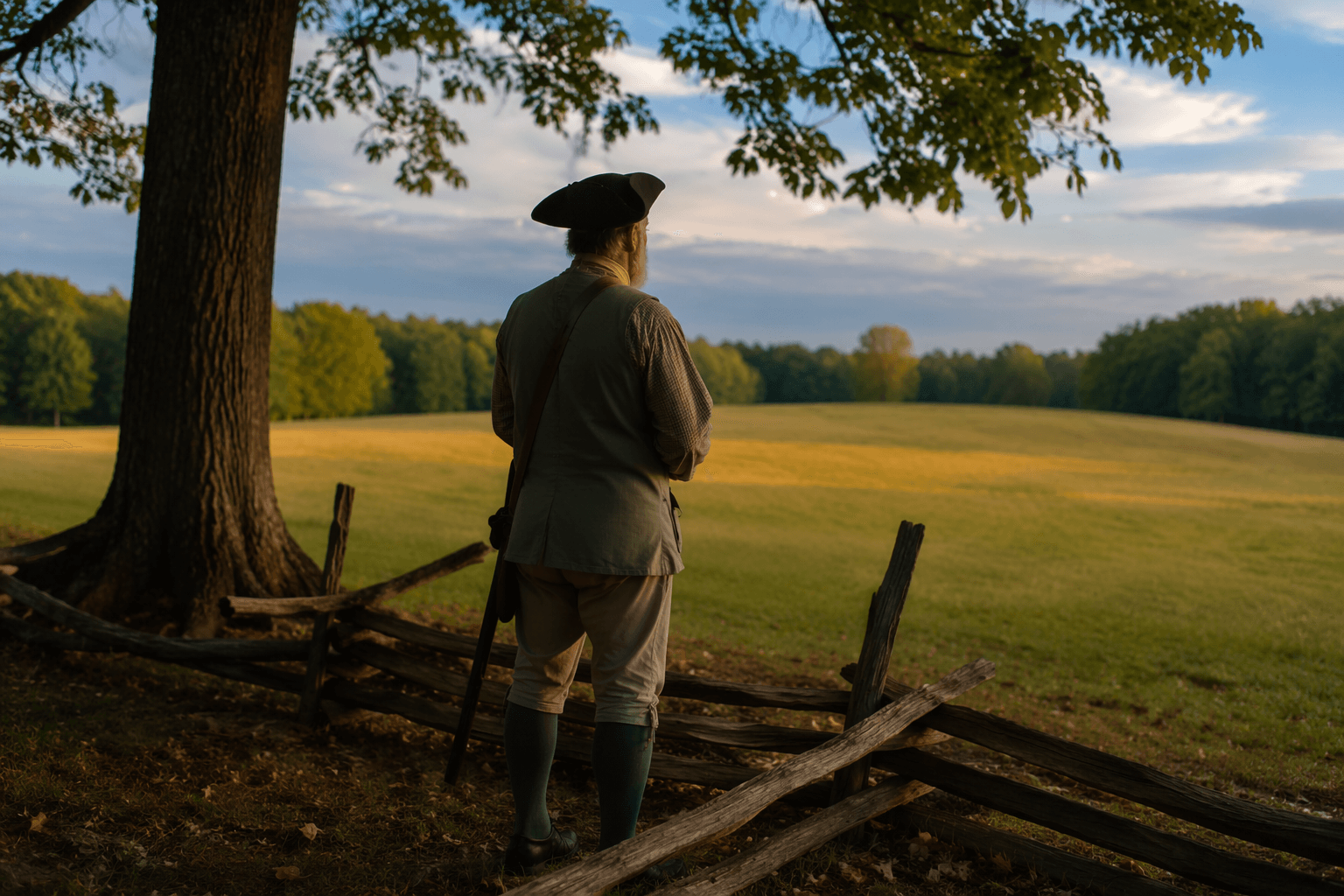
- the battlefield, where the 1771 clash unfolded
- the Allen House, which reflects Piedmont farm life after the battle era
- the monuments and markers that explain the Regulator movement on-site
- the guided tour stops that place the battle in context
The Allen House deserves special attention because it gives the site a second historical layer. North Carolina Digital Collections says the house was built around 1782 near Snow Camp and moved to the property in 1967, so it is not a battle-day structure. Instead, it serves as a tangible example of the postwar Piedmont world that grew out of the same regional environment.
The Regulator story behind the fight
The Battle of Alamance was the final battle of the Regulator Movement. North Carolina Digital Collections says the confrontation broke out after Tryon called up the militia, ordered General Hugh Waddell to march toward the Regulators, and the Regulators refused to disband. After the defeat, Tryon offered pardons to people who would swear allegiance, which shows how decisively the political balance shifted after the fighting.
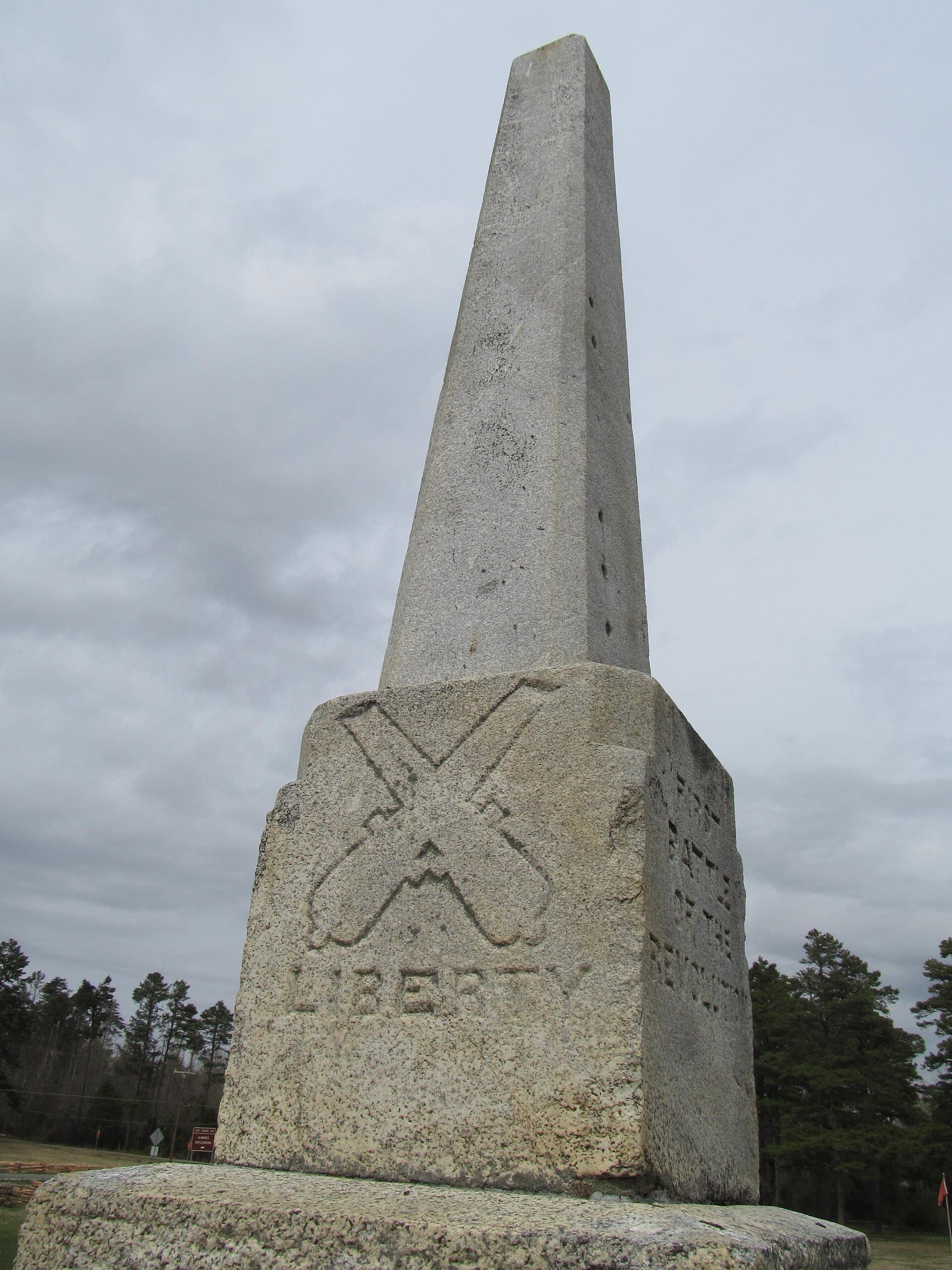
The battle itself lasted about two hours, according to the American Battlefield Trust, and ended in a British victory with heavy Regulator casualties. That same source notes that Alamance Battleground is sometimes described as the opening salvo of the American Revolution, but says that label is incorrect. The better way to understand the site is as a decisive local uprising that exposed the tensions driving North Carolina politics before independence.
The setting also helps explain why resentment deepened. North Carolina Digital Collections points to corruption in the colony and says even Tryon’s Palace in New Bern, funded at public expense, intensified anger. In that sense, Alamance Battleground is not only about a single fight in 1771, but about how public power, taxation, and local trust broke down across the province.
How to plan a visit
The practical details make this an easy stop to fold into a county drive. Alamance Battleground is located at 5803 N.C. 62 S. in Burlington, and NC Historic Sites lists regular hours as Tuesday through Saturday, 9 a.m. to 5 p.m. Guided tours are offered at 11 a.m., 1 p.m., and 3 p.m., which makes it straightforward to plan around school groups, family trips, or a half-day stop before or after time in downtown Burlington or elsewhere in Alamance County.
Admission is free, and some special events carry a fee. That makes the site one of the most accessible history stops in the area, especially for readers who want a low-cost outing with clear educational value. Alamance Battleground Friends, Inc., the nonprofit associated with the site, says its mission is to preserve and promote the battleground’s history and provide educational opportunities about its role in the American Revolution.
For Alamance County readers, the value of the site is immediate: it is a place where the county’s colonial roots, the Regulator uprising, and the beginnings of state political change all sit on the same ground. That is why Alamance Battleground remains the first history stop worth visiting when you want to understand how this part of North Carolina entered the Revolution on its own local terms.
This article was produced by Prism’s automated news system from verified source data, official records, and press releases, then run through automated quality and moderation checks before publishing. The system is built and supervised by the people who set the standards it runs under. Read our full AI policy.
Know something we missed? Have a correction or additional information?
Submit a Tip