Alamance County museum spotlights Holt family’s textile roots
The Holt family home in Burlington turns Alamance County’s textile origins into something you can walk through, from the first mills to the wealth they built.
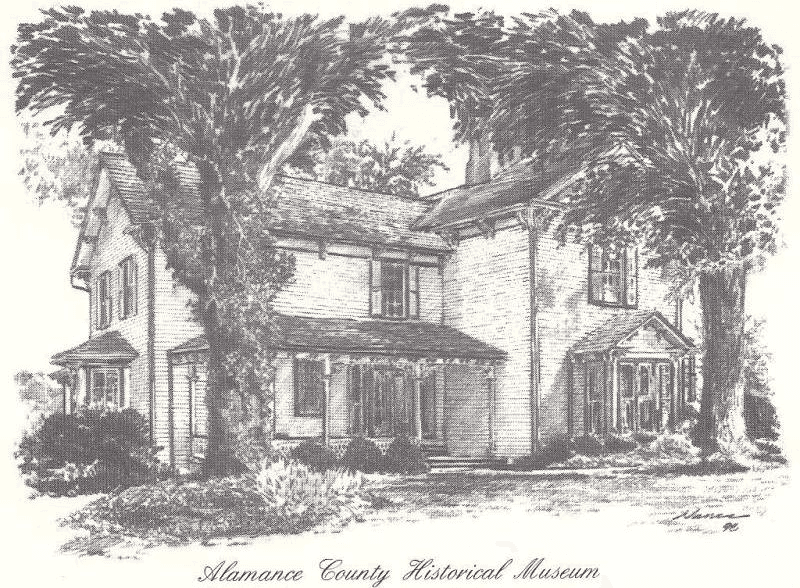
The house at 4777 NC Highway 62 South does more than preserve a family name. At the Alamance County Historical Museum, the former Holt home makes Burlington’s textile boom tangible, linking one address beside E.M. Holt Elementary School to the mills, labor, and wealth that shaped Alamance County.
A house that sits at the center of the county’s industrial story
The museum’s own history page identifies the property as the birthplace of Edwin Michael Holt, the pioneer tied to the early southern textile industry. The building is also listed in the National Register of Historic Places, which places it within the federal preservation system created by the National Historic Preservation Act of 1966 to recognize and protect places of national, state, and local importance.
That designation matters because this is not simply an old house with family furnishings. It is a surviving piece of the county’s industrial beginning, and the story attached to it reaches far beyond Burlington. The Holt family’s influence spread through mills, patents, mill villages, and the accumulation of land and capital that helped define Alamance County’s development.
What the Holt family story adds to a museum visit
The house began in 1790 as a two-room dog-trot structure, expanded in 1800, and again in 1875 with Italianate Revival details. That layered architecture gives visitors a visible timeline of the family’s rise, from a modest rural dwelling to a more elaborate home reflecting later prosperity.

The deeper family story begins well before Edwin Michael Holt’s birth on February 14, 1807. North Carolina State University’s textiles history site traces the family’s roots from Germany to Virginia and then to the Haw River area, while NCpedia notes that Holt was one of six children born to Rachel Rainey and Michael Holt III in Orange County, now Alamance County. By the time Holt died on May 14, 1884, NCpedia says most of the mills in Alamance County belonged to members of his family.
That arc helps explain why the museum is useful as a guide to local history, not just a stop for architecture. It gives residents a way to see how one family’s migration, landholding, and industrial investment became part of the county’s structure, and how the benefits of textile growth were concentrated in a few hands.
The first mill and the birth of Alamance Plaid
The most important industrial site in this story began in 1837, when Edwin M. Holt built his first cotton mill in Alamance County on the banks of Alamance Creek. A North Carolina Department of Natural and Cultural Resources marker marks that moment and says the early mill effort produced the first colored fabrics south of the Potomac River, including the design known as “Alamance Plaid.”
NCpedia adds that the original Alamance Cotton Mill was founded by Edwin M. Holt and William A. Carrigan in 1837 near Burlington and became famous as the first southern mill to manufacture dyed, woven cotton cloth. North Carolina State University’s textiles history site says the Holt family would go on to found, buy, or partner in more than 20 textile mills from 1837 to 1900.

Those facts give the museum its power. The house is not only a family landmark; it is a physical entry point into the county’s first major industrial system. Visitors who come for the home can leave with a clearer understanding of how cotton processing, dyeing, and mill ownership changed Burlington and the surrounding countryside.
What you can see inside the museum
The museum’s collections page says its exhibits include Alamance County pottery, quilts, military artifacts, and changing displays upstairs. That mix matters because it broadens the visit beyond the Holt family alone. The quilts and pottery connect the museum to craft traditions in the county, while the military artifacts add another layer of local memory and service.
The changing upstairs displays also make return visits worthwhile. A visitor who already knows the Holt name can come back for a rotating exhibit and find another part of Alamance County’s story brought into focus. That makes the museum especially valuable for families, teachers, and anyone trying to connect the county’s industrial past with the material culture that survived around it.
The site is also supported in part by a grant from the North Carolina Humanities Council, a detail that underscores how preservation and interpretation depend on public investment as much as on private memory. The museum’s continued work keeps the story in circulation for people who may know Burlington’s textile heritage in general but have never stood inside the home where one of its central figures was born.

Why this story still matters in Alamance County
The Holt story is useful now because it shows how industry shaped the county’s geography, social hierarchy, and inherited wealth. The mills did not just produce cloth. They helped define which families controlled capital, which communities grew around production, and how the county came to be known beyond its borders.
That is why the museum belongs in a modern guide to Alamance County. It gives context for the streets, schools, and mill-era places that still shape daily life in Burlington and beyond. It also offers a more honest view of prosperity, because the same industrial expansion that made the Holt name prominent depended on labor systems, land concentration, and the transformation of local agriculture into manufacturing.
At the museum, that history is not abstract. It is attached to a house, a birthplace, a mill marker on Alamance Creek, and a documented family line that stretches from Germany to Virginia to the Haw River area. For anyone trying to understand how Alamance County became what it is, the Holt home remains one of the clearest places to start.
This article was produced by Prism’s automated news system from verified source data, official records, and press releases, then run through automated quality and moderation checks before publishing. The system is built and supervised by the people who set the standards it runs under. Read our full AI policy.
Did this article answer your question?