Alamance County Offers History, Rivers, and Libraries for Residents and Visitors
Alamance County packs Revolutionary-era battlegrounds, paddleable rivers, and free library resources into one compact North Carolina community worth exploring.

On May 16, 1771, a ragged force of frontier farmers known as the Regulators faced colonial militia at a field in what is now Alamance County, and the skirmish that followed became one of the earliest organized armed rebellions against British-era governance in American history. That battlefield still exists. You can walk it. That single fact sets the tone for everything Alamance County offers: history that isn't behind glass, rivers that aren't roped off, and libraries that treat civic learning as a public right rather than a privilege.
Alamance County sits in the Piedmont region of North Carolina, compact enough to cross in under an hour but layered with enough destinations to fill a long weekend. Three categories of experience anchor what the county does best: walking through documented history, paddling its river corridors, and tapping into the community library resources that serve both longtime residents and newcomers still figuring out where they've landed.
The Battle of Alamance and Revolutionary-Era History
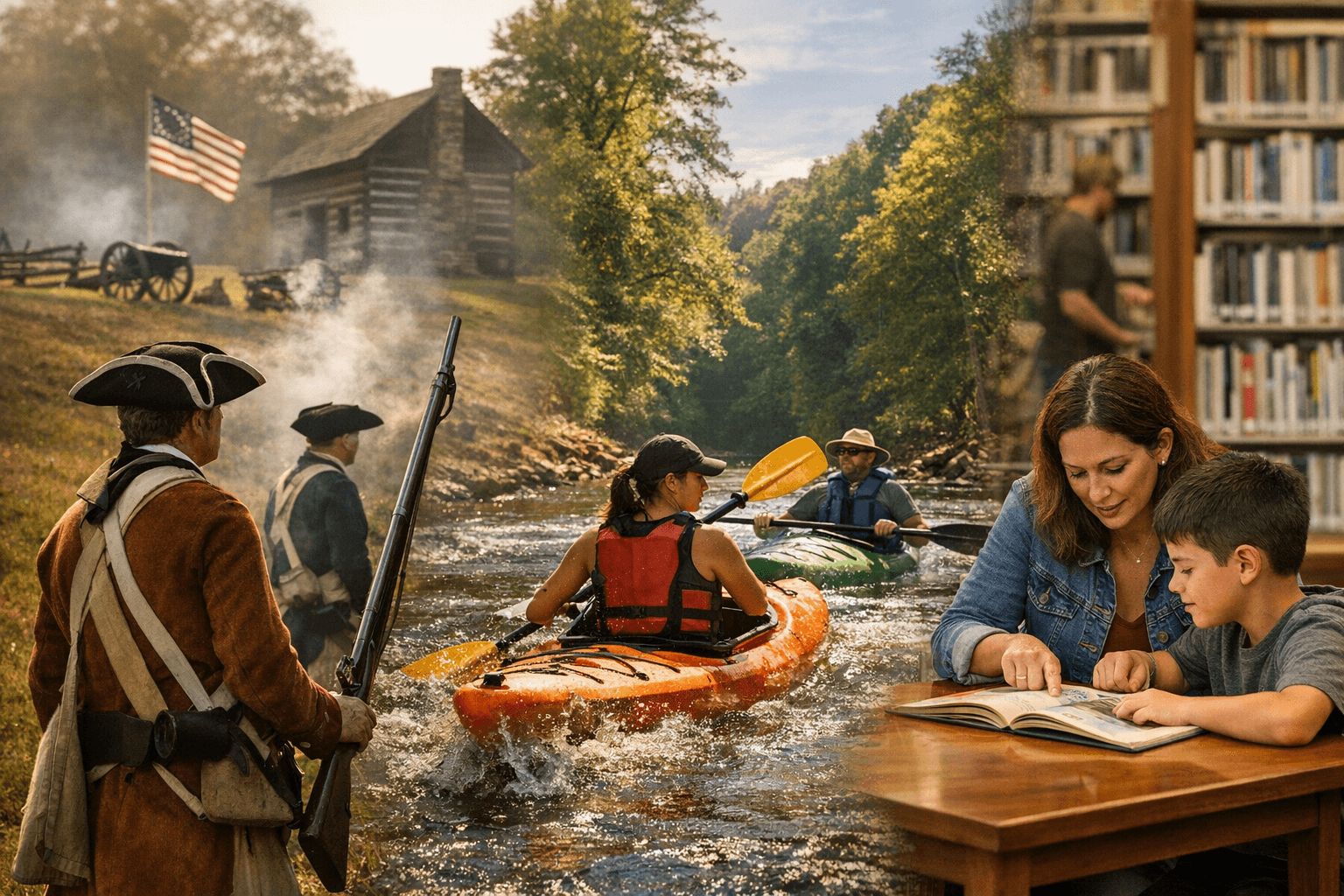
The Battle of Alamance, fought on May 16, 1771, predates the Declaration of Independence by five years, which makes Alamance County's claim to Revolutionary-era history more precise than most counties dare to make. The Regulators, a movement of western North Carolina colonists protesting corrupt colonial taxation and court practices, were defeated that day by Governor William Tryon's militia. Six Regulators were later executed. The site where this happened is preserved and interpreted, giving visitors a physical place to stand while absorbing a chapter of American history that most school curricula skip.
Walking the battlefield grounds connects the abstract facts of 18th-century colonial grievance to a specific landscape: tree lines, open fields, and interpretive markers that explain what happened and why it mattered. For anyone who lives in Alamance County and has driven past this site without stopping, it rewards the visit. The rebellion the Regulators launched didn't succeed militarily, but historians note that many Regulators later joined or influenced the Patriot cause during the Revolution proper, threading this obscure 1771 confrontation directly into the national story.
River Corridors and Outdoor Recreation
Alamance County is crossed by river systems that make paddling one of the most accessible forms of outdoor recreation in the area. The county's river corridors offer conditions suited to a range of skill levels, from calm flatwater stretches appropriate for beginners and families to moving water that rewards more experienced paddlers. These aren't destination rivers that require long drives and shuttle logistics; they run through and around communities that Alamance County residents already know.
Walking trails along river corridors extend the outdoor offering beyond paddling. The combination of waterway access and trail infrastructure means a single outing can shift between on-water and on-foot activity depending on conditions, season, or preference. Spring and fall bring the best paddling weather in the Piedmont, when water levels are reliable and temperatures cooperate, though the river corridors draw users year-round from hikers and cyclists to birdwatchers working the riparian habitats that form along any healthy waterway.
For those new to paddling in the county, connecting with local outfitters or checking conditions through county parks resources before a trip is practical advice. River levels in the Piedmont can shift quickly after rainfall, and knowing what you're entering before you put in is the kind of basic preparation that separates a good day on the water from a frustrating one.
Community Libraries as a Civic Resource
The Alamance County library system functions as one of the county's most underused assets among people who haven't needed it recently. Libraries in the county offer far more than book lending: digital resource access, community programming, genealogical research tools, and public meeting spaces are all part of what a library card unlocks. For anyone researching local history, including the Revolutionary-era sites described above, the library's local collections provide primary and secondary source material that online searches rarely surface.
The library network reaches across the county's communities rather than concentrating resources in a single location, which means access isn't limited to residents who live near the largest branch. That geographic distribution matters in a county where rural communities and smaller towns sit alongside Burlington and other urban centers. Walking into a branch and asking a librarian what's available for a specific research interest or recreational need still works as a strategy, and library staff in systems this size tend to have detailed knowledge of their collections.
For families, the libraries offer programming aimed at children and teens that runs throughout the year, not just in summer. For adults, digital access through library cards can include databases, e-books, and streaming resources that have real monetary value. A library card in Alamance County is a civic resource with a return on investment that most people who have one underestimate.
Planning a Visit or Making the Most of the County
Alamance County's three anchor experiences, history, rivers, and libraries, work well together as a coherent itinerary rather than isolated stops. A morning walk through the Battle of Alamance site pairs naturally with an afternoon on one of the county's river corridors. A library visit before either trip can surface historical context, trail maps, or paddling guides that make the outdoor experience more grounded.
For visitors arriving from outside the county, Burlington serves as the practical base: hotels, restaurants, and highway access are concentrated there, and the city sits within easy reach of the county's historic and natural sites. For residents who have lived here long enough to stop noticing what's around them, the county's offerings reward the same kind of deliberate attention that travelers bring to unfamiliar places.
Alamance County doesn't sell itself loudly, which is part of what keeps its historical sites walkable and its rivers uncrowded. The Battle of Alamance happened 255 years ago this May, and the field where it was fought is still there, still accessible, and still carrying a story that connects this particular county to the broader arc of American political history. That's not a minor thing.
This article was produced by Prism’s automated news system from verified source data, official records, and press releases, then run through automated quality and moderation checks before publishing. The system is built and supervised by the people who set the standards it runs under. Read our full AI policy.
Did this article answer your question?