Alamance County, school board end mediation deadlocked over ABSS funding
A 7.5-hour mediation in Graham ended with Alamance County and ABSS still split over $58.8 million in operating money, leaving staffing and back-to-school planning in limbo.
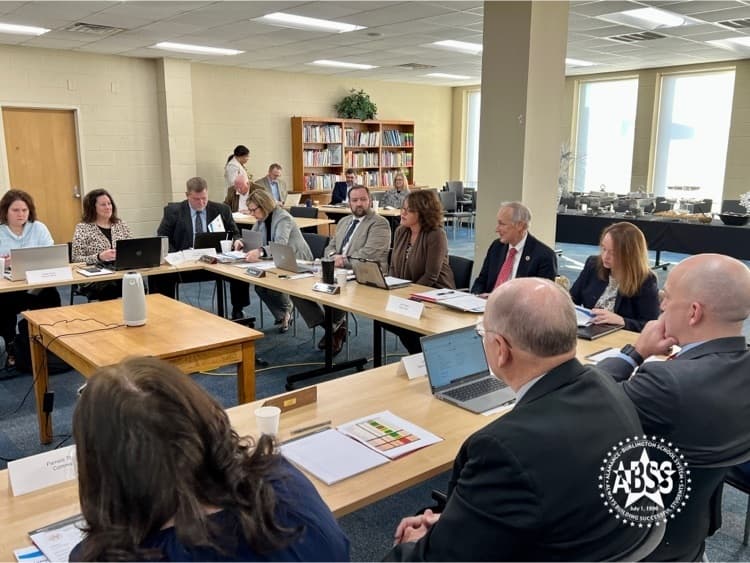
Families waiting to see whether Alamance County schools will have enough money for teachers, bus routes and classroom staffing got no answer Monday, when county leaders and the Alamance-Burlington school board left the first day of mediation still deadlocked over current-expense funding. After 7.5 hours in the Historic Court House courtroom in Graham, the dispute remained centered on the dollars that pay for day-to-day school operations, even though talks on capital spending could still continue.
Former judge Greg McGuire, who was brought in under the state mediation process, said his role was to “facilitate a compromise.” His session came after ABSS invoked North Carolina General Statute 115C-431 less than 24 hours after county commissioners adopted the 2026-27 budget, triggering a statutory window meant to resolve school funding fights before they turn into litigation. The law requires a joint meeting within seven days when a school board believes county appropriations are not enough to support public schools.

The numbers driving the standoff are stark. County commissioners approved the budget 4-1 with no tax increase and set ABSS current-expense funding at $58.8 million. The school system had asked for about $61.9 million to $62.8 million for current operations, depending on the tally, and had also pressed for more money for facilities. The county put $4.8 million toward annual capital outlay and $9.4 million toward capital improvement funding, while ABSS had requested just over $7 million in annual capital outlay and $18.3 million in CIP money. On the broader county funding picture, ABSS sought about $87.3 million to $88.1 million total, while the county appropriated $72.9 million.
The capital split matters because it affects building repairs, equipment and other long-term projects, but the current-expense gap is the piece most likely to hit families first if it does not close quickly. Current-expense money is the funding that keeps schools running from one day to the next, including staffing decisions and other operating costs tied to the start of the school year.
The mediation also unfolded against a tight county budget climate. Alamance County budget materials said the county faced a $13 million deficit just to keep spending level, and a nearly $23 million gap when budget requests were added. The county’s recommended budget called for a 2.25-cent property-tax increase, even as survey data showed 78% of respondents ranked ABSS support as a top priority. County materials also showed education, public safety, quality of life, smart development and accountability as leading strategic concerns.
ABSS used the same statutory tool a year earlier, when the dispute moved faster after the county came back with a larger offer. This year, the first day ended with the operating-dollar fight unresolved, and the next round will determine whether the county and school system can settle the split over classrooms now, or head toward a broader fight over school funding.
This article was produced by Prism’s automated news system from verified source data, official records, and press releases, then run through automated quality and moderation checks before publishing. The system is built and supervised by the people who set the standards it runs under. Read our full AI policy.
Did this article answer your question?


