Alamance County tracks more than 700 historic sites across the county
More than 700 Alamance County sites sit in the local preservation system, where a county commission decides which places can become landmarks or districts.
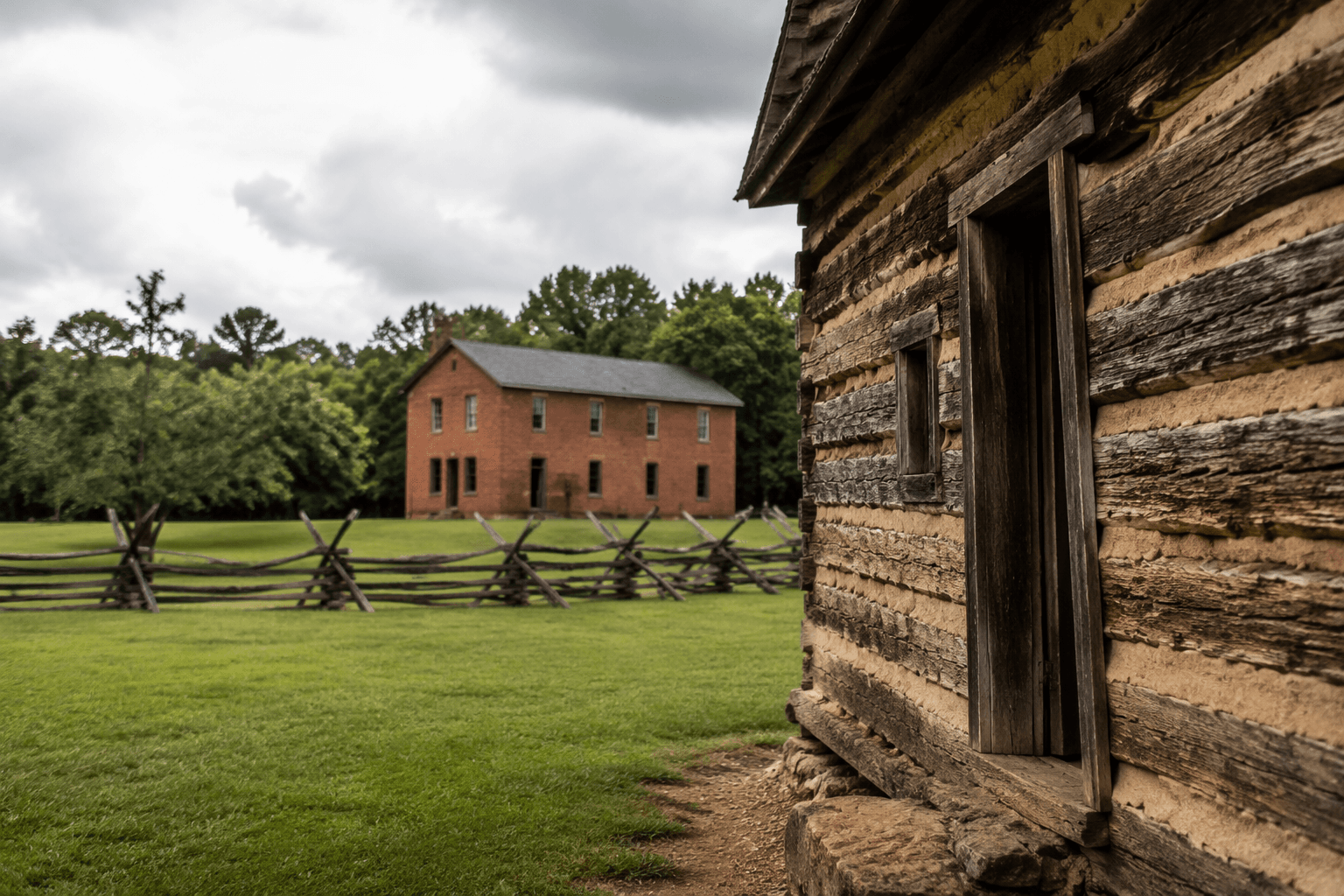
Alamance County’s preservation system reaches far beyond a single house, depot, or roadside marker. The county’s Historic Properties Commission uses a formal public process to recommend landmark and district designations, and the county inventory now lists more than 700 historic sites across 12 of the county’s 13 townships. That puts places in Burlington, Graham, Mebane, Elon, Saxapahaw, and unincorporated communities into a countywide land-use conversation, not just a history file.
How the county decides what gets protected
The Planning Department’s Historic Properties Commission materials describe the county’s preservation role as safeguarding Alamance County’s heritage and culture. One of the commission’s core duties is to recommend properties for historic landmark designation and, in some cases, historic districts, which means local protection starts with a government review process rather than an informal honor system.
The county’s local designation guidelines draw a line between individual sites and larger areas. Local designation can apply to a building, structure, site, or object, or to a cohesive collection of resources that together form a historic district. The same materials call local designation an honor, but they also make clear that the honor is earned through a defined application path and a judgment about significance, not simply because a place is old.
Alamance County’s Historic Marker Program serves a different function. It recognizes historic resources, people, and events significant in architecture, archaeology, county history, and traditional culture. The marker rules also add a practical threshold: the applicant must be the property owner or have written agreement and easement permission for the marker placement.
What the inventory says about the county
The county’s Architectural Inventory, updated in April 2014, is the clearest sign that preservation in Alamance County is broad and ongoing. It says the county’s inventory includes more than 700 sites across twelve townships, building on Alamance County Architectural Heritage, which the Alamance Historic Properties Commission published in 1980 and the Alamance County Printing Department printed. A survey update followed in 2002, and the 2014 update says additional properties were added through local landmark designations and National Register Study List applications.
That history matters because it shows the county’s preservation system has been accumulating over time instead of sitting still. The inventory reaches across older farmsteads, houses, mill-related properties, commercial buildings, and community landmarks that help explain how the county developed. In a county created in 1849, where agriculture and textiles shaped the landscape, that mix of sites tells the story of how land use, work, and settlement changed over generations.
The Alamance County Historical Museum adds another layer to that story. The museum is listed in the National Register of Historic Places, and it was the birthplace of Edwin Michael Holt, a pioneer in the southern textile industry. That connection is a reminder that the county’s built environment is tied to the textile economy that left mills, villages, and related structures scattered across the county.
Where preservation is visible on the ground
Burlington gives the most visible examples of how the county’s preservation framework shows up in everyday places. The city lists the West Davis - West Front - Fountain Place Local Historic District and the Glencoe Mill Village Local Historic District, along with local landmarks that include the Dentzel Menagerie Carousel at City Park and the Southern Railway Depot. Those sites show that preservation in Alamance County is not confined to archives or theory; it is anchored in places people pass on the way to work, school, or downtown errands.
The county’s marker system expands that map even farther. The Historic Marker Database shows 137 historical and war memorial marker entries in Alamance County, and county visitor materials describe markers as a way to connect people with key sites across the county. Alamance Battleground, an official North Carolina state historic site, sits within that larger public memory network and helps place local preservation alongside state history.
What local designation changes, and where the limits start
For property owners, the distinction between an inventory listing, a marker, and a local designation matters. A site can be documented as historically important without becoming a landmark, and the county’s own language makes clear that local designation is the step that formally identifies a property or district as part of Alamance County’s heritage and culture.
That is where the practical stakes begin. A designated landmark or district can shape how a site is discussed when renovation, reuse, or demolition pressure comes up, because the county has already placed it in a protected category through a formal review process. By contrast, the marker program is about public recognition and placement, with owner consent or written easement permission built into the rules.
The county’s system also has boundaries. The inventory can document a site, and the marker program can recognize it, without turning every older building into a landmark or district. That means preservation policy in Alamance County is selective, not universal, and the selection itself is part of local government power.
Why this matters beyond history
Preservation Alamance, a local nonprofit, argues that preservation and adaptive reuse contribute to stronger, safer neighborhoods, economic development, aesthetic beauty, and community pride. That view aligns with the county’s planning materials and the visitor-oriented role of markers, showing that historic designation is tied not only to memory but also to how communities manage change.
Alamance County is also operating within a statewide framework. The UNC School of Government describes local landmark designation as a standard North Carolina preservation tool, and its preservation-commission overview says state law authorizes counties and municipalities to safeguard historic resources. In practice, that means Alamance County’s decisions about landmarks and districts sit at the point where heritage, planning, and future land use meet.
This article was produced by Prism’s automated news system from verified source data, official records, and press releases, then run through automated quality and moderation checks before publishing. The system is built and supervised by the people who set the standards it runs under. Read our full AI policy.
Did this article answer your question?