Alamance County woman turns garage into a small theater stage
A garage experiment in Burlington became Studio 1, a 100-seat black box that is giving Alamance County performers a place to learn, volunteer, and belong.
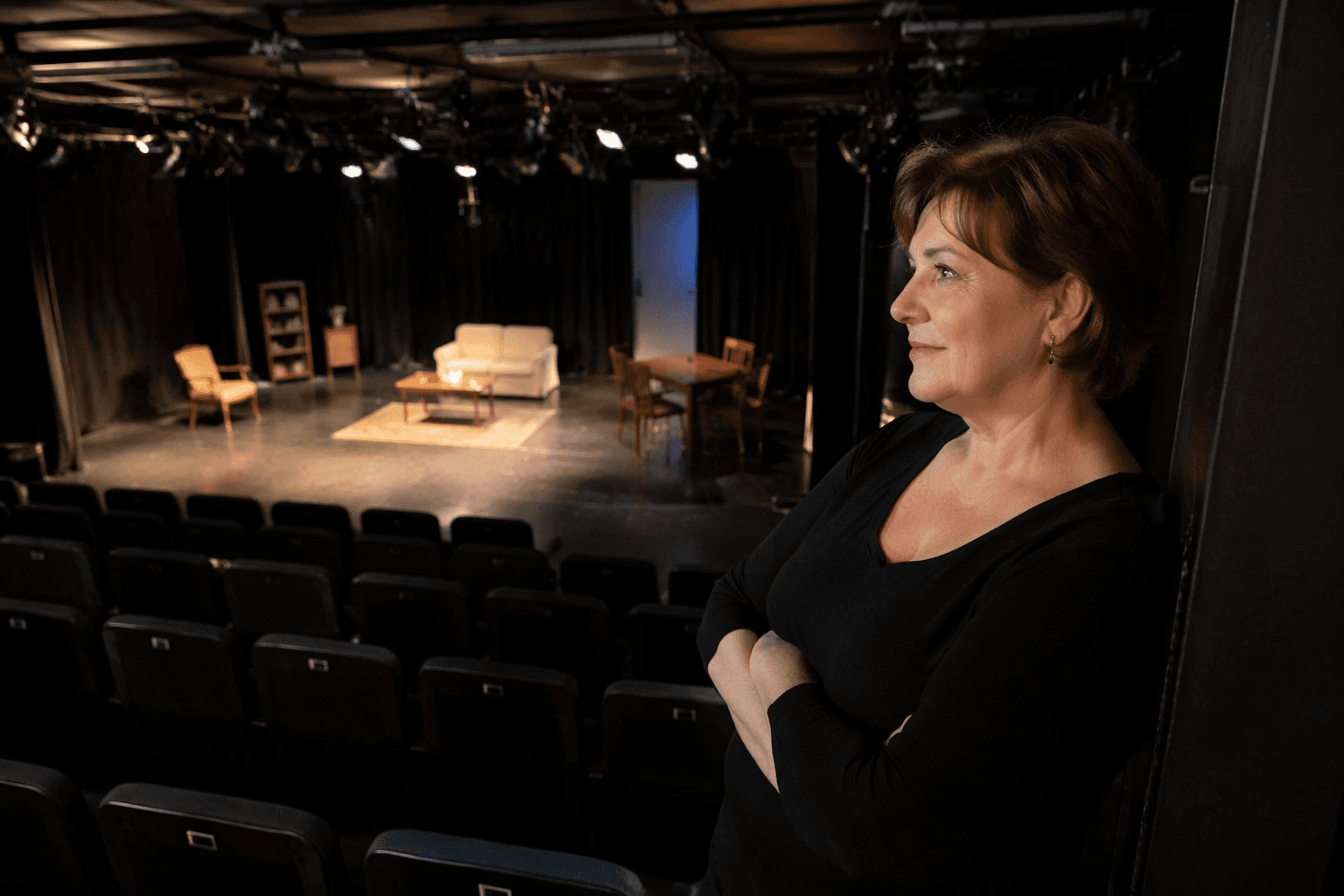
A blanket over a swing set was the first stage Tami Kress ever built for herself, and the habit never left Alamance County. Two decades after moving from Idaho to North Carolina, she has turned that early instinct into Studio 1, a 100-seat black box theatre now operating inside Holly Hill Mall in Burlington. What began as a garage project has grown into a place where children, adults, volunteers, and audiences can find a foothold in local arts.
From garage lessons to a county arts anchor
Kress started Studio 1 in her garage after seeing a gap in performance opportunities for kids in the area. She began with classes, voice lessons, and piano lessons, building a program around the practical need for instruction as much as the desire to perform. That original setup matters because it explains the shape of the organization now: Studio 1 is still rooted in access, not just presentation.
The organization is entering its 15th season, and the move from a home garage to a theater in Holly Hill Mall shows how quickly a community project can become part of the county’s cultural map. Studio 1 now identifies itself as a performing arts center with an intimate 100-seat black box theatre at 309 Huffman Mill Road, Unit 540, in Burlington. The setting keeps the work local and approachable, while still giving productions enough room to feel like real theatre rather than an informal showcase.
Who gets changed by the work
Kress has said the mission of community theatre is to give people a place to belong, express themselves, and create something bigger than themselves. That idea sits at the center of Studio 1’s value in Alamance County, where the work reaches far beyond a single stage. The theater serves performers of all ages and levels, and its programming includes inclusive efforts for people of all abilities, the deaf and hard-of-hearing community, bilingual speakers, and underserved communities.
That reach matters because it changes who gets invited into the process. Studio 1 says it accepts volunteers of all experience levels, which opens the door for residents who may not consider themselves theatre people but still want to help build a production. The organization also offers main stage productions, youth stage opportunities, classes, and camps, creating multiple entry points for people who want to move from audience member to participant.
Impact Alamance reported that Studio 1 produces several shows each year, and that regular production schedule gives the theater more than symbolic value. It becomes a steady place where local performers can rehearse, learn lines, build confidence, and work alongside neighbors in a shared public setting. In a county where arts access often depends on individual initiative, that kind of consistency is its own form of community service.
How the work reaches beyond one building
Kress’s influence does not stop at Studio 1’s Burlington address. She also serves as executive director of Snow Camp Outdoor Theatre, another local arts site in southern Alamance County. Our State reported that the Snow Camp property sits on 13 acres dedicated to local stories and regional history, which places Kress’s work inside a larger effort to preserve community memory through performance.
That broader role helps explain why her work resonates beyond one venue. Snow Camp Outdoor Theatre and Studio 1 together show two very different but connected ways of sustaining the arts in Alamance County: one indoors in a mall, one outdoors on a historic tract of land. Both depend on the same basic idea, that theatre can be a tool for belonging as much as entertainment.
Her collaboration with the Burlington Writers Club made that network even more visible. After a Harwood Institute lab, Kress partnered with club president Cheryl Wilder to bring writers and performers together to create and edit monologues for a Studio 1 production. That kind of partnership matters because it ties together different parts of the local creative community and gives writers a direct path into performance, not just publication.
Why the recognition followed
Kress’s background helps explain why she has been able to build so much so locally. The American Association of Community Theatre says she directed her first original production at age seven, has directed more than 150 productions, and founded Studio 1 in 2011. The same organization says she now leads both Studio 1 and Snow Camp Outdoor Theatre, a combination that reflects a career built around sustained, hands-on leadership rather than a single headline moment.
In June 2026, FOX8 reported that she received the Special Recognition Award from the American Association of Community Theatre for leadership, service, and advocacy. That award lands with unusual force because it recognizes the exact kind of work that is often overlooked: the slow construction of access, the steady mentoring of young performers, and the creation of spaces where more residents can take part in the county’s cultural life.
How the local model works
Studio 1’s trajectory offers a clear picture of how a grassroots arts operation can grow without losing its neighborhood scale.
- Start small, with lessons and early-stage training, as Kress did in her garage.
- Build a consistent pipeline, including classes, camps, youth stage work, and main stage productions.
- Make room for more than one kind of participant, from volunteers to bilingual performers to the deaf and hard-of-hearing community.
- Connect with other local institutions, as Studio 1 did with the Burlington Writers Club and as Kress does through Snow Camp Outdoor Theatre.
That structure is why the story lands as more than a feel-good profile. It shows one Alamance County resident turning a childhood impulse into a working public space, then using that space to bring other people in. The garage is gone, but the purpose that began there still shapes the stage at Holly Hill Mall and the wider arts network around it.
This article was produced by Prism’s automated news system from verified source data, official records, and press releases, then run through automated quality and moderation checks before publishing. The system is built and supervised by the people who set the standards it runs under. Read our full AI policy.
Did this article answer your question?