Alamance News publisher appeals Graham park approval, citing notice concerns
Tom Boney Jr. appealed Graham’s park approval, saying the city skipped required notice and hearing steps before greenlighting a project that would cut downtown parking.
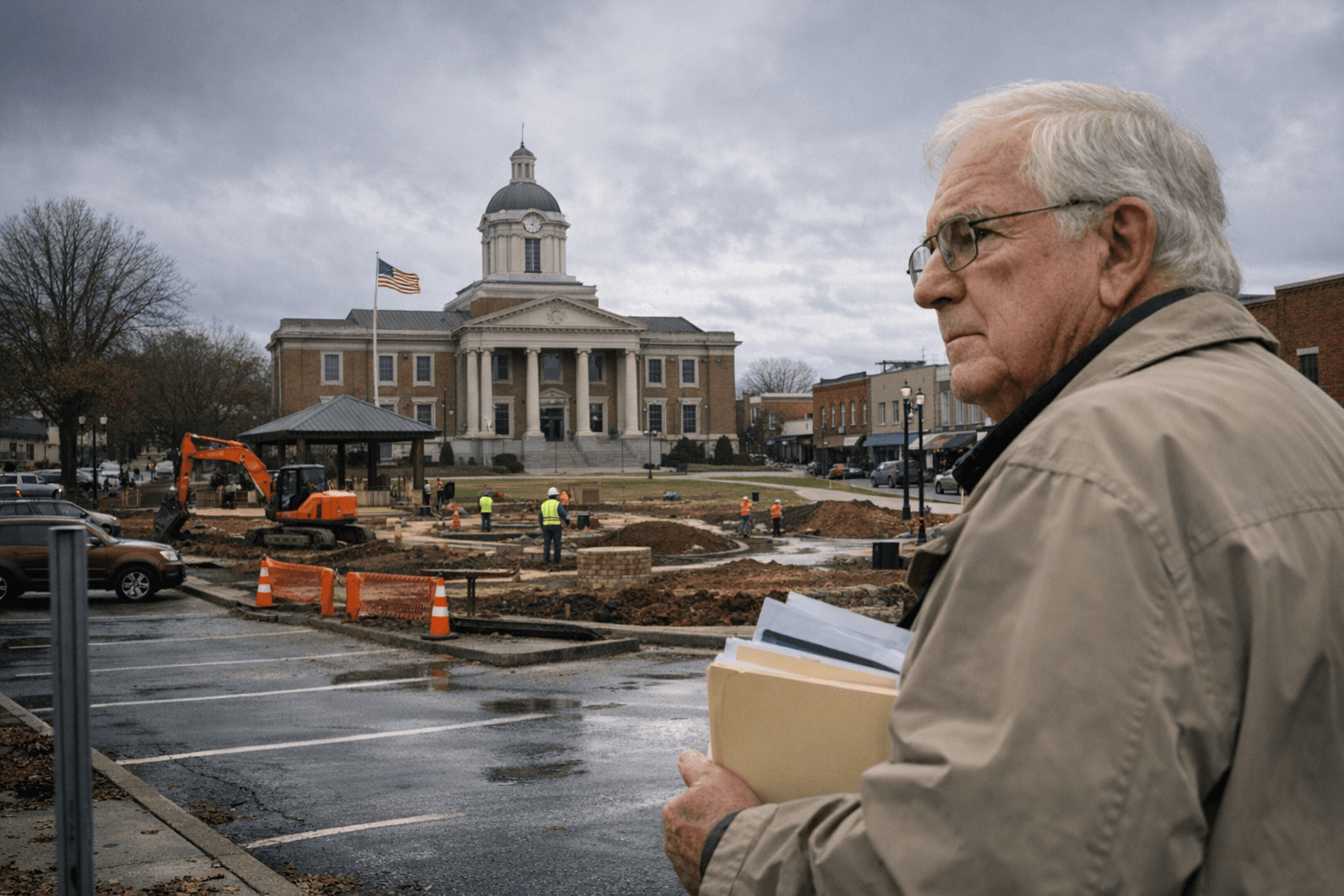
Tom Boney Jr. has pushed Graham’s downtown park fight into formal legal territory, filing an appeal to the Graham Board of Adjustment over the approval of a certificate of appropriateness for the new park planned across from the Alamance News office. His challenge goes beyond the park’s design. It targets the city’s notice, the way the hearing was run, and whether the Historic Resources Commission followed state law before approving the project.
Boney says the city’s process was defective when the Historic Resources Commission met March 24 and signed off on the park proposal with only one design change, replacing the originally pitched pavilion roof with a flat roof. He said he tried repeatedly to raise objections during the hearing, but the commission ruled that he lacked standing to speak and told him to sit down. He argues the written notice sent to adjacent property owners did not clearly explain that the matter would be handled as a quasi-judicial hearing, that he received the notice only seven days before the meeting, and that the city did not post the sign required for that type of proceeding.
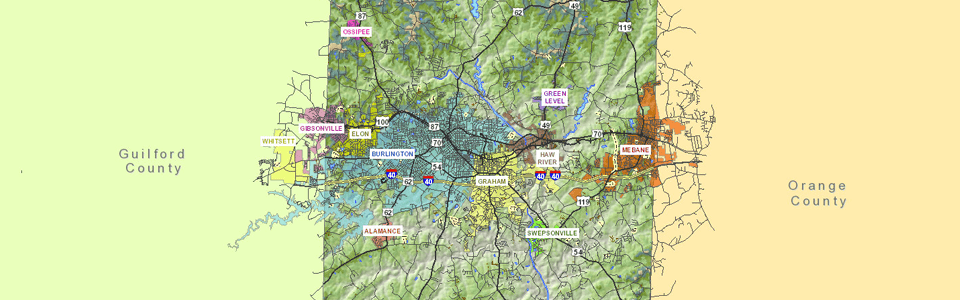
The city’s own notice, however, was posted March 20 for the March 24 special meeting at 6 p.m. at City Hall and explicitly said, “This is a quasi-judicial hearing.” The Historic Resources Commission reviews certificates of appropriateness for the Courthouse Square Historic District, which Graham designated as a local historic district on March 4, 1980. Under North Carolina General Statute 160D-947, COA decisions in designated historic districts can be appealed, putting the board of adjustment at the center of whether the approval stands or is overturned.
The dispute is also tied to a concrete downtown change. Graham’s April 14 bid advertisement said the city planned to replace the existing parking lot at 129 W. Elm Street with a new city park intended as an urban gathering space, with substantial completion expected by June 30. The city’s RFQ said Sesquicentennial Park was built in 1999 to mark the city’s 150th anniversary in 2001, and that the park includes dedicated bricks, columns and a pergola. The city also said the site has differential settlement requiring repairs and set the relocation budget at $600,000 to $800,000.
City council moved the project in stages, first voting 4-1 on Jan. 15 to place the park behind the Graham Historical Museum at 135 West Elm Street, then voting 3-2 on March 12 to adopt a third version that shifted it to the front portion of the West Elm Street parking lot. That version would take 20 parking spaces and create a park of about 7,710 square feet, compared with the current park’s 1,132 square feet of usable space, though the latest design regained four spaces along West Elm Street.
The appeal now turns a downtown parking and park redesign into a test of whether Graham’s notice and hearing procedures hold up under scrutiny. If the board of adjustment finds fault with the process, the decision could delay the park and set a precedent for how the city handles future land-use and historic-district approvals.
This article was produced by Prism’s automated news system from verified source data, official records, and press releases, then run through automated quality and moderation checks before publishing. The system is built and supervised by the people who set the standards it runs under. Read our full AI policy.
Did this article answer your question?