Alamance Rescue Unit seeks dedicated tax funding for equipment, staff upgrades
Alamance County homeowners could be asked to underwrite a dedicated rescue tax, trading a new property-tax stream for 24/7 specialty response coverage.
Alamance County homeowners could soon be asked to pay for a dedicated rescue tax district that would give the Alamance County Rescue Unit a steadier stream of money for equipment, staffing and high-risk calls that standard EMS or fire crews cannot always handle.
Rescue chief Chris Mauney told county commissioners the long-running unit needs recurring revenue instead of relying mainly on donations, grants and the county’s current $125,000 annual stipend. That money now helps cover capital projects and supports a small paid staff that backs up about 70 volunteers for 12 hours a day. Mauney’s pitch was straightforward: a countywide tax district would let the rescue unit professionalize further, replace aging equipment and keep trained staff available around the clock.
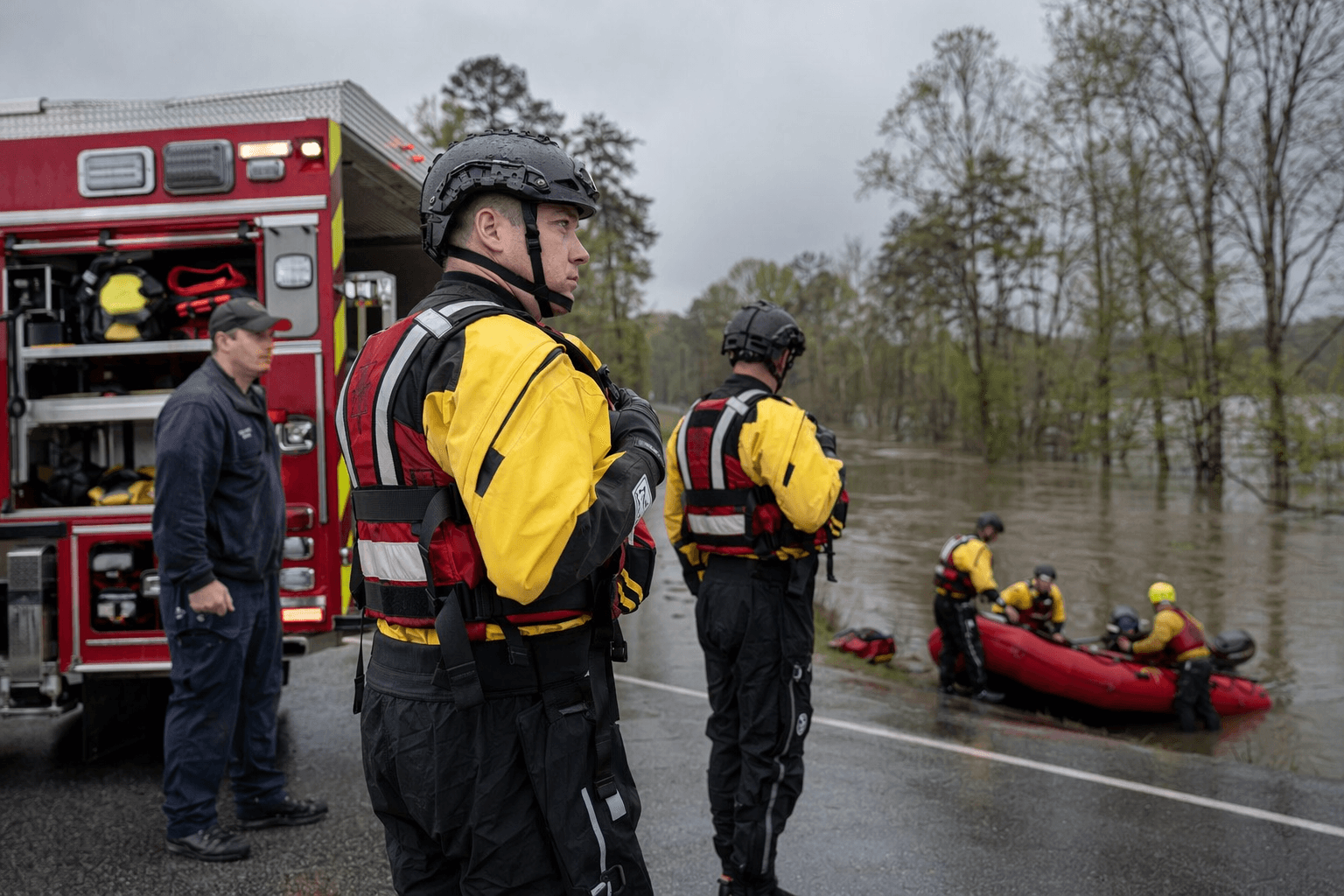
The ask carries direct consequences for how Alamance County handles rare but dangerous emergencies. The rescue unit says it responds to trench collapses, people trapped in heavy vehicles, agricultural emergencies such as grain-silo incidents, and floodwater or underwater recoveries. Its website also lists wilderness search and rescue, swift water rescue, trench rescue and large animal rescue among its specialty services. In practice, the proposal is not just about keeping a nonprofit afloat. It is about whether the county wants a permanently funded specialty-response system that can be deployed when ordinary first responders need backup.
The unit’s own history traces its roots to 1955, when it was organized as the Graham Rescue Unit and then chartered by North Carolina on March 13, 1956. That history gives added weight to Mauney’s argument that the agency has become an established part of Alamance County’s emergency network, even if its financing has remained patchwork and dependent on year-to-year decisions.
The funding debate also reflects a vulnerability the rescue unit has already faced. Mauney said a year earlier, a possible cut in the county’s annual allocation threatened the organization’s solvency. In May 2025, the unit publicly warned that its future was in jeopardy after a proposed county budget left out funding. Later county budget coverage showed commissioners adopting a 2025-2026 budget with a 2.5-cent property tax increase, underscoring how tightly rescue funding is tied to broader tax decisions.
The Alamance County Board of Commissioners, a five-member governing body, controls those budget and tax choices. North Carolina law allows counties to establish service districts and related special tax mechanisms for services including fire protection and flood and hurricane protection works, which helps explain why Mauney framed his proposal as a countywide district rather than another annual appeal. For Alamance County, the decision now is whether to keep relying on donations and a modest stipend or build a durable funding base for the rescues that can make the difference between life and death.
This article was produced by Prism’s automated news system from verified source data, official records, and press releases, then run through automated quality and moderation checks before publishing. The system is built and supervised by the people who set the standards it runs under. Read our full AI policy.
Did this article answer your question?