Children's Museum of Alamance County sparks curiosity in Graham
Rainy days in Graham get easier at the Children’s Museum of Alamance County, where $6 admission, free parking and hands-on exhibits make repeat visits worthwhile.

The Children’s Museum of Alamance County gives Graham families a dependable indoor plan when school is out, the weather turns wet, or a weekend needs structure. At 217 S. Main St., the museum is built for children and adults to learn together through exploration, interaction and direct experience, which is why it works as a repeat stop instead of a one-time outing.
Why this museum keeps working for local families
The museum describes its audience broadly, serving future “Leaders, Dreamers, Scientists, Farmers, Artists, Teachers and Helpers” from Burlington, Graham, Mebane, Elon, Gibsonville, Haw River and surrounding areas. That reach matters in Alamance County, where parents often need one place that can serve toddlers, siblings of different ages, grandparents and caregivers without making the day feel like a special event that has to be perfectly planned.
Its mission also ties play to local identity. Through grassroots efforts, the museum says it aims to give visitors an impression of Alamance County’s history, people and culture, including textile and railroad beginnings, agriculture, creative arts and literacy. Founded in 2007 and holding tax-exempt status since 2008, it has had time to settle into the county’s family-activity landscape rather than appear as a short-lived attraction.
What children actually do inside
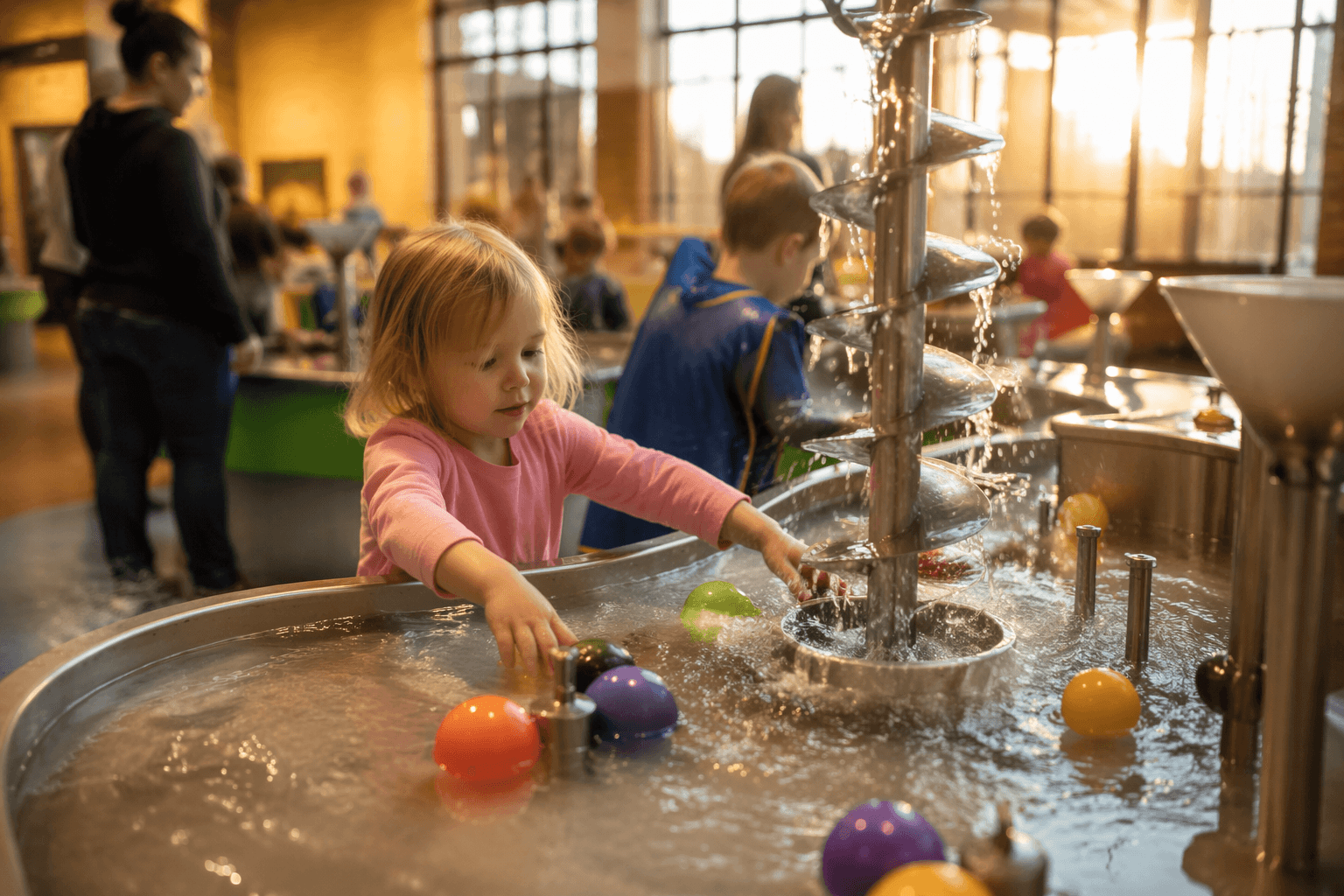
The exhibit mix is specific enough to make a return visit feel different each time. Children can move through Building Zone, Artist’s Workshop, Health Center, Science Adventure, My Own Backyard, Huey’s Seafood Restaurant, Then & Now, Luckey Climber and Wobble & Roll, switching between building, drawing, role-play, movement and early science.
That variety matters for different ages and temperaments. Building Zone and Luckey Climber give children a place to test balance, strength and gross-motor skills, while Artist’s Workshop and Science Adventure lean into hands-on creativity and curiosity. Huey’s Seafood Restaurant, Health Center and My Own Backyard add pretend play that helps children practice conversation, social roles and everyday routines in a setting that feels playful rather than instructional.
Then & Now connects children to the museum’s broader community story, reinforcing the idea that play can also introduce local history and literacy. For families trying to make one stop serve multiple needs, that combination of physical activity, make-believe and discovery is the reason the museum can fill a rainy afternoon without feeling repetitive.
Programs that stretch the value beyond open play
The museum says its programming is designed to educate children and make learning fun through weekly and monthly offerings, birthday parties, facility rentals and field trips aligned with the North Carolina standard course of study. That makes it useful not only for casual visits but also for preschool groups, school connections and celebrations that need a space with built-in child appeal.
One of the clearest examples is Laugh and Learn, a monthly play-and-learning experience for children from birth to age 2 and their caregivers. The program includes play-based activities and access to pediatric therapy experts from Cone Health Alamance Regional Medical Center, which gives the museum a practical role for families with infants and toddlers who want developmentally appropriate activities, not just toys on a floor.
How to plan the trip
The basics are straightforward, which is part of the appeal for local parents trying to get out the door quickly. The museum is open Tuesday and Wednesday from 10 a.m. to 4 p.m., and Thursday through Saturday from 10 a.m. to 5 p.m. It is closed Sunday and Monday.

Admission is $6 for ages 1 through 100, and children 11 months and under are free. Adult chaperones must be at least 18 years old, and children must always be accompanied by an adult, so this is not a drop-off destination. Families can park free in the museum lot, with additional public parking near the Graham Public Library and the Alamance Arts building.
The museum’s public phone number is 336-228-7997, useful for families who want to check a detail before leaving home or plan around a group visit. Those practical details matter because the museum is set up for the kind of everyday use that Alamance County parents actually need: a place that can absorb a couple of hours without turning into a logistical project.
Where it fits in Graham’s cultural life
The City of Graham includes the Children’s Museum among its arts-and-culture attractions, placing it alongside other civic anchors rather than treating it as a niche stop. That matters in a downtown setting where families may want to pair a museum visit with a walk, a library stop or another local errand.
Annual exhibit sponsorships are also part of the museum’s public face, and the sponsorship page names Michele Davis as executive director. Secondary nonprofit listings place the organization at about 15 employees and put annual revenue in the range of roughly $420,000 to $500,000, a size that helps explain why community support still matters to keeping the hands-on model stable.
For Alamance County families, the museum’s value is practical: it gives Graham a place where children can climb, build, pretend and explore without needing perfect weather or a major trip. That is what makes it a local standby, not just a stop on a list.
This article was produced by Prism’s automated news system from verified source data, official records, and press releases, then run through automated quality and moderation checks before publishing. The system is built and supervised by the people who set the standards it runs under. Read our full AI policy.
Did this article answer your question?