Commissioners face open meetings questions after Saxapahaw development meeting
Three county commissioners drew open-meetings scrutiny after a Saxapahaw gathering on two huge subdivision plans. The issue is whether listening to residents crossed into prejudging votes.

Kelly Allen, Sam Powell and Ed Priola drew fresh scrutiny after all three attended a grassroots meeting at Bethlehem Presbyterian Church in Saxapahaw focused on two large residential proposals in southeastern Alamance County. The same gathering also drew state senator Amy Scott Galey and state Representative Dennis Riddell, and it landed at the center of a familiar county fight over growth, land use and how openly elected officials can engage before a project reaches a vote.
Allen said the meeting did not amount to an open-meetings violation because the commissioners did not sit together as a quorum or transact public business. That distinction matters under North Carolina law. The Open Meetings Law defines an official meeting as a gathering of a majority of a public body for hearings, deliberations, voting or otherwise transacting public business. It also says a social meeting or informal gathering is not an official meeting unless it is used to evade the law.

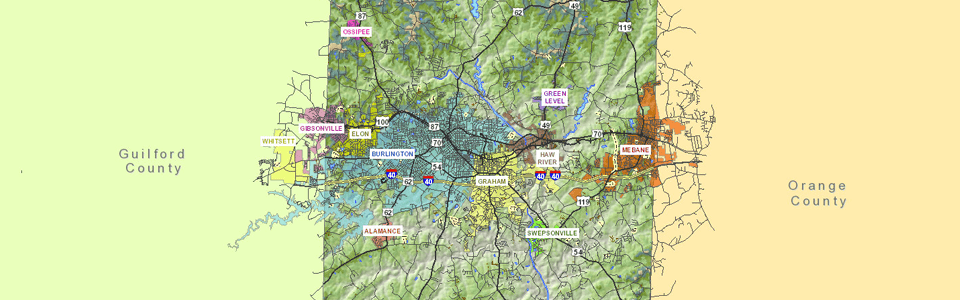
That line is where the tension begins in Alamance County. Commissioners are expected to hear from residents, developers and neighbors, but the more controversial the project, the more a public appearance can be read as support, opposition or behind-the-scenes coordination. The county’s five-member Board of Commissioners is elected at large to four-year staggered terms, and its planning department oversees land development only in the unincorporated parts of the county, where decisions on subdivisions often shape roads, wells, traffic and rural character for years.

The biggest proposal already under staff review is Morrow Mill, which calls for 541 single-family homes on 440 acres between Morrow Mill and Austin Quarter roads. Hunter’s Ridge has not yet been formally submitted, but a preliminary sketch reviewed by the county showed more than 400 single-family lots on nearly 375 acres off Austin Quarter Road. Taken together, the two projects have been described locally as nearly 1,000 homes, a scale that has fueled worry about traffic, water supply and the pace of change in southeastern Alamance County.
The Haw River Assembly has said both developments would have no access to municipal water, raising concerns about groundwater and watershed impacts. The backdrop is a county that has wrestled with growth before: in 2024, commissioners considered raising the rural minimum lot size from 30,000 to 65,000 square feet but did not adopt the change. Earlier disputes over four new Mebane-area subdivisions totaling 1,313 proposed homes and townhouses, along with a 106-home proposal on Rock Quarry Road and Danny Drive, show why even a non-voting appearance at a church meeting can quickly become a test of public trust.
This article was produced by Prism’s automated news system from verified source data, official records, and press releases, then run through automated quality and moderation checks before publishing. The system is built and supervised by the people who set the standards it runs under. Read our full AI policy.
Did this article answer your question?