Old Haw River church gets new life as home and workshop
A Raleigh native bought a 125-year-old Haw River church after spotting it from an Amtrak train and is turning it into a home and workshop. The project keeps the landmark in use.

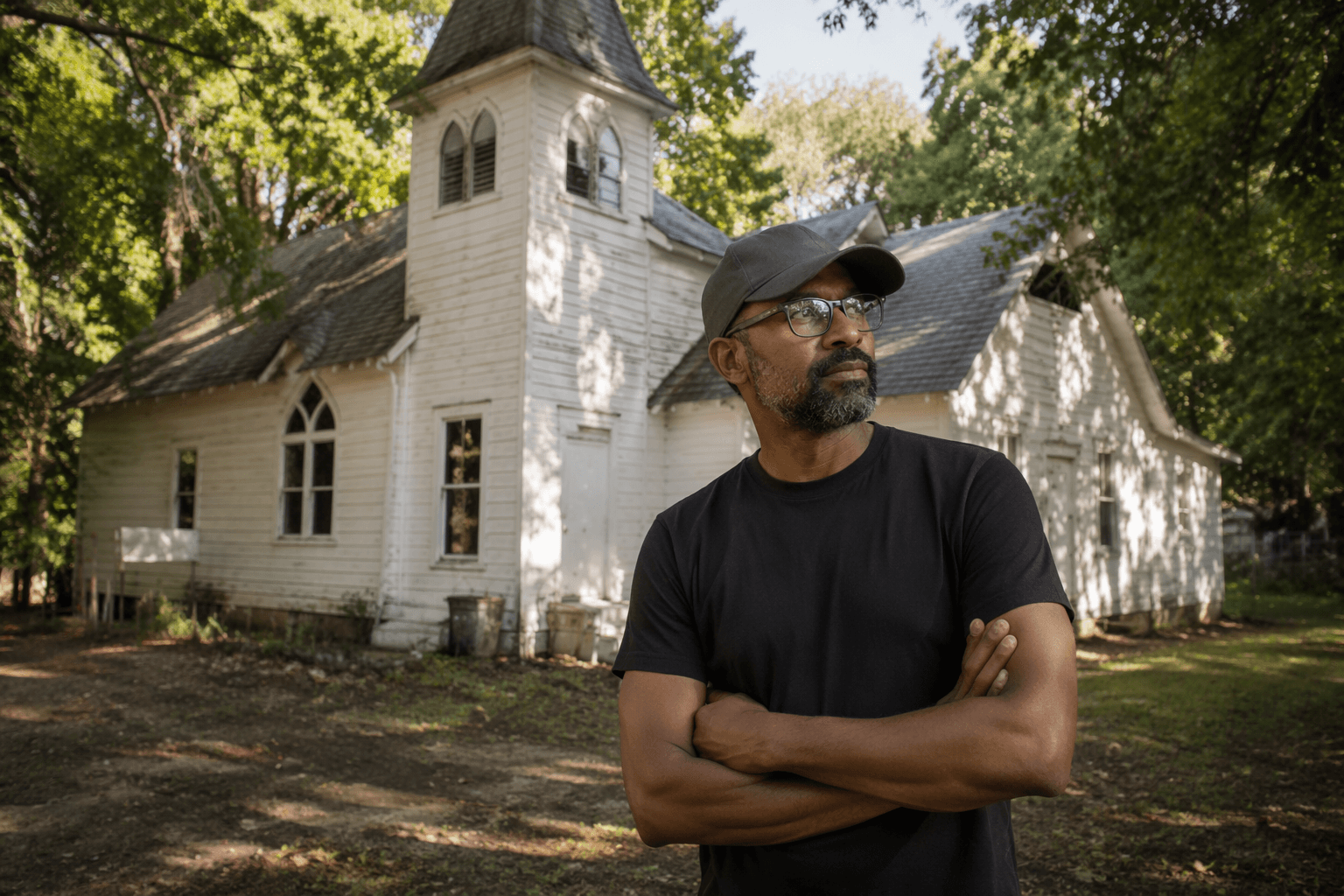
A 125-year-old church in Haw River has moved from a landmark with a fading future to a building with a working one. Andrew Leager, a Raleigh native, bought the structure on December 31, 2019 after spotting it from an Amtrak train, and he is turning it into a combination home and workshop.
A church caught in passing, then put back to work
Leager said he had spent 20 years looking for a building like a church before he saw the Haw River property. The purchase turned a passing glimpse into a long-term restoration project, with the building now serving both as a place to live and a place to work. That dual use matters because it gives the structure a reason to stay maintained rather than sitting empty and vulnerable to decay.
The building itself is thought to have been built in 1896, and local history ties it to Thomas Holt, the former North Carolina governor and mill owner. That connection places the church inside the same industrial and civic landscape that shaped much of Haw River and the rest of Alamance County.
Why adaptive reuse is the practical test
This project fits a preservation strategy known as adaptive reuse: giving an old building a new function while keeping its historic character intact. The U.S. National Park Service treats adaptive reuse as a legitimate preservation approach, especially for buildings that can still serve useful purposes if the rehabilitation is handled carefully. In this case, the church’s new life as a home and workshop shows how a historic structure can stay active without being turned into a museum piece.
That kind of conversion is not simple. The National Park Service notes that successful reuse takes a skilled, creative and innovative historic architect to shape a rehabilitation plan that respects the building while making it usable for modern needs. For rural communities like Haw River, that usually means making hard choices about what to preserve, what to adapt and how to keep the building stable enough for daily use.
The preservation tools that matter in North Carolina
Owners restoring historic properties in North Carolina are not on their own. The State Historic Preservation Office, part of the North Carolina Department of Natural and Cultural Resources, provides technical preservation services that include building conservation guidance. It also helps coordinate federal and state tax credits that can support rehabilitation work on historic buildings.
Those tools are important because projects like this often hinge on whether preservation can be matched with practical financing and sound construction planning. A church turned into a residence and workshop has to function as a modern building, but the work still has to protect the features that make the place historic in the first place. In that balance, technical advice and tax-credit support can be as important as the purchase itself.
What Haw River stands to keep visible
The Haw River church is part of a broader pattern in smaller Piedmont communities, where old churches, mills and industrial buildings are sometimes repurposed instead of demolished. That matters in a townscape where historic buildings can disappear quickly once they are no longer in active use. Keeping one structure occupied and repaired does more than preserve a single property; it helps keep the town’s older architecture part of everyday life.
For Haw River, the payoff is especially local. A building that might have become another vacant shell instead remains visible, occupied and cared for. That kind of reuse does not erase history. It keeps history from becoming a ruin.
Why Alamance County keeps coming back to its built past
Alamance County’s interest in preserving old buildings is tied to the county’s own economic history. The textile era began in 1837, when Edwin M. Holt opened the first large-scale textile mill in the county. From that point on, textile manufacturing became a principal part of the county’s economy, and the built environment followed that pattern.
Thomas Holt’s place in that history helps explain why buildings associated with mills, villages and churches still draw attention. NCpedia notes that after the war he and his partner, Adolphus Moore, built a larger factory on the Haw River that eventually employed 175 people and supported a village of forty homes, a school and a church. That is the larger backdrop for Leager’s project: Haw River and Alamance County were built around institutions that did not separate work, worship and community as cleanly as modern life often does.
Seen in that light, the former church is not just being saved because it is old. It is being adapted because it still has a place in the county’s working landscape. The building’s next chapter depends on the same thing that has always mattered in Alamance County history: whether a structure can remain useful enough to survive.
This article was produced by Prism’s automated news system from verified source data, official records, and press releases, then run through automated quality and moderation checks before publishing. The system is built and supervised by the people who set the standards it runs under. Read our full AI policy.
Did this article answer your question?