Superintendent visits Cane Creek Mountains Nature Park, highlights county tourism
Aaron Fleming’s tourism-focused visit put Cane Creek Mountains Natural Area at the center of Alamance County’s economic plans. The Snow Camp park now spans about 1,000 acres of protected public land.
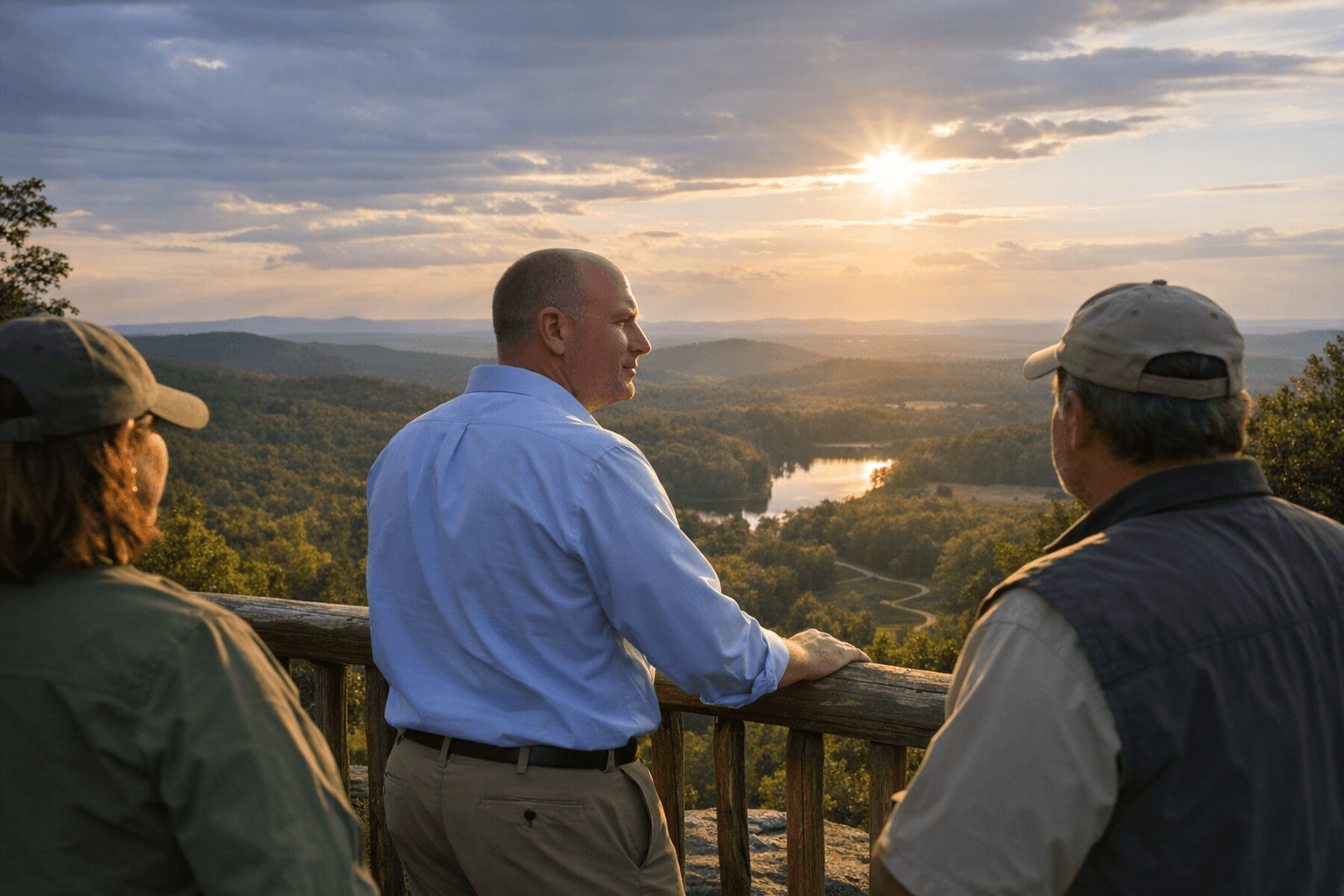
Superintendent Aaron Fleming’s visit to Cane Creek Mountains Natural Area put Alamance County’s tourism strategy on display in one of the county’s most visible outdoor assets. The stop, part of Leadership Alamance’s tourism-focused program, centered on a park in Snow Camp that county officials say is more than a backdrop for hikes and views. It is public land with economic value, conservation value and room to shape how Alamance County markets itself.
Cane Creek Mountains Natural Area gives public access to Alamance County’s largest state-significant natural heritage area. The park sits in the Cane Creek Mountains range in the southwest quadrant of the county, and its highest peak, Cane Creek Mountain, rises to 987 feet. County materials describe it as the highest point in North Carolina east of Greensboro, a distinction that helps explain why local leaders keep returning to the site when they talk about outdoor tourism.
The park opened to the public in May 2020 and already includes trailheads, hiking trails, camping facilities, a parking area and bathroom facilities. Alamance County Parks and Recreation says three trailheads are open now: Pine Hill, Oak Hill and Peach Orchard. Trails are color-coded and marked with blazes every tenth of a mile, with each blaze carrying a 4-digit code for navigation and emergency location, a detail that matters as much to safety as it does to visitor access.
The county’s broader parks system now reaches far beyond Cane Creek. Alamance Parks says it manages 1,200 acres overall, including Cedarock Park, Great Bend Park, Shallow Ford Natural Area, Swepsonville River Park, Saxapahaw Island Park and sections of the Haw River Trail. That footprint gives county leaders more than one way to connect recreation with local spending, school programming and land conservation.

The political and fiscal significance of Cane Creek grew again in February 2021, when Alamance County, The Conservation Fund and Piedmont Land Conservancy announced a 432-acre Sizemore addition. County officials said the expansion would nearly double the natural area to roughly 1,000 acres of county-owned, protected, publicly accessible park land. Brian Baker, then the county’s parks director, said the acquisition would benefit residents’ health and happiness and the local economy, while conservation partners said it would also protect wildlife habitat and water quality.
For county leaders, the message from Cane Creek is clear: open space can be an amenity, a tourism draw and a long-term public asset at the same time. Fleming’s visit underscored that Alamance County is treating the park as part of its economic identity, not just its landscape.
This article was produced by Prism’s automated news system from verified source data, official records, and press releases, then run through automated quality and moderation checks before publishing. The system is built and supervised by the people who set the standards it runs under. Read our full AI policy.
Did this article answer your question?