Albany County explains when property tax bills are mailed
Albany County mails property tax notices in mid-September, and buyers who close or record deeds after Jan. 1 should not expect the bill in their name.
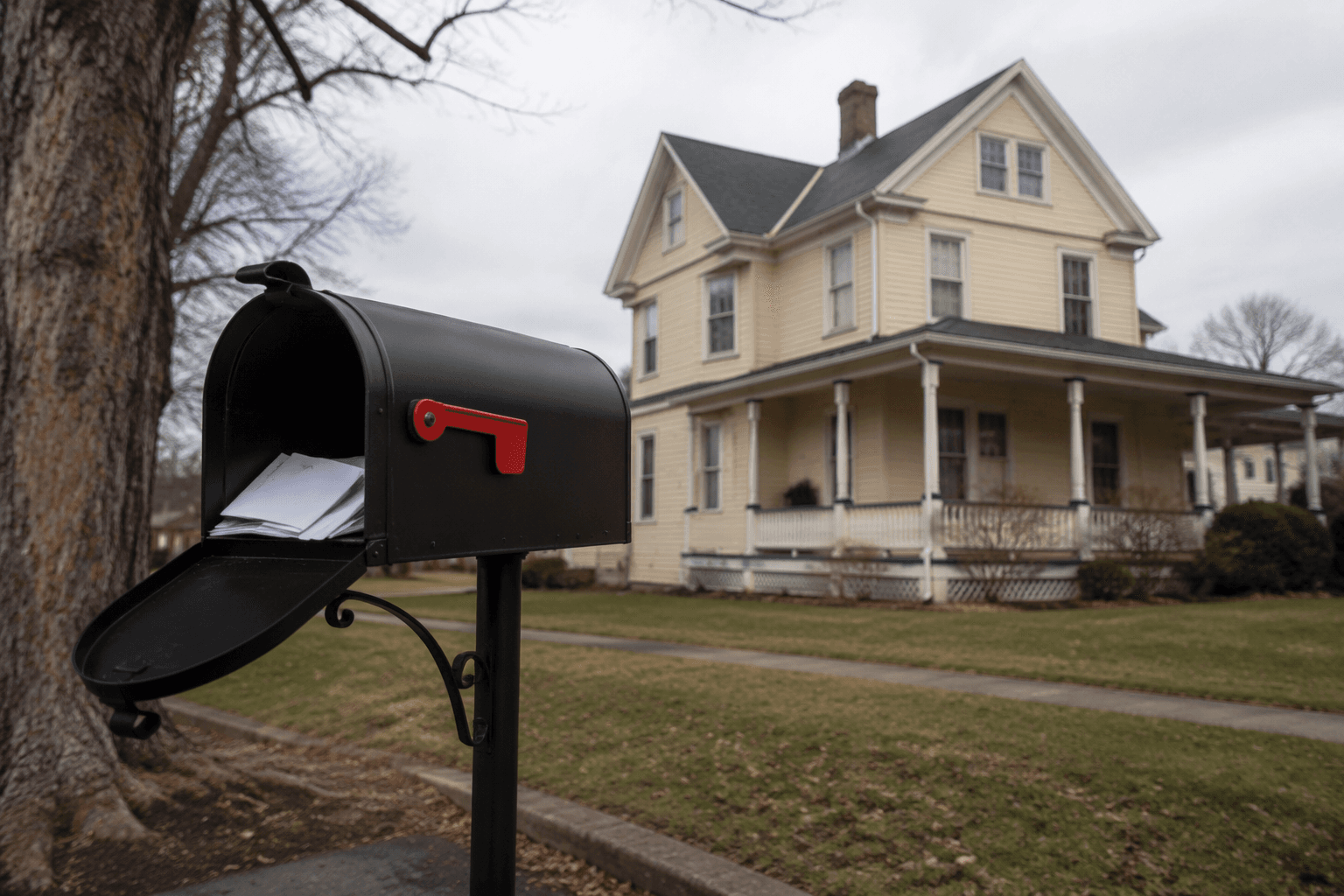
Albany County mails property tax notices in the middle of September, and that timing can leave a new owner waiting for a bill that never arrives in their name. If you buy a property or record a deed on or after Jan. 1, the county says the tax bill will not be issued in your name, so the owner of record matters long before the envelope shows up.
Why the September mailing date matters
For homeowners, landlords, ranch property owners and commercial holders, the key date is not just when taxes are due later in the year, but when the county prepares the notices. Albany County says those notices are typically generated and mailed in mid-September, which means a change in ownership after Jan. 1 usually does not change who receives the bill for that tax cycle.
That is especially important in Laramie, where properties can change hands quickly, but it also matters on rural parcels and small-town holdings across the county. A first-time buyer, an heir settling an estate, or a seller handing over a deed all need to understand that the county’s mailing schedule follows its own calendar, not the closing date on a private sale.
How the bill is built
Albany County’s assessor has a constitutional duty to list, locate and value all property in Albany County. That valuation is one of the foundations of the tax bill, while the mill levy determines how much tax is applied to that assessed value. On the county’s mill-levy page, a mill is defined as $1 of tax for every $1,000 of assessed value.
The county’s 2025 general tax levies document shows that the bill is not a single flat county charge. Instead, it is built from the taxing districts and mill rates that apply to a parcel, which is why two properties in the same county can have different totals. That distinction matters whether the property is in town, on a subdivision lot, or on a ranch parcel outside the city limits.
Albany County’s process also fits the broader Wyoming calendar. Carbon County’s tax calendar says all taxable property is listed, valued and assessed in the name of the owner of record as of Jan. 1, while Uinta County says property taxes are billed on Sept. 1 each year. Albany County’s mid-September mailing sits within that same statewide pattern: ownership is pegged early in the year, and billing follows later.
Who handles what at county level
The simplest way to keep the bill straight is to separate the offices. The Albany County Assessor’s Office handles the value side of the process, while the Albany County Treasurer’s Office handles billing and collection. If the property description, ownership record or mailing information looks wrong, those are the two places to check.
- The assessor is the office to contact about how a property is listed, located or valued.
- The treasurer is the office to contact about the bill itself, payment timing and collection questions.
- The recorded deed is what controls who appears as the owner of record when the county prepares notices.
That is why a fresh closing can create confusion if the deed has been recorded but the tax cycle has already moved ahead. A buyer in Centennial, a ranch owner near Rock River or a landlord with multiple units in Laramie should not assume the bill will automatically switch names just because the property changed hands.
Where to go and how to check your parcel
The Treasurer’s Office is at 525 E. Grand Avenue, Suite 205, Laramie, WY 82070, and it is open Monday through Friday from 9 a.m. to 5 p.m. Those hours give owners a straightforward place to ask about billing questions, payment status and any mismatch between a deed and a mailed notice.
Albany County also gives residents a property tax lookup tool that can search by property tax ID, owner name, property address or geocode. The search includes community and place names such as Albany, Bosler, Buford, Centennial, Fox Park, Foxpark, Garrett, Granite Canon, Jelm, Keystone, Laramie, Larmie, Medicine Bow, Rock River, Tie Siding, Tiesiding, Wheatland and Wycolo.
That search tool is useful before the mail arrives, especially if you have just bought a property, inherited one or are checking whether an address change has been captured correctly. It is also a practical check for owners who manage more than one parcel and need to confirm that each property is tied to the right tax ID.
The refund program adds another deadline
Albany County also has a property tax refund program, which gives owners another date to keep on the calendar. County commissioners approved the refund program rules and budget for the 2023 tax year on June 28, 2024, and the county later set a deadline of Monday, Oct. 12, 2026, by close of business for the 2025 tax year application.
That deadline stands apart from the regular bill mailing cycle, but it matters for anyone trying to keep property costs under control. Between the mid-September mailing window, the Jan. 1 ownership rule and the county’s refund deadline, the safest move is to verify your parcel early, confirm which name is on the deed and keep the Treasurer’s Office in the loop before the bill is due to land.
This article was produced by Prism’s automated news system from verified source data, official records, and press releases, then run through automated quality and moderation checks before publishing. The system is built and supervised by the people who set the standards it runs under. Read our full AI policy.
Did this article answer your question?