Conservationist urges slower wind development to protect golden eagles, wildlife
A Laramie conservationist says Albany County should slow wind buildout after Rail Tie swallowed the site she picked for a wildlife museum.
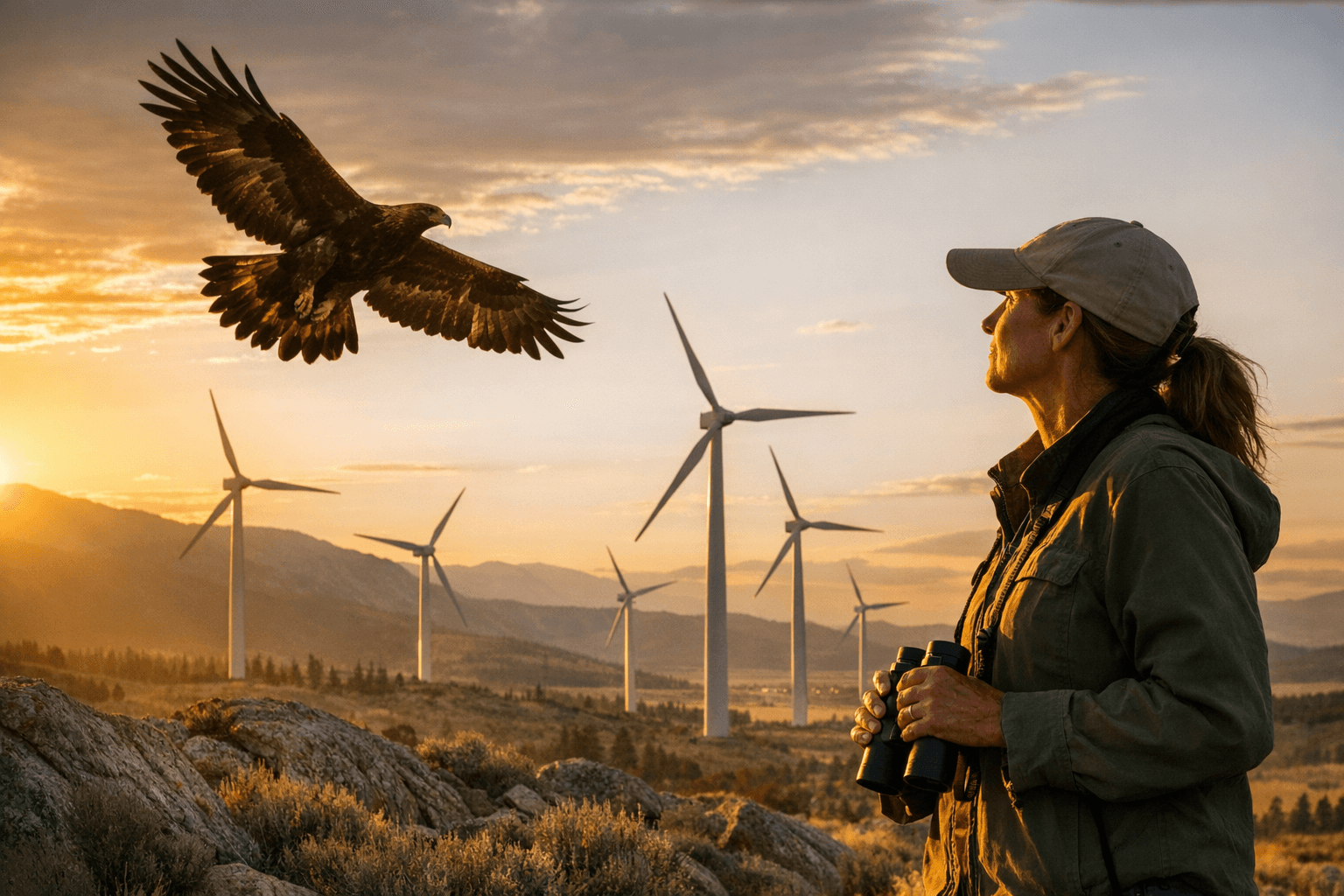
Anne Brande says Albany County is watching the wrong picture if it treats each wind project as a stand-alone proposal. The Laramie conservationist and executive director of the Albany County Conservancy is pressing state and federal decision-makers to slow new development in southern Wyoming so golden eagles and other wildlife are not left to absorb the full buildout at once across a much larger landscape.
Brande’s concern sharpened after the location she once chose for a wildlife migration museum on Highway 287 south of Laramie ended up inside the footprint of the Rail Tie Wind Project, a 26,000-acre, 504-megawatt facility near the Colorado border. She founded the Albany County Conservancy in 2020, and the project’s sweep across that terrain became a turning point in how she viewed the county’s long-term land-use future. What had looked like a single site for interpretation and migration education became, in her view, a cautionary example of how quickly industrial wind can overtake open ground once a corridor is in play.
The dispute is not limited to Rail Tie. Brande has said her worry has grown as more turbines have come online in the region, including Seven Mile and Ekola Flats, because wildlife does not experience those projects as separate approvals. Birds of prey move across the whole area, and each new array adds to the cumulative pressure on habitat, flight paths and hunting grounds. That argument has taken on added weight for golden eagles, which Brande says are declining in part because of turbine strikes.
Federal policy now gives that debate a more defined regulatory path. The U.S. Fish and Wildlife Service says its goal is to maintain stable or increasing breeding populations of bald eagles and golden eagles. Its final eagle rule, published Feb. 12, 2024 and taking effect April 12, 2024, created general permits for qualifying wind projects with relatively low and well-understood risks. Higher-risk or uncertain-risk projects still go through specific permit review, which means wildlife data can still influence whether a project advances and under what conditions.
Albany County is already part of that broader review landscape. The Bureau of Land Management and Fish and Wildlife Service described the Two Rivers Wind Energy Project in November 2022 as a plan for up to 79 turbines generating up to 420 megawatts, with Phase IV stretching into Albany County on about 4,500 acres of private land south of U.S. 30/287 and west of Rock River. The Rail Tie lawsuit filed in federal court by the Albany County Conservancy, the Wyoming Association of Professional Archaeologists, Michelle White and Natalia Johnson shows the opposition has already moved into the courts, where wildlife and land-use questions can affect project timelines and conditions.
The bigger precedent is also clear in western Wyoming. The Bureau of Land Management has previously pointed to the Chokecherry and Sierra Madre project, which moved forward with an Eagle Take Permit framework and extensive avian-protection planning. For Albany County, that means Brande’s campaign is more than symbolic protest. The next permitting decisions will help determine whether wildlife concerns stay on the margins or become a real brake on where, and how fast, wind projects spread.
This article was produced by Prism’s automated news system from verified source data, official records, and press releases, then run through automated quality and moderation checks before publishing. The system is built and supervised by the people who set the standards it runs under. Read our full AI policy.
Did this article answer your question?