UW Lecture Explores Gerrymandering Effects on Trust and Democracy
Ryan Williamson, an assistant professor at the University of Wyoming, will deliver the 2025 Sandeen Lecture in Humanities on Monday, December 8, examining how perceptions of gerrymandering shape citizens' trust in institutions. The presentation will draw on national surveys and experiments and consider how carefully designed independent commissions could help restore confidence in democratic processes, a subject with direct implications for Albany County voters and local governance.
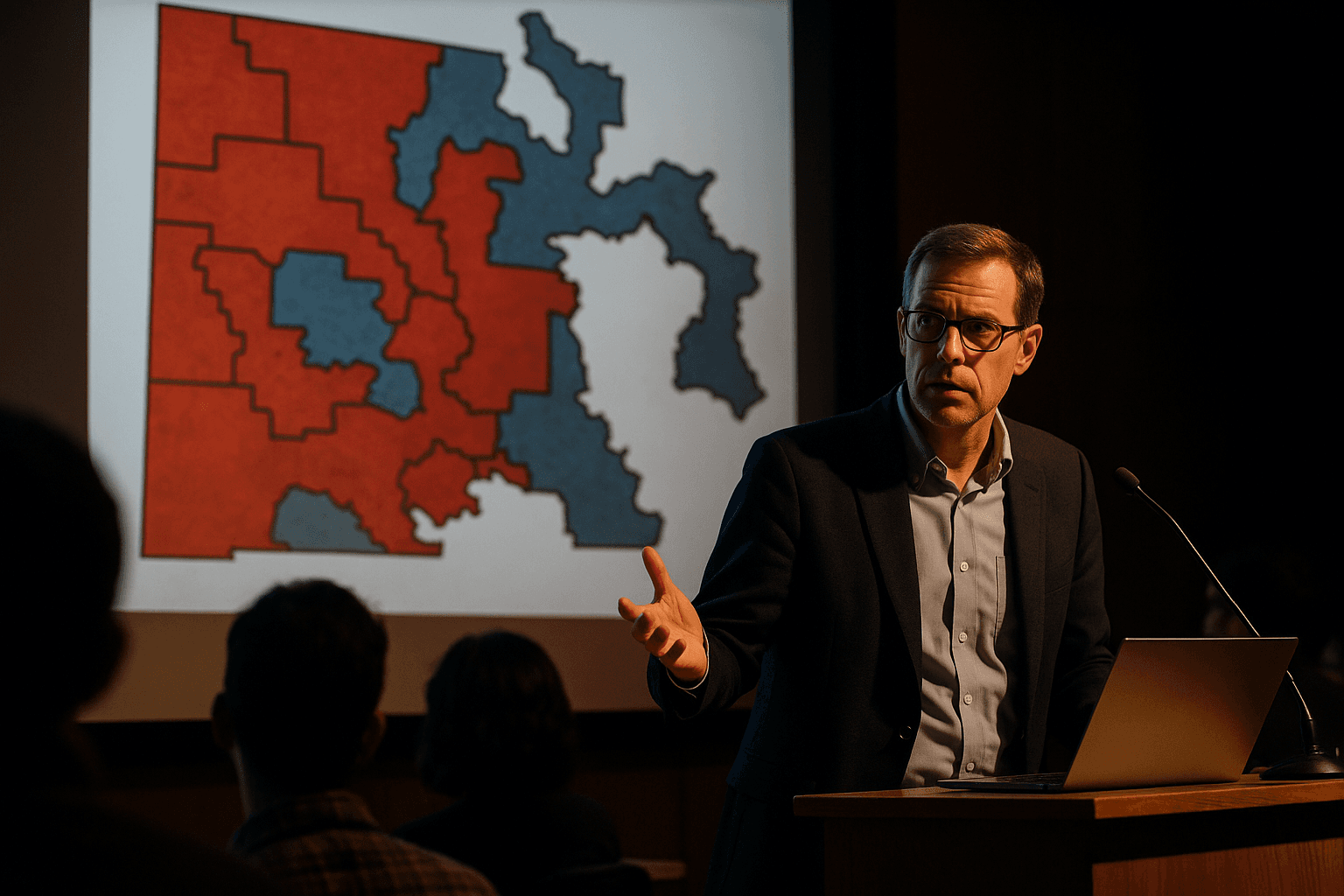
Ryan Williamson will present the 2025 Sandeen Lecture in Humanities at 4 p.m. Monday, December 8 in the Business Building Scarlett Auditorium on the University of Wyoming campus in Laramie. Titled "Redrawing Trust: Citizens’ Views on Gerrymandering and Democratic Legitimacy," the lecture will examine how perceptions of gerrymandering affect public confidence in elections, legislatures, and other institutions by drawing on national surveys and experimental data.
Williamson is an assistant professor in UW’s School of Politics, Public Affairs and International Studies. He joined the UW faculty in 2023 after professional work in Washington, D.C. The lecture is being presented as part of the university's Sandeen Lecture series, which brings humanities scholarship to public audiences. For those with questions, the announcement lists the Wyoming Institute for Humanities Research as a point of contact.
The subject matters to Albany County residents because district lines and perceptions about how those lines are drawn influence who represents Laramie and surrounding towns in the state legislature and beyond. Research into citizens’ views on gerrymandering connects directly to voting patterns, policy outcomes, and civic engagement. When voters believe maps are drawn to advantage one party or protect incumbents, turnout and trust can decline, with downstream effects on policy priorities that shape local services and investment.
Williamson will identify flash points in redistricting that tend to erode legitimacy and outline institutional reforms that scholars find most promising. Among these are carefully designed independent commissions intended to separate map drawing from direct legislative control. The lecture will present experimental and survey evidence about whether such commissions can rebuild trust and increase perceived fairness among voters.
Local officials, community groups, and voters preparing for upcoming elections may find the lecture timely for understanding how institutional design choices influence representation. The event offers a practical forum to assess policy options that affect who draws maps, how electoral contests are structured, and how Albany County residents engage with democratic processes.
This article was produced by Prism’s automated news system from verified source data, official records, and press releases, then run through automated quality and moderation checks before publishing. The system is built and supervised by the people who set the standards it runs under. Read our full AI policy.
Did this article answer your question?