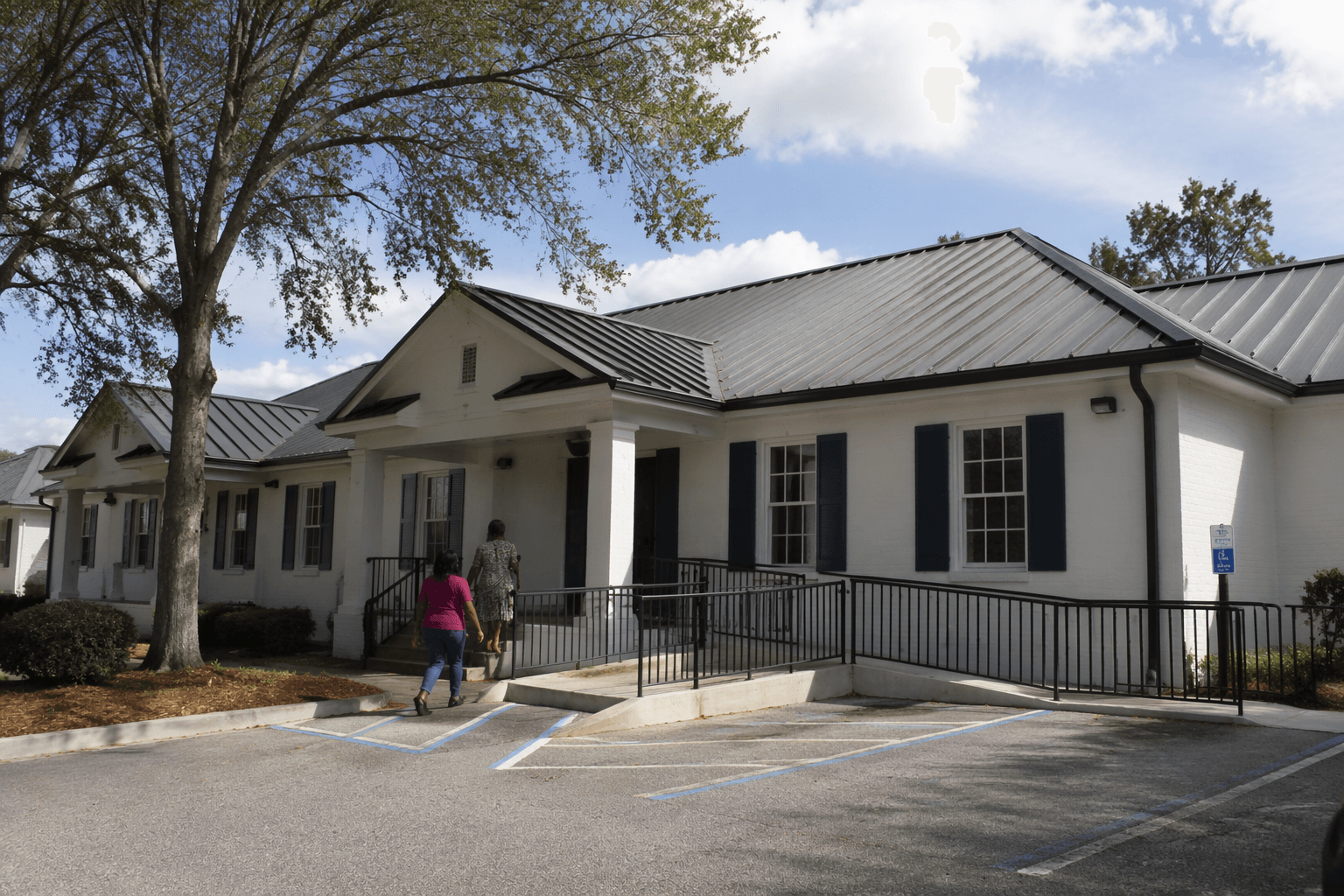
Allendale County Hospital Anchors Emergency and Rural Health Care Access
Allendale County Hospital is the only inpatient hospital across a three-county area in rural SC, and its CEO is now fighting to keep it funded as Medicaid cuts loom.

Allendale County Hospital, a critical access hospital in Fairfax, South Carolina, is the only inpatient hospital serving a three-county swath of the rural Lowcountry, a reality that sharpens every policy debate, every staffing gap, and every ambulance dispatch in ways that urban health systems rarely face. When the closest alternative for intensive care requires a long ambulance ride out of the county, the stakes of keeping this one facility operational are not abstract.
The Only Hospital in Three Counties
In the last decade, closures across the region have made Allendale County Hospital the sole inpatient provider for a three-county area. The Medical University of South Carolina took over operations of a freestanding emergency room in Bamberg County in 2023, but while that facility can handle emergencies, lab work, and imaging, patients needing more intensive care must be transferred via ambulance to a hospital. That ambulance ride, in a region with limited roads and sparse population, is the gap that Allendale County Hospital fills every day.
The hospital's emergency room operates 24 hours a day, seven days a week. It is licensed for 25 acute care beds, has a hospitalist on staff, and carries a critical access designation shared by only two other hospitals in South Carolina: Abbeville Area Medical Center and Edgefield County Healthcare, both affiliates of Greenwood-headquartered Self Regional Healthcare. All three feature 25 or fewer inpatient beds and round-the-clock emergency services.
More Than a Hospital
The facility on Allendale Fairfax Highway is the anchor of a broader care network that most counties its size could not sustain independently. Allendale also operates a 44-bed nursing home called the John Edward Harter Nursing Center in Fairfax, several rural health clinics, and the only retail pharmacy in the county, making it essential to the area.
That pharmacy detail matters in a county where the next closest retail option requires leaving the county entirely. The hospital's participation in the federal 340B Drug Pricing Program means county residents and the nursing center's long-term patients benefit from medication discounts often 25% to 50% off the sticker price. For low-income households, that discount is not a convenience; it determines whether prescriptions are filled at all.
The hospital also maintains what are known as swing beds, which allow patients to stay at the hospital for 20 days of therapy after a major surgery without requiring transfer to a distant rehabilitation facility. For an elderly patient recovering from a hip replacement, that local option can mean the difference between recovery near family and a weeks-long stay in another city.
CEO Lari Gooding and the Medicaid Calculation
Allendale County Hospital is financially stable and not at risk of closure. But with cuts to Medicaid payments looming, CEO Lari Gooding wants the hospital to be ready if payments from government-funded health care programs were to dip too far. Gooding, who has spent 29 years in healthcare, is now pressing South Carolina legislators to add a new provider category to state law before the financial picture deteriorates.
The potential answer Gooding is pursuing is a Medicaid provider designation called a "rural emergency hospital." Amid a national hospital closure crisis, some facilities on the brink of insolvency have turned to it as a way to keep going. The designation would allow Allendale to preserve emergency services even if inpatient volumes fell below what the current critical access model requires.

For the fiscal year ending June 30, 2025, South Carolina's participation in a supplemental Medicaid payment program provided hospitals an additional $2.5 billion statewide. Allendale's share of that was $3.5 million. A reduction in those supplemental payments, driven by proposed federal Medicaid cuts, is what Gooding is preparing to absorb. No hospital in South Carolina has yet sought the rural emergency hospital designation, but Gooding expects Allendale would be the first if that moment comes.
The tradeoffs, however, are real. Converting to a rural emergency hospital designation would cost the hospital its 340B pharmacy discounts and force it to eliminate swing beds, two services that directly affect the county's most vulnerable residents. That tension frames why Gooding's legislative push is for a backstop, a legal option, not an immediate conversion.
What Medicaid and Medicare Coverage Means Locally
Allendale County's poverty rate is among the highest in South Carolina, which means a disproportionate share of the hospital's patients rely on Medicaid and Medicare. Critical access hospitals like Allendale receive an added 1% on Medicare reimbursements compared to traditional hospitals, a margin that helps offset the cost of maintaining round-the-clock emergency capability in a county where patient volumes alone could not justify the overhead. The hospital's participation in both programs also ensures that residents are not forced to travel to access network coverage for routine inpatient or outpatient care.
Coordination: EMS, Emergency Management, and Transfers
The hospital does not operate in isolation. It coordinates actively with Allendale County Emergency Management, local EMS crews, and regional transfer centers to ensure that patients who need higher-level specialty care reach it as efficiently as possible. That transfer coordination is the functional equivalent of a bridge between rural emergency capacity and the larger tertiary hospitals, primarily in Augusta and Charleston, that handle cases beyond Allendale's scope.
For county residents, the practical guidance is straightforward: call 911 for life-threatening emergencies, including chest pain, stroke symptoms, or trauma. The emergency department is equipped to stabilize patients and initiate transfer protocols when the situation requires a higher level of care. For non-emergency questions about services, billing, or Medicare and Medicaid network participation, the hospital can be reached directly at 803-632-3311, and the county's official hospital page lists current contact and address details.
The Employment and Economic Dimension
As one of the county's largest employers, Allendale County Hospital supports healthcare workers, administrators, and ancillary staff in a local economy with limited alternatives. Workforce recruitment and retention in rural critical access settings remain persistent operational challenges, and staffing gaps can directly constrain which services a facility can offer on any given day. The hospital's ability to attract and keep qualified clinicians is not just an HR matter; it is a determinant of whether the emergency department can function at full capacity when a cardiac event or a multi-vehicle accident demands it.
Gooding's legislative effort is ultimately an argument that the county's healthcare infrastructure, and the 340B pharmacy, the nursing home, the swing beds, the rural clinics, and the only ER for miles in every direction, is too interconnected to lose through a financial slide that state policy could prevent. The goal is not to transform what Allendale County Hospital is. It is to ensure it is still there to be what it has always been.
This article was produced by Prism’s automated news system from verified source data, official records, and press releases, then run through automated quality and moderation checks before publishing. The system is built and supervised by the people who set the standards it runs under. Read our full AI policy.
Did this article answer your question?