Allendale County named for Allen family, formed in 1919
Allendale County’s name traces to the Allen family, a first postmaster, and a crossroads that still anchors the county seat. The story began in 1849 and still shapes how people read the county today.
Allendale County carries a name that came from people before it came from paperwork. The Allen family gave the county its identity, Paul H. Allen served as the settlement’s first postmaster, and the Town of Allendale took root where US 278 and US 301 meet in the center of the county. Those three facts still explain why the county seat sits where it does, and why the place feels organized around a few landmarks everyone recognizes.
A county named for a family, not a boundary line
The county itself is relatively new by South Carolina standards. Allendale County was formed in 1919 from parts of Barnwell and Hampton counties, making it the youngest county in the state. That late date matters because it means the county’s public identity is newer than many of the settlements and families that already lived there.
That helps explain why the Allen name remains so visible. Instead of being named for a river, a plantation, or a government official, the county took its name from a local family whose presence was already part of the landscape. In a rural county, that kind of naming keeps a family story attached to the map every time someone says where they live.
The post office that made Allendale a place people could find
The Allendale post office was established on July 11, 1849, and Paul H. Allen was the first postmaster of the settlement later called Allendale. That detail may sound small, but in a rural community a post office was one of the first public institutions that made a place legible to the outside world. It gave the settlement a mailing address, a formal name, and a point of contact long before modern maps, road signs, or county government filled in the rest.
Paul H. Allen is part of that origin story in a very literal way. Local-history records say he was born about 1800, died in Allendale, and is buried in Swallow Savannah Cemetery. That burial place ties the county’s naming story to a real location residents can still visit, which keeps the history rooted in the county rather than floating off into abstraction.
The post office also helps explain why the settlement’s identity stuck. Once mail, names, and routine business begin to flow through one point, that point becomes the place where people orient themselves. In Allendale, the post office was one of the first building blocks in the county’s civic geography.
Why the crossroads mattered
The Town of Allendale sits in the center of Allendale County where US 278 and US 301 intersect, and that crossroads position shaped the town’s daily life. Junction towns tend to draw stores, churches, schools, and government functions because people naturally pass through them. In Allendale, that central location made the town a practical choice for the county seat and gave it a role as the county’s organizing center.
This is why the county still feels connected to its road network. US 278 and US 301 are not just routes on a map; they are the lines that made the town easy to reach from across the county. When a county seat grows at a crossing, the roads do part of the civic work, pulling people toward the same center for business, public meetings, and courthouse errands.
The place has not always stood exactly where it does now. The original site of the town of Allendale was southwest of the present town center at the intersection of roads 107 and 47. An historical marker sits at that earlier location, giving the county a visible before-and-after geography. That marker matters because it shows that the town’s identity did not appear all at once, but shifted toward the transportation junction that eventually defined it.
The courthouse as the county’s civic anchor
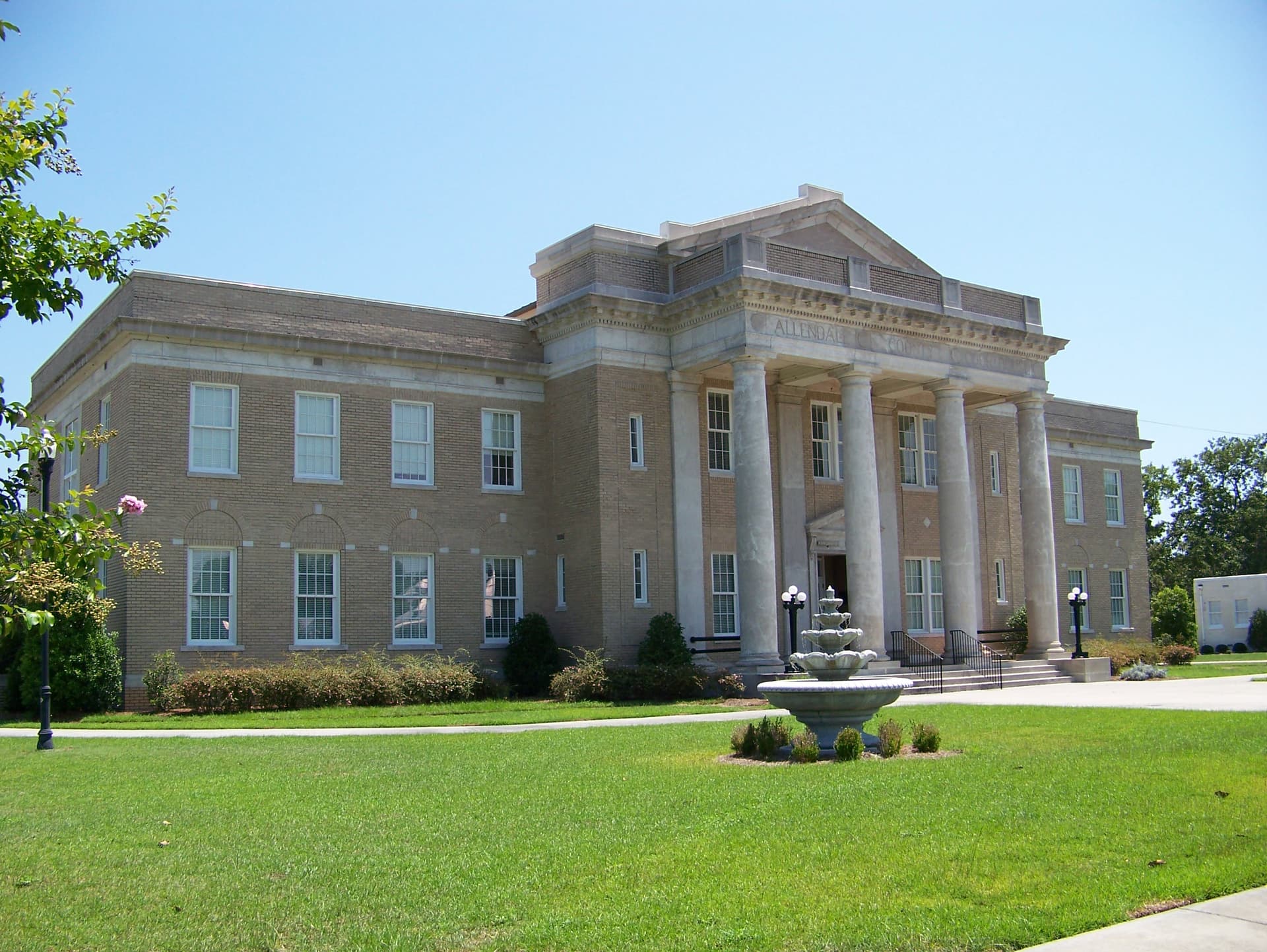
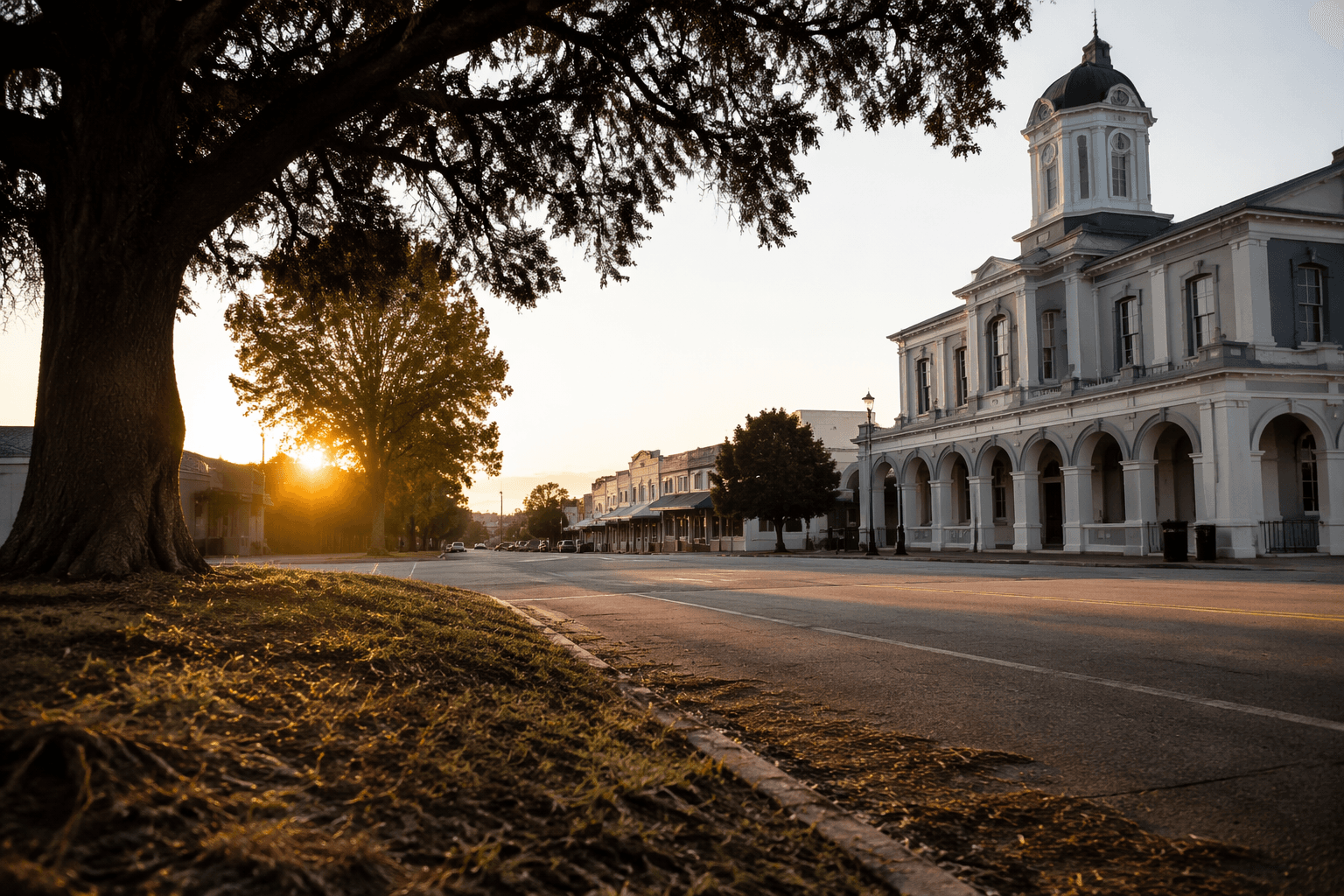
The Allendale County Courthouse on US 278 carries that same sense of continuity. It was gutted by fire in 1998, then renovated in 2004 in a way that preserved the original shell while creating a modern facility. The building is a reminder that the county’s center has changed with time, but not moved away from the crossroads that made it central in the first place.
A courthouse is more than an office building in a county this size. It is where land records, legal decisions, and everyday civic business collect in one place, which is why its location and condition matter so much. Keeping the original shell after the fire preserved the building’s visual link to the county’s past while letting it keep serving residents in the present.
A small county where the old names still carry weight
Allendale County had a population of 8,039 in 2020, a number that underscores how small and closely connected the county remains. In a place that size, a family name, a post office, a cemetery, a road intersection, and a courthouse are not separate historical curiosities. They are the landmarks that still help people explain where they are and how the county came to be.
That is why the Allen family story still matters in Allendale today. The county’s name, its county seat, the old post office history, the historical marker at roads 107 and 47, and the courthouse on US 278 all point to the same idea: this county grew from a settlement that became visible, then central, because people gave it a name, a mailing point, and a crossroads.
This article was produced by Prism’s automated news system from verified source data, official records, and press releases, then run through automated quality and moderation checks before publishing. The system is built and supervised by the people who set the standards it runs under. Read our full AI policy.
Did this article answer your question?