Allendale County website centralizes meetings, services, and public records
Allendale County’s website now serves as the county’s front desk, giving residents a single place to track council, pay taxes, and reach key offices.
A county portal built for daily use
Allendale County’s website is doing far more than posting a few notices. It functions as the county’s main public-facing hub for meetings, services, public records, and local reference material, which makes it the first stop for residents trying to understand what county government is doing and how to reach it.
That role matters in a county where practical information is often spread across multiple offices. Instead of sending people from one phone number or building to another, the site brings agendas, minutes, tax payment tools, request forms, and contact information into one place.
How council business is presented
The county explains its government structure clearly: Allendale uses a council-administrator form of government, with five council members elected from single-member districts and one chairman serving four-year terms. South Carolina recognizes four forms of county government, and Allendale’s setup places elected council leadership alongside an administrator who helps run the day-to-day operation.
For residents who want to follow local decision-making, the site gives one especially useful detail: council meets every third Thursday at 6 p.m. at the Allendale County Courthouse in Allendale, South Carolina. That makes the courthouse the central place for in-person public business, while the website keeps the schedule visible for anyone planning ahead.
The homepage calendar shows a budget workshop on May 19, 2026, which signals that county finances and planning are active issues right now. The county’s YouTube presence adds another layer of access, with a playlist that includes a regular council meeting on April 23, 2026 and a channel that says it will host all Allendale County Council meetings. For residents who cannot get to the courthouse, that matters: council business is not being treated as a closed-room process.
What residents can actually do on the site
The site is most useful when someone needs an action, not just a headline. From the main government page, residents can reach agendas, minutes, a Freedom of Information Request form, online tax payments, requests for proposals, county offices, and a wide set of local and state connections.
That means the website works as a starting point for several common tasks:
- checking when council meets
- reviewing what council already discussed
- finding the Freedom of Information Request form
- paying county taxes online
- looking up bids and RFPs
- finding the right county office or public contact
- following links to community and state resources
The offices page names key personnel as well, including Interim Administrator Chanel Lewis and Finance Director Esther Bridges. That gives residents a clearer path when they need to move from a general question to the specific office that can answer it.
Paying taxes and handling payment details
The online tax-payment page is one of the most practical parts of the site because it turns a routine chore into something residents can manage without an extra trip. The county says phone payments are now available at 803-573-9766, and paid receipts are available after 48 hours.
There are also some important limits built into the service. Delinquent taxes cannot be paid online or by phone, and credit-card payments carry a 2.35% convenience fee. Those details matter because they shape how people should approach the system before they try to pay.
For a resident trying to avoid delays, the page is useful precisely because it is specific. It tells you what the service can do, what it cannot do, and where the extra cost appears.
Public records, transparency, and the county archive
The county website is also acting as a records gateway. Agendas and minutes are available through the site, and the Freedom of Information Request form gives residents a formal path to ask for records instead of relying on informal phone calls or scattered office visits.
That public-record function is reinforced by the county’s meeting archive on YouTube, where council sessions from 2025 and 2026 have been streamed. In a small county, that kind of accessibility can make a big difference because it lets residents check decisions after the fact, follow budget debate, and see how council members handle public business over time.
The county is clearly using the website and video archive together to make government easier to follow. The result is a more visible public record than a static website alone could provide.
A site that also reflects county identity
The website does not stop at government mechanics. Its links to cities and towns in the county, the county airport, the county hospital, local businesses, colleges and universities, churches, historic sites, and civic organizations give the page a broader civic purpose.
That is especially important in Allendale County, which had a population of 8,039 in the 2020 Census and 408.1 square miles of land area. In a county of that size, a central website does more than advertise services. It helps knit together a community that is geographically spread out and institutionally interconnected.
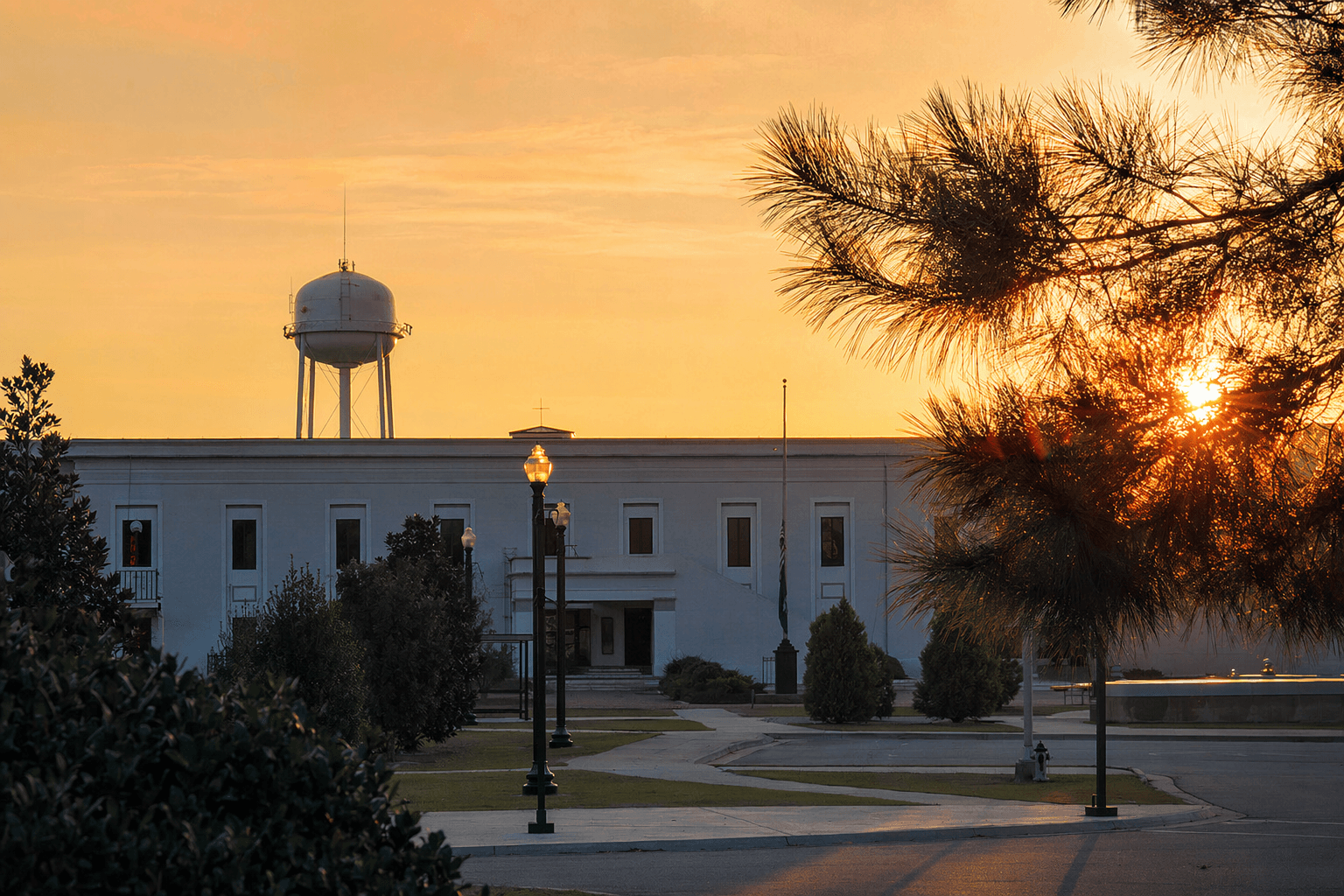
The historic-sites section stands out in particular. It includes the Topper Site, the Fairfax Train Depot, the Allendale Standpipe, USC Salkehatchie, and numerous churches and historic properties. For a county formed in 1919, that list places heritage alongside administration and suggests that public identity is part of the county’s digital presence, not an afterthought.
Why the website matters now
For Allendale residents, the site is useful because it does the basic government jobs that matter most: it tells you when council meets, who is running county offices, where to find records, and how to handle tax payments. It also shows that council business is active, with a budget workshop listed on the homepage and regular meetings appearing in the video archive.
In a rural county, that kind of centralized access makes government feel closer and more usable. Allendale’s website is not just a brochure. It is the county’s public front desk, meeting notice board, records file, and service directory all at once.
Know something we missed? Have a correction or additional information?
Submit a Tip