Allendale County's Historic Sites Shape Cultural Identity and Tourism Potential
The Allendale Standpipe, restored neighborhood theaters, and Fairfax historic houses anchor a cultural identity that doubles as the county's strongest tourism draw.
Few counties of Allendale's size can claim a historic landscape as layered and locally beloved as the one that stretches from downtown Allendale to the preserved neighborhoods of Fairfax. The Allendale Standpipe, restored neighborhood theaters, and a collection of historic houses in Fairfax together form something greater than a list of attractions: they represent the physical memory of a community that has actively chosen to protect what earlier generations built. That choice carries real consequences for cultural identity and, increasingly, for the county's economic future.
The Allendale Standpipe: A Landmark That Orients the Downtown
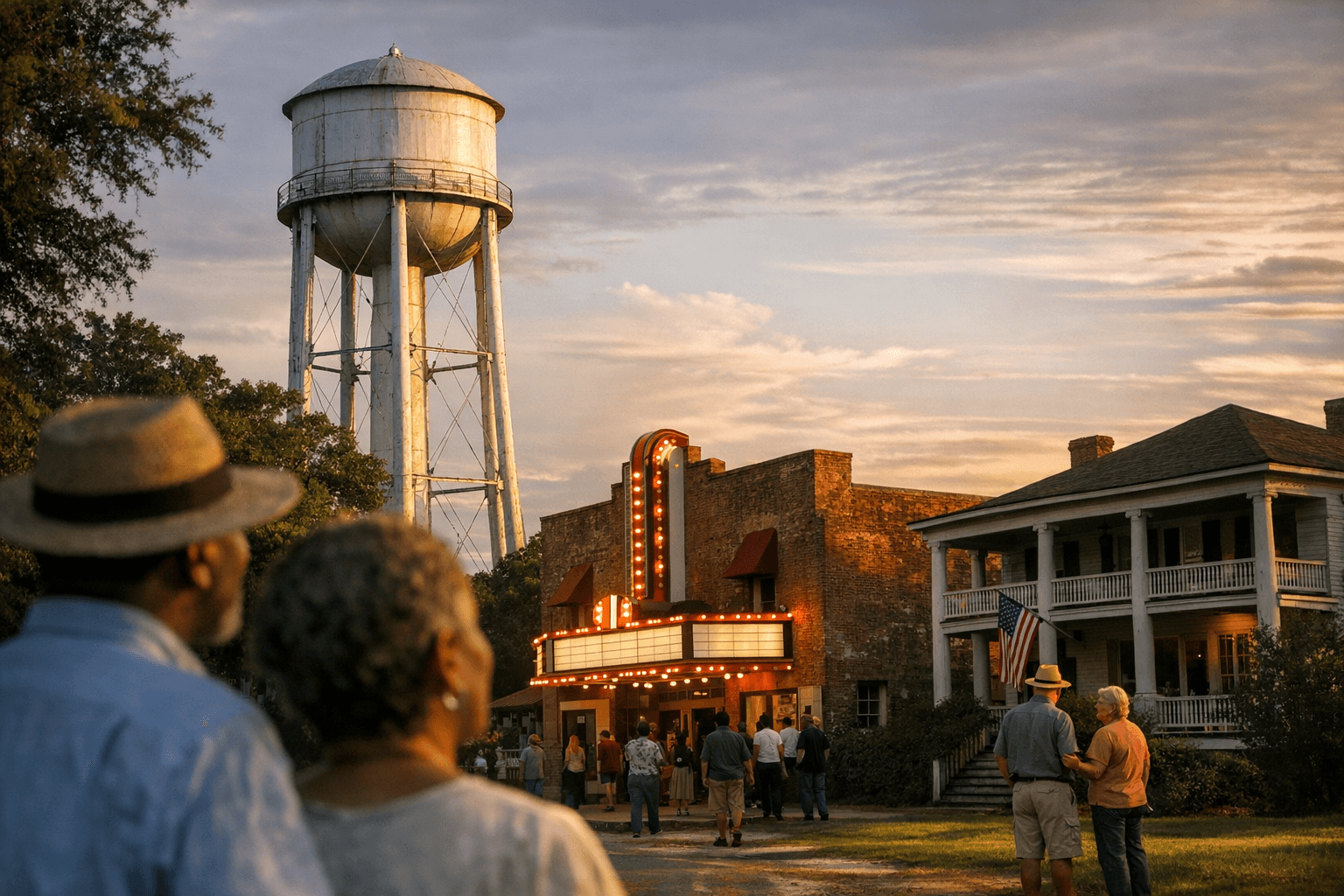
The Allendale Standpipe is the county's most immediately recognizable historic structure, anchoring the downtown streetscape in a way that few single buildings can. Standpipes were engineering solutions of their era, built to regulate water pressure across growing municipalities, and their survival into the present is relatively rare. That Allendale's standpipe still stands downtown, rather than having been demolished during one of the county's previous rounds of modernization, speaks to a preservation instinct that runs deep in local civic culture. Its presence in the heart of downtown gives residents and visitors an immediate visual reference point, a reminder that the city they are walking through has a material history that predates living memory.
The standpipe also functions as an informal orientation marker. Ask a longtime Allendale resident for directions and the standpipe will almost certainly appear in the answer. That kind of embedded navigational and cultural role is difficult to quantify but impossible to overlook when assessing a structure's value to a community. Its continued prominence in downtown Allendale makes it a natural anchor for any heritage tourism itinerary the county might develop.
Restored Neighborhood Theaters: Where Preservation Meets Public Life
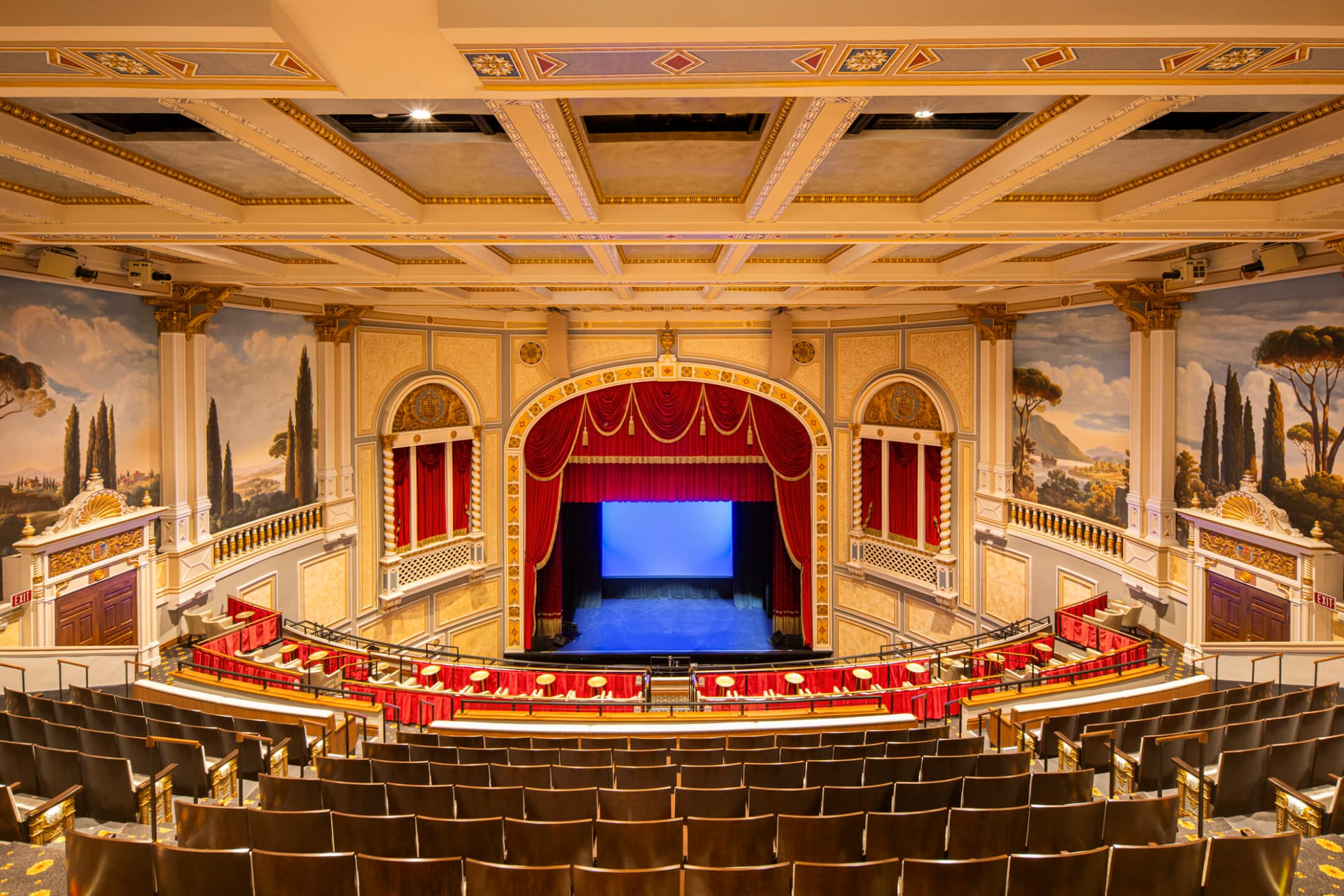
Allendale County's restored neighborhood theaters represent a different category of historic asset: spaces that were built not for utility but for gathering. Theaters occupy a specific place in the social history of American communities, serving as venues for film, live performance, political meetings, and civic ceremony across decades. When a neighborhood theater is restored rather than razed, the community retains not just a building but a tradition of public assembly that shaped generations of local residents.
Restoration projects of this kind require sustained institutional commitment and often significant financial investment, both of which signal that a community values its built heritage enough to act on that value. The presence of restored theaters in Allendale County suggests that local preservation efforts have achieved a level of organizational maturity, moving beyond the reactive work of stopping demolitions and into the more proactive work of bringing historic spaces back into active use. A functioning restored theater is, by definition, a living historic site: it continues to accumulate community history with every performance or screening it hosts.
For tourism purposes, restored theaters carry particular appeal. Visitors drawn to heritage destinations consistently respond to spaces that feel authentically inhabited rather than frozen in amber. A theater that still books performances, hosts community events, or screens films offers an experience that a museum-style preservation cannot fully replicate. Allendale's restored venues, by remaining active community spaces, position themselves as destinations that reward repeat visits.
Fairfax and Its Preserved Historic Houses
The neighborhood of Fairfax contributes a residential dimension to Allendale County's historic landscape that the downtown standpipe and the theater circuit do not provide on their own. Preserved historic houses tell the story of how ordinary people lived, where they built their families, and what domestic architecture looked like across different economic periods. That kind of history is often more immediately relatable to visitors than the grand civic or commercial narratives that downtown landmarks tend to represent.
Fairfax's collection of preserved historic houses gives the neighborhood a streetscape integrity that is increasingly rare in communities that have experienced significant modern development pressure. When a critical mass of historic structures remains intact along a residential street, the cumulative effect is immersive in a way that isolated preserved buildings cannot achieve. Visitors walking through Fairfax encounter not just individual houses of historical note but an entire neighborhood that communicates something coherent about the county's past.
For residents, the preservation of Fairfax's housing stock carries practical implications as well as cultural ones. Neighborhoods with strong historic character tend to attract sustained civic investment, generate heritage tourism interest, and maintain property values through periods of broader economic uncertainty. The decision to preserve rather than redevelop in Fairfax has produced a neighborhood that serves multiple community interests simultaneously.
Cultural Identity and the Argument for Preservation
Taken together, the standpipe, the theaters, and the Fairfax houses make the case that Allendale County's cultural identity is not abstract. It is embedded in specific structures at specific addresses, structures that can be visited, photographed, studied, and experienced directly. Communities that preserve their built heritage retain a tangible connection to their own origins, and that connection functions as a form of civic cohesion that is difficult to manufacture from scratch once it has been lost.
Allendale's compact geography works in the county's favor here. Because the historic sites are distributed across a relatively small area, they are accessible to one another in a way that encourages combined visits rather than isolated stops. A heritage tourism route that connects the downtown standpipe to the restored theaters to the Fairfax neighborhood can be completed on foot or by bicycle, which aligns with the preferences of a growing segment of cultural travelers.
Tourism Potential and the Path Forward
The tourism potential embedded in Allendale County's historic sites is real but not automatic. Potential becomes economic activity only when sites are documented, interpreted, and marketed with the same seriousness that the preservation community has brought to the physical work of saving these structures. Signage, walking tour materials, digital mapping, and coordination among site managers are the connective tissue that transforms a collection of individual landmarks into a coherent visitor experience.
The county's existing assets are strong. The Allendale Standpipe provides an iconic image capable of anchoring promotional materials. The restored theaters provide programmable venues that can anchor events-driven tourism. The Fairfax historic houses provide the kind of neighborhood-scale authenticity that heritage travelers increasingly seek out over conventional attractions.
What Allendale County has built through its preservation decisions, structure by structure over many decades, is a cultural infrastructure that most small counties would envy. The work now is to connect those assets into an experience that communicates their collective value as clearly to a first-time visitor as it does to the lifelong resident who has grown up in their shadow.
This article was produced by Prism’s automated news system from verified source data, official records, and press releases, then run through automated quality and moderation checks before publishing. The system is built and supervised by the people who set the standards it runs under. Read our full AI policy.
Did this article answer your question?