Community joins Allendale Fairfax meeting, helps shape school goals
Parents and community members gathered at Allendale Fairfax Elementary School on December 17 for a Cocoa and Conversation session hosted by the School Improvement Council. The meeting gave residents a direct opportunity to share ideas that could shape school priorities, services, and supports that matter to local families.
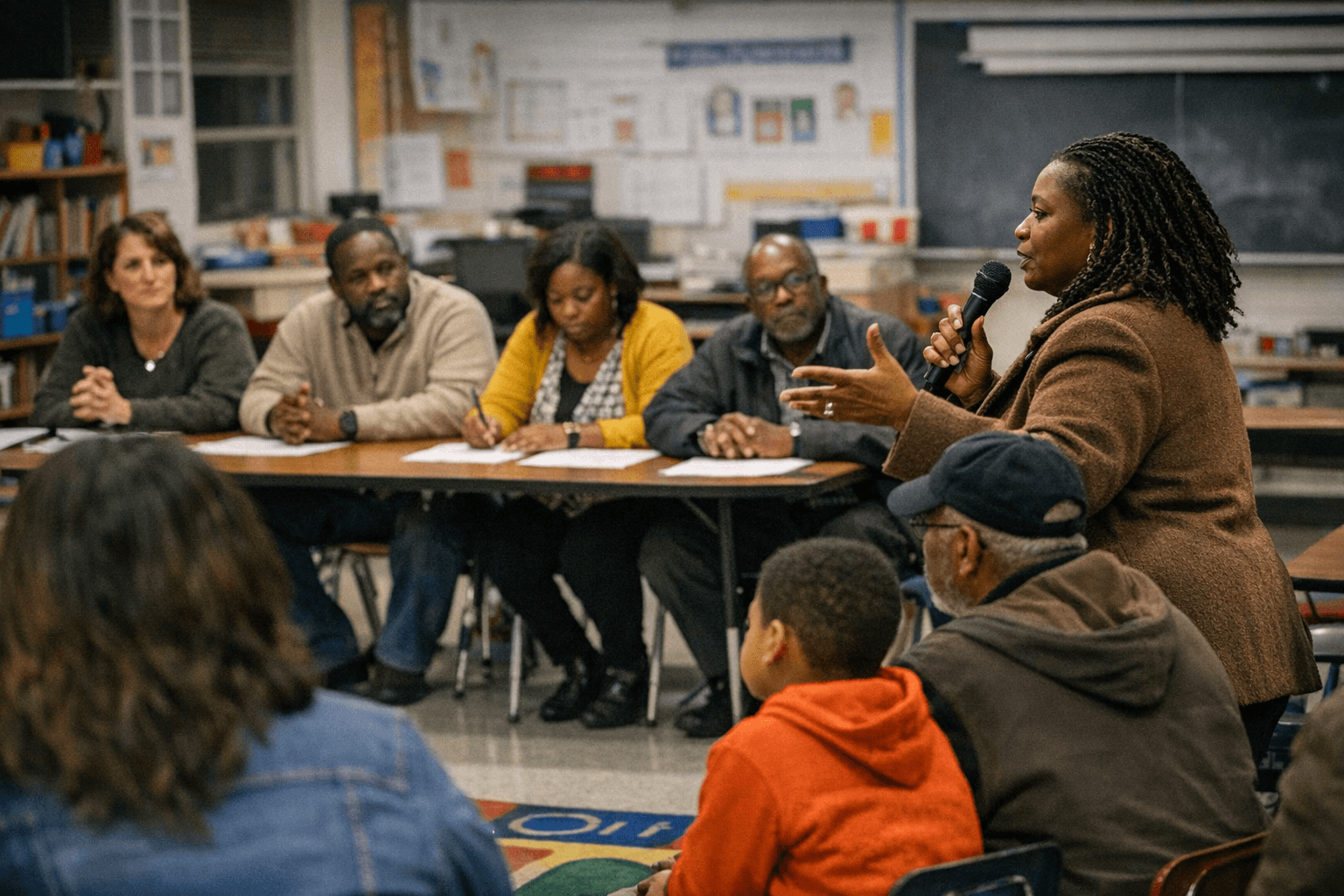
On December 17 community members and parents met in the Allendale Fairfax Elementary School cafeteria for a Cocoa and Conversation event organized by the school improvement council. The district posted a live feed announcement on its website during the week of December 15 through 19 inviting residents to attend and to share ideas to help support students and the school community. The gathering focused on school goals and strategies for improvement.
The School Improvement Council convened the session to solicit local input, a core part of the council role in shaping school improvement plans and advising school leadership. Hosting the meeting in the cafeteria and offering a live feed were meant to lower barriers to participation, allowing people who cannot attend in person to follow the discussion and contribute. The district asked residents to bring forward ideas, priorities, and concerns to inform work that affects classroom instruction, student supports, and family engagement.
Local engagement at meetings like this has direct consequences for policymaking and resource decisions at the school and district level. Community input can influence priorities for spending, programs for academic support, and partnerships for wraparound services such as mental health resources, nutrition supports, and transportation. For Allendale County, where access to services and educational equity are longstanding concerns, parent and community voice is especially important in directing limited resources toward the students and families who need them most.
Public health and social equity intersect with school improvement work. Schools are frontline sites for supporting child development, mental health, and access to preventive services. When community members participate in planning, they help identify gaps in services and make sure interventions reach historically underserved children. That can mean advocating for after school supports, culturally responsive instruction, or stronger coordination with county health services.
The School Improvement Council will use the collected input as it refines its recommendations. Continued attendance and follow up from residents will be necessary to translate conversation into concrete changes, and to hold decision makers accountable to community priorities in the months ahead.
This article was produced by Prism’s automated news system from verified source data, official records, and press releases, then run through automated quality and moderation checks before publishing. The system is built and supervised by the people who set the standards it runs under. Read our full AI policy.
Did this article answer your question?