Severe drought grips Allendale County, farmers face costly irrigation needs
Allendale County farmers were irrigating fields just to plant corn as drought deepened, and a statewide burn ban shut down outdoor burning.
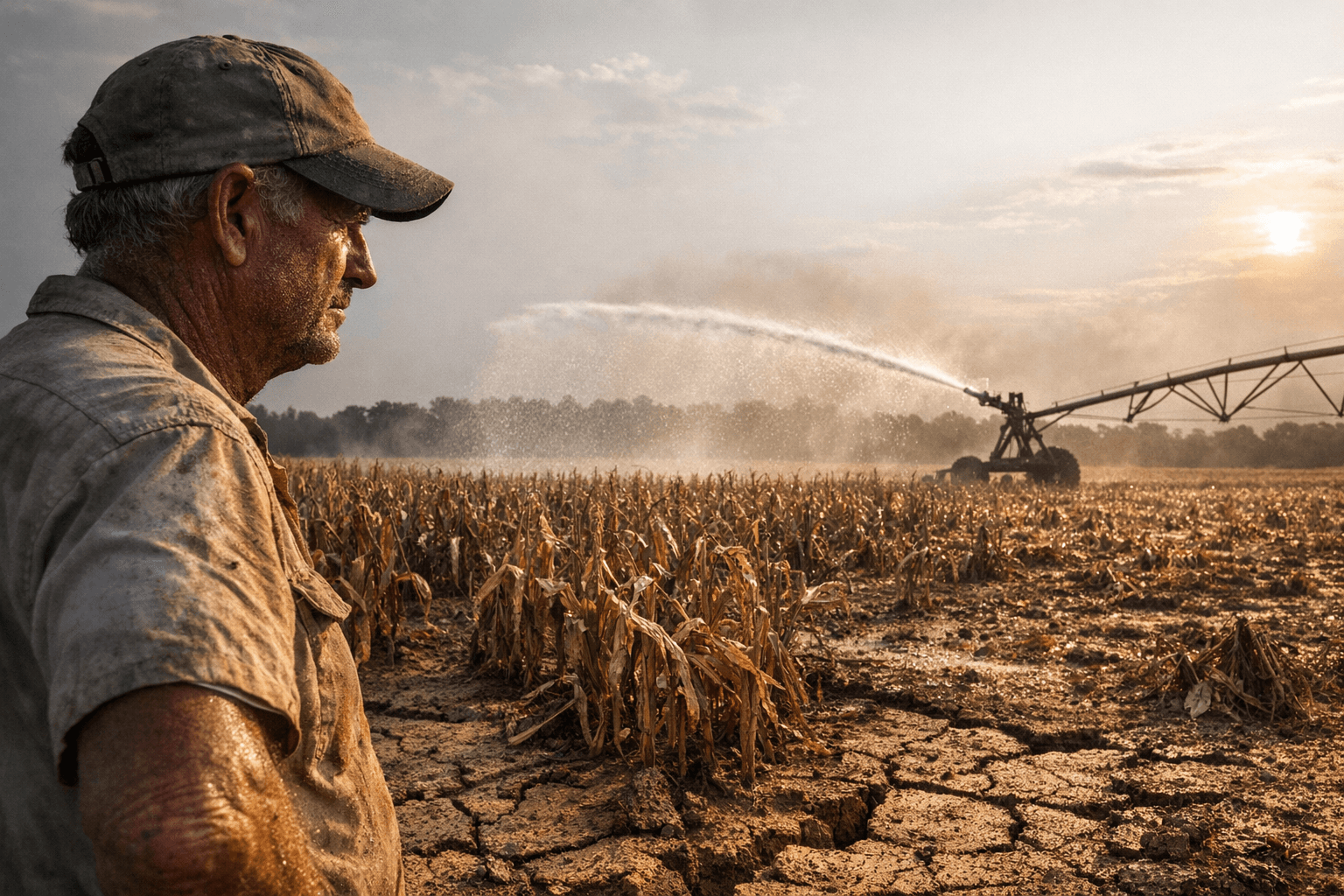
Dry soil across Allendale County has already forced farmers to pour irrigation water into fields just to get corn planted, adding cost and labor to an operation where margins are already thin. One longtime county resident described conditions as severely dry and unlike anything seen in recent memory, and the concern has moved well beyond the farm gate.
The National Weather Service Charleston drought summary on April 3 listed Allendale County in D1 moderate drought and said the lack of rain stretched back to September 2025. In the same period, Charleston International Airport recorded only 49% of normal rainfall, or 13.31 inches below normal, while Savannah International Airport was at 42% of normal, 13.41 inches below normal. A Condition Monitoring Observer Report filed April 1 by a farmer in Allendale County said crops and irrigation ponds were already taking a hit.
For a county with 205 producers and major crop acreage in soybeans, corn for grain, peanuts, wheat, and forage and hay, the timing could hardly be worse. Corn fields in some parts of the county could not be planted without irrigation because the soil lacked enough moisture. In fields with irrigation, water had to be applied before planting could even begin, a sign that growers are spending more just to keep spring work on schedule. USDA’s April 6 Crop Progress report underscored how closely farmers across the region were tracking planting conditions as the dry spell continued.
The drought also raised the fire danger. The South Carolina Forestry Commission issued a statewide burn ban that took effect at 7 a.m. Friday, April 17, prohibiting outdoor burning, yard debris fires, campfires, and recreational fires. A previous statewide ban had been issued effective 4 p.m. on March 27 and lifted March 30, showing how quickly the risk had returned. Darryl Jones, the agency’s fire chief, said energy-release conditions were high to critical, meaning fires were more likely to be driven by the landscape itself than by wind alone.
State fire-prevention materials say nearly 98% of South Carolina wildfires are human-caused, and escaped debris burns are the leading cause. South Carolina averages about 1,400 wildfires and 14,000 acres burned each year, with fire season typically running from late winter through mid-April. In Allendale County, that meant the drought was not just a weather problem. It was already shaping what farmers could plant, how much they had to spend on irrigation, and how quickly a small spark could turn into a much larger fire.
This article was produced by Prism’s automated news system from verified source data, official records, and press releases, then run through automated quality and moderation checks before publishing. The system is built and supervised by the people who set the standards it runs under. Read our full AI policy.
Did this article answer your question?