Topper Site Exhibit Brings Ancient Allendale History to USC Salkehatchie
Stone tools possibly 50,000 years old, recovered 15 miles away on the Savannah River, are now on permanent display at the USC Salkehatchie library.
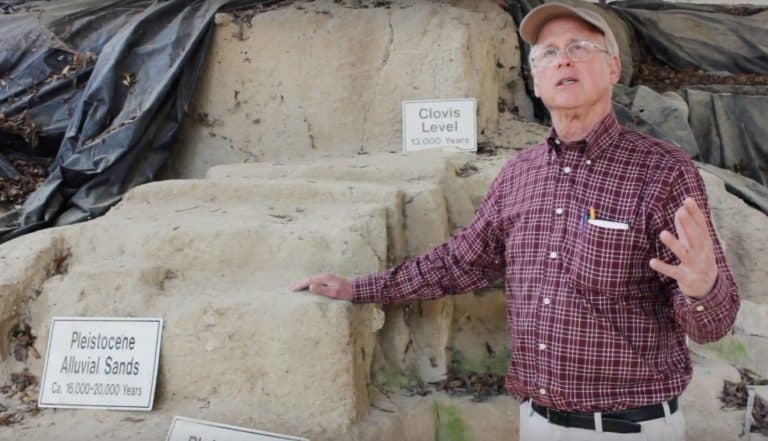
A permanent exhibit at the USC Salkehatchie Campus Library in Allendale puts some of North America's most disputed prehistoric artifacts within reach of local residents, bringing the controversial findings of a decades-long dig on the Savannah River into a public setting for the first time.
The exhibit, "Searching for our Beginnings: Public Archaeology at the Topper Site," features stone tools recovered from the Topper Site, a chert quarry located on a Pleistocene terrace along the Savannah River roughly 15 miles from campus. The site, catalogued under the official code 38AL23 and listed within the Allendale Chert Quarries Archeological District on the National Register of Historic Places, is described as the largest site in the Southeast with evidence of Clovis-era human occupation.
Dr. Albert Goodyear of the South Carolina Institute of Archaeology and Anthropology at the University of South Carolina has directed research at the site since excavations began in 1986. Goodyear first identified the location in 1981 with the help of John Topper, a local forester whose name the site now carries. Early digs revealed Archaic occupation layers, and by the late 1990s, researchers had documented an extensive Clovis presence in deeper strata, recovering artifacts numbering in the thousands. As of 2013, 840 square meters of the site had been excavated down to Clovis-bearing material or deeper.
The exhibit was prepared by the South Carolina Archaeological Public Outreach Division under Dr. Goodyear's direction and in consultation with Dr. Ann Carmichael, then dean of USC Salkehatchie. It includes physical artifacts, explanatory posters, and a kiosk with interactive audio-visual presentations. Two additional display cases in the library hold prehistoric tools, weapons, and dishes recovered from along the Savannah River, most made by American Indians within the past several thousand years, though a few date to the Clovis period.
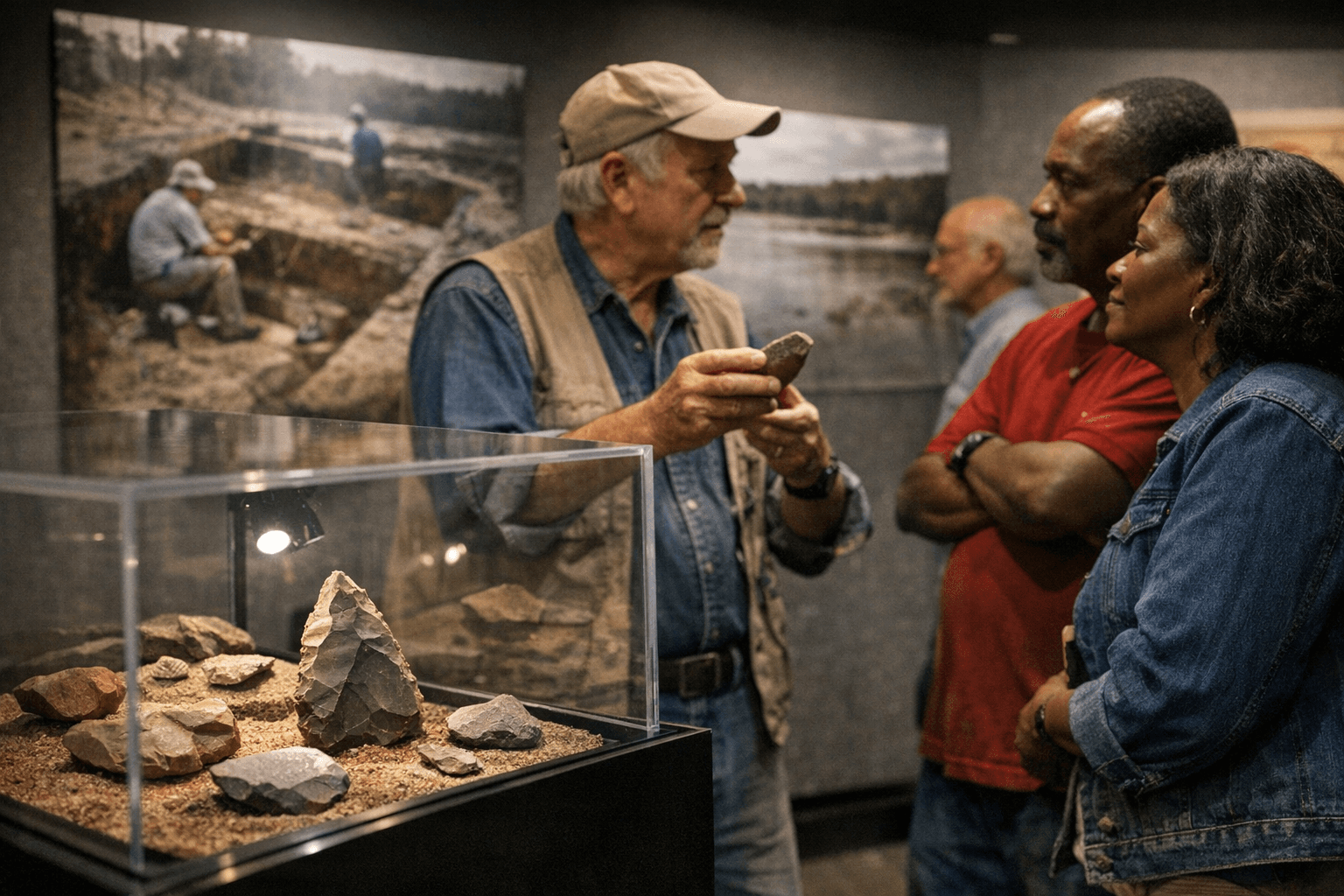
Artifacts in the exhibit are labeled in two categories. Items marked "Clovis" are approximately 13,000 years old, a designation that takes its name from Clovis, New Mexico, where tools made with the same technology were first identified. Items labeled "Pre-Clovis" are described as more than 15,000 years old and, according to the exhibit, could be as much as 50,000 years old. That figure places the Topper Site at the center of one of American archaeology's sharpest debates: the established view has long held that humans first arrived in the Americas around 13,000 years ago, making any claim of earlier habitation, let alone one reaching back five times that far, deeply contested.
No proposed pre-Clovis site in North America has drawn more sustained controversy than Topper. The research has attracted attention from scholars and news organizations internationally, partly because the Allendale Coastal Plain chert quarried at the site was among the most prized raw materials for prehistoric toolmakers in the region; stone suitable for forming into points is scarce north and east of Topper, meaning the site drew people from a wide area for an extraordinarily long span of time.
The land the site sits on was formerly owned by Clariant, which contributed funding for a protective pavilion built over the Pleistocene terrace in 2006 and constructed a viewing deck overlooking the excavation area. Ownership transferred to Archroma in 2013. The USC Salkehatchie exhibit remains the first and only permanent public display of artifacts from the Topper Site.
This article was produced by Prism’s automated news system from verified source data, official records, and press releases, then run through automated quality and moderation checks before publishing. The system is built and supervised by the people who set the standards it runs under. Read our full AI policy.
Did this article answer your question?