Apache County tribes await water settlement as lawmakers stall
Apache County families could feel the settlement gap at home, where one in three Navajo homes still lacks a tap or toilet and major water rights claims remain in Congress.
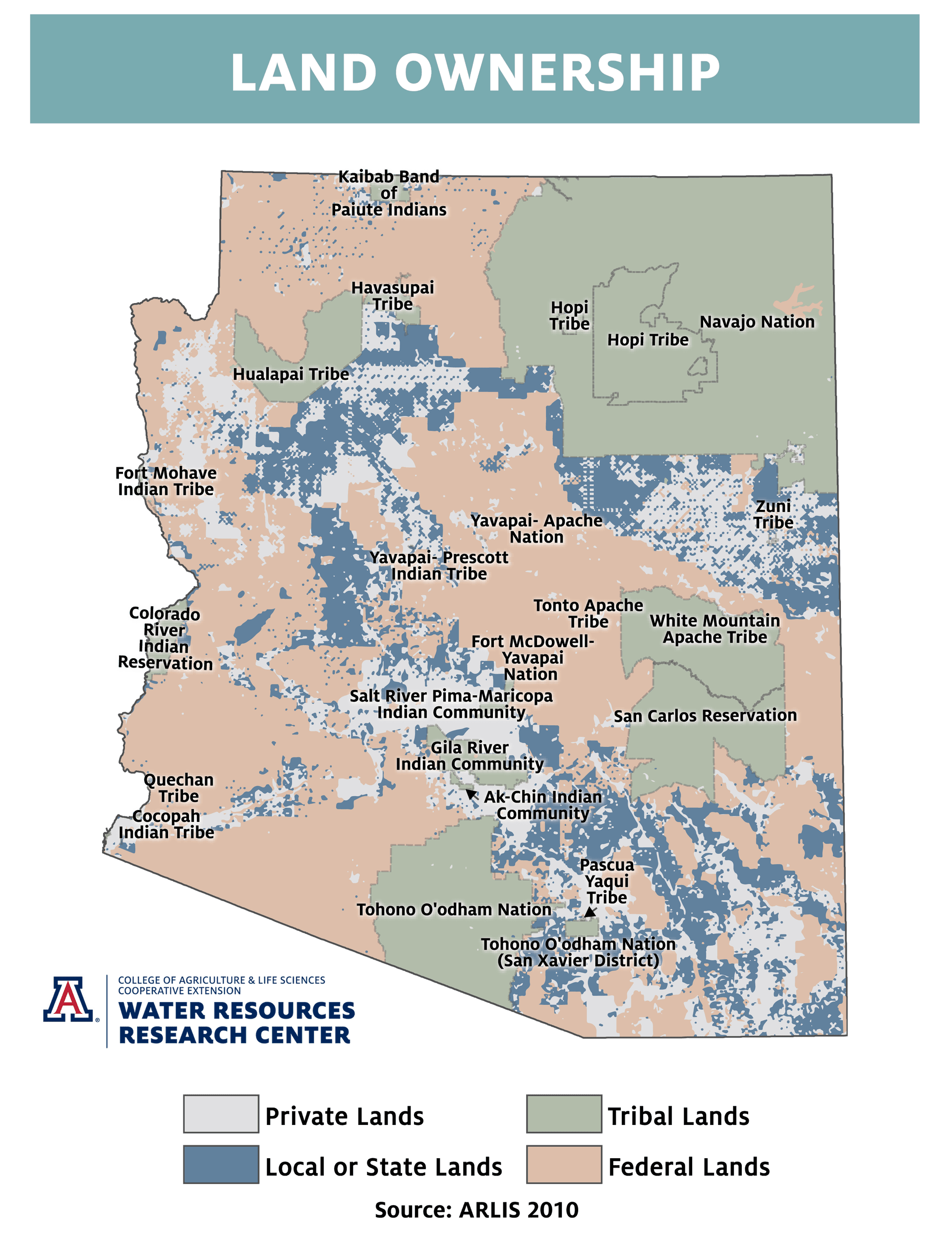
Tribal water rights that still have no federal approval are shaping daily life in Apache County, from hauled water and household plumbing to whether new housing, grazing plans and drought responses can move ahead. Water experts said at the 99th Annual Arizona Water Conference and Exhibition in Phoenix that Arizona’s long-term water future depends not only on Colorado River negotiations and groundwater policy, but also on these unresolved settlements.
The biggest pending package in northeastern Arizona covers the Navajo Nation, Hopi Tribe and San Juan Southern Paiute Tribe. It would settle claims to the Colorado River, the Little Colorado River and groundwater across the region, establish a reservation for the San Juan Southern Paiute Tribe and authorize more than $5 billion in water infrastructure funding. Arizona water officials have called it one of the largest tribal water-rights settlements in U.S. history.
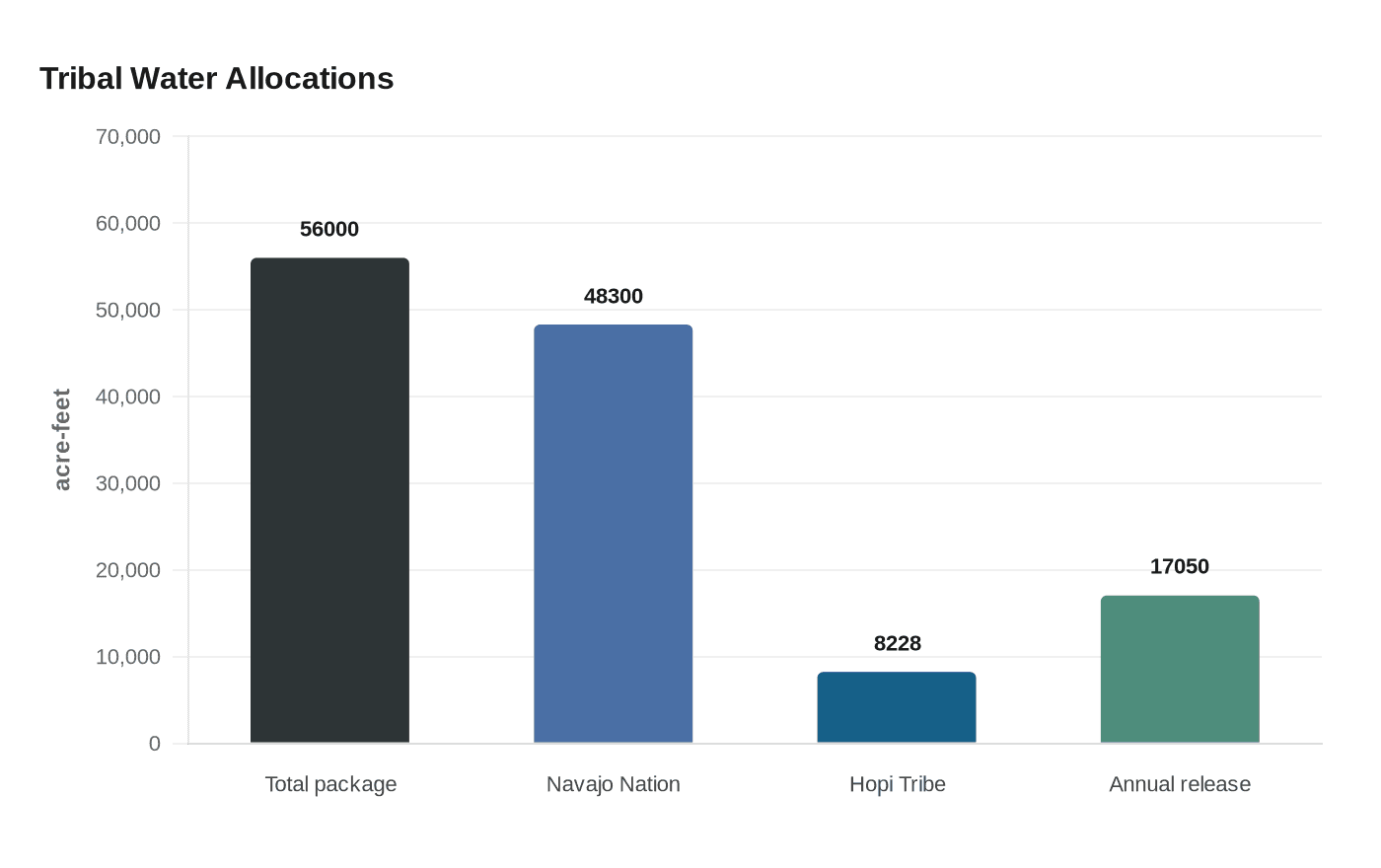
For Apache County, the stakes are immediate. The settlement would secure more than 56,000 acre-feet of Colorado River water and require the Navajo Nation and Hopi Tribe to leave 17,050 acre-feet a year of Arizona Upper Basin water in Lake Powell for the first 20 years. The agreement also would give the Navajo Nation about 48,300 acre-feet of Colorado River water in Arizona and the Hopi Tribe about 8,228 acre-feet, numbers that could eventually affect how water is routed, stored and delivered in communities from St. Johns to Chinle.
The three tribes approved the agreement in May 2024, and Gov. Katie Hobbs approved it later that year on behalf of Arizona. But Congress did not pass the settlement before the end of the 118th Congress, leaving the deal stalled in Washington. The legislation was reintroduced in the 119th Congress as S. 953 and sent to the Senate Committee on Indian Affairs, where tribal leaders testified in March 2026 in support of the measure. Sen. Mark Kelly introduced Navajo Nation President Buu Nygren, Hopi Tribe Chairman Lamar Keevama and San Juan Southern Paiute Tribe Vice President Johnny Lehi Jr. at that hearing.
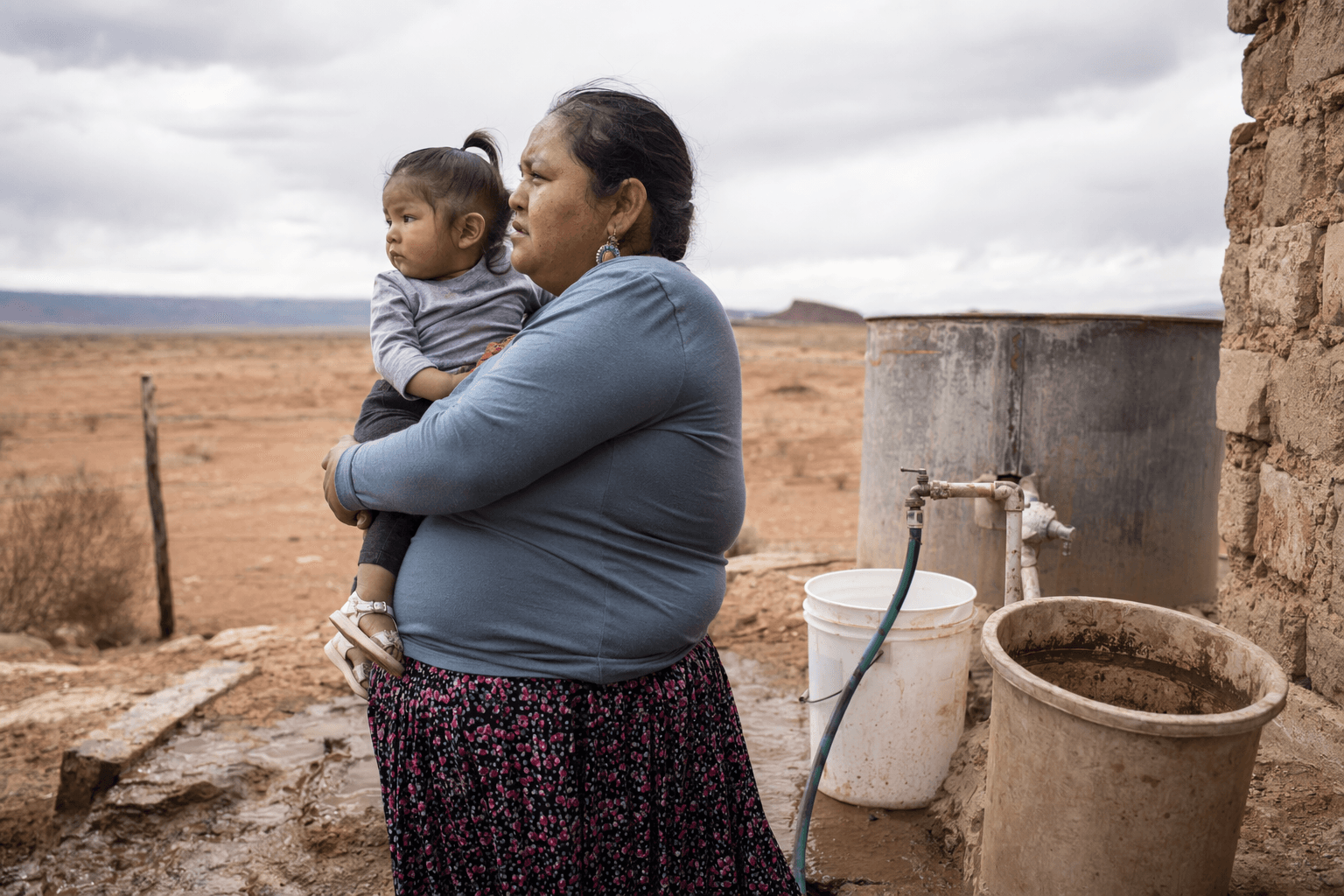
The delay carries real consequences in homes across Apache County and the wider Navajo Nation. The Navajo Nation Department of Water Resources says about 30% of the Navajo Nation population does not have access to clean, reliable drinking water. The Navajo Water Project says one in three Navajo homes still lacks a tap or toilet. Until lawmakers act, those numbers continue to define what water rights mean on the ground: not an abstract legal fight, but whether families can count on running water, whether communities can build for growth and whether drought planning can keep pace with need.
This article was produced by Prism’s automated news system from verified source data, official records, and press releases, then run through automated quality and moderation checks before publishing. The system is built and supervised by the people who set the standards it runs under. Read our full AI policy.
Know something we missed? Have a correction or additional information?
Submit a Tip

