Diné debate peyote access as psychedelics industry expands
A sacred cactus once protected by federal law is now caught between a peyote shortage, a growing psychedelic market and a Navajo Nation fight over who may use it.
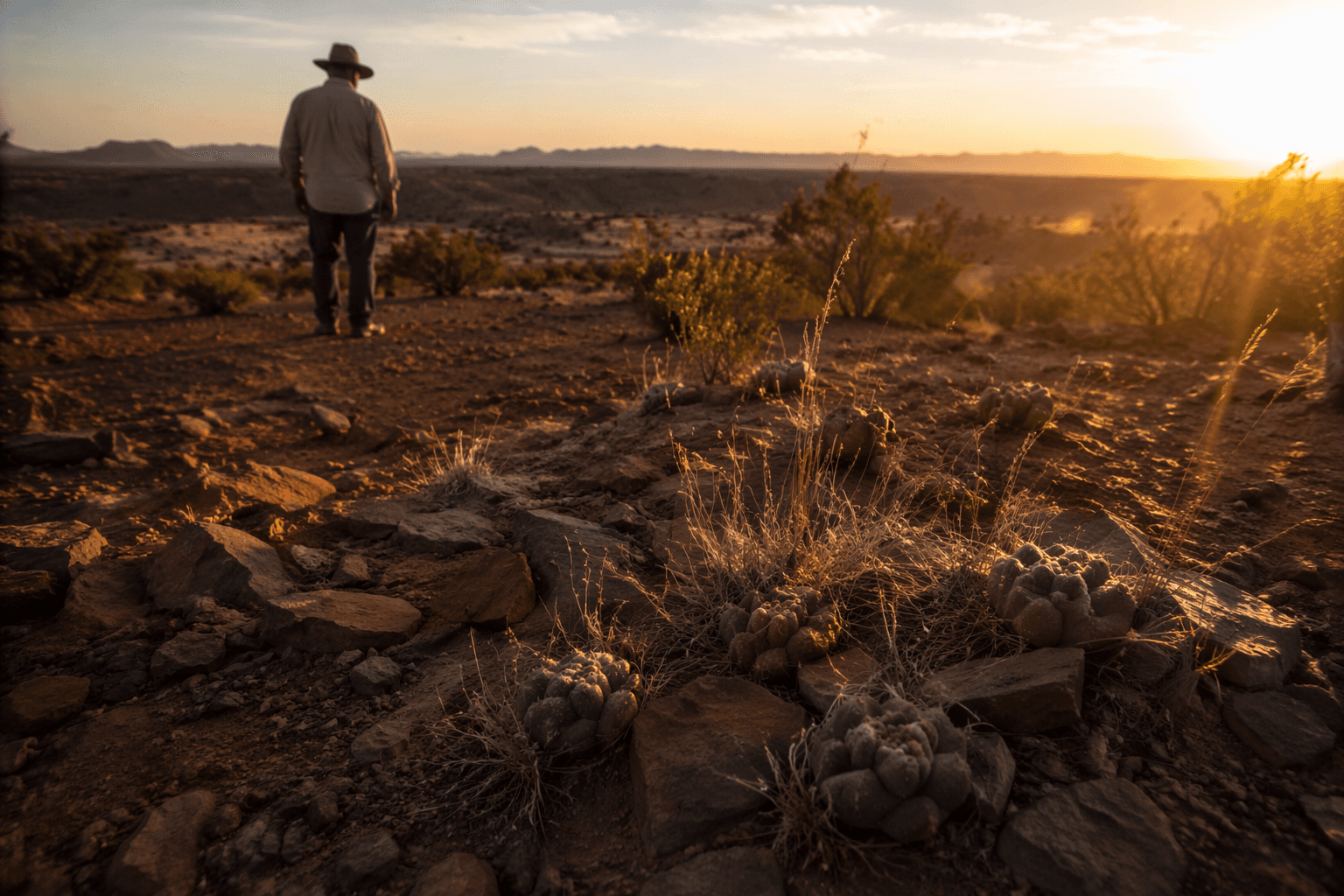
For Diné families in Apache County and across the Navajo Nation, the peyote debate reaches far beyond Washington or the commercial psychedelics market. It reaches into homes, where ceremony is planned quietly and without public notice, and into the question of who gets to define legitimate use of a sacred medicine that many families say has guided religious life for generations.
The core legal protections are already in place. In 1994, Congress amended the American Indian Religious Freedom Act to say the traditional ceremonial use of peyote by an Indian for bona fide traditional ceremonial purposes is lawful and cannot be prohibited by the United States or any state. Federal regulations at 21 CFR 1307.31 also exempt peyote used in bona fide Native American Church ceremonies from the Controlled Substances Act’s peyote restrictions. Congress also found that peyote had been protected by federal regulation since 1965 and that uneven state rules created hardship for Indian people trying to take part in ceremonies.
Even with those protections, pressure on peyote is growing. Recent reporting has linked a shortage to over-harvesting, land development and rising interest in psychedelics, a combination that has put new strain on a plant known in Navajo contexts as Ázeé Diyin, or lophophora williamsii. That scarcity matters in practical ways for people in northeastern Arizona. If supply continues to tighten, families in Window Rock, surrounding communities and Apache County may see longer waits, greater travel burdens and more uncertainty around ceremony planning.
The Navajo Nation has moved to draw a line against commercialization. In November 2023, President Buu Nygren signed a proclamation opposing any state or federal effort to decriminalize peyote for commercial or recreational purposes. The proclamation framed peyote as a sacred plant used for religious, cultural and ceremonial purposes for centuries. A 2022 Navajo Nation resolution went further, saying the Nation recognizes the Azeé plant as sacred and that many Diné families have used it for religious, cultural and ceremonial purposes since time immemorial.
Not all church members agree on the response. Within Native American Church circles, including the Native American Church of Navajoland and the Azee’ Bee Nahagha’ of Diné Nation, the debate has widened as the psychedelic industry grows louder. Some focus on protecting access and sovereignty; others emphasize conservation and restoration. The Indigenous Peyote Conservation Initiative, formed in 2017 by Native church leaders and allies, has pushed regeneration, sustainable harvesting and replanting.
For Apache County readers, the stakes are immediate. The argument over peyote is shaping how ceremony, supply and tribal policy may change in the years ahead, and it is testing whether a sacred sacrament can stay protected as outside markets push closer.
This article was produced by Prism’s automated news system from verified source data, official records, and press releases, then run through automated quality and moderation checks before publishing. The system is built and supervised by the people who set the standards it runs under. Read our full AI policy.
Know something we missed? Have a correction or additional information?
Submit a Tip