Navajo leaders hear local priorities on water, energy and health
Council members at Whitehorse High School weighed water, clinic access and road money against larger promises that still depend on funding, permits and Congress.

Council members met at Whitehorse High School in Montezuma Creek, Utah, on June 20 to hear what Northern Navajo Agency chapters want first: water infrastructure, energy development, drought preparedness, public health and budget money. The forum brought together the 25th Navajo Nation Council, the Northern Navajo Agency Council, chapter officials, residents and health and research professionals, with the sharpest divide running between projects that can move now and promises that still depend on outside approvals.
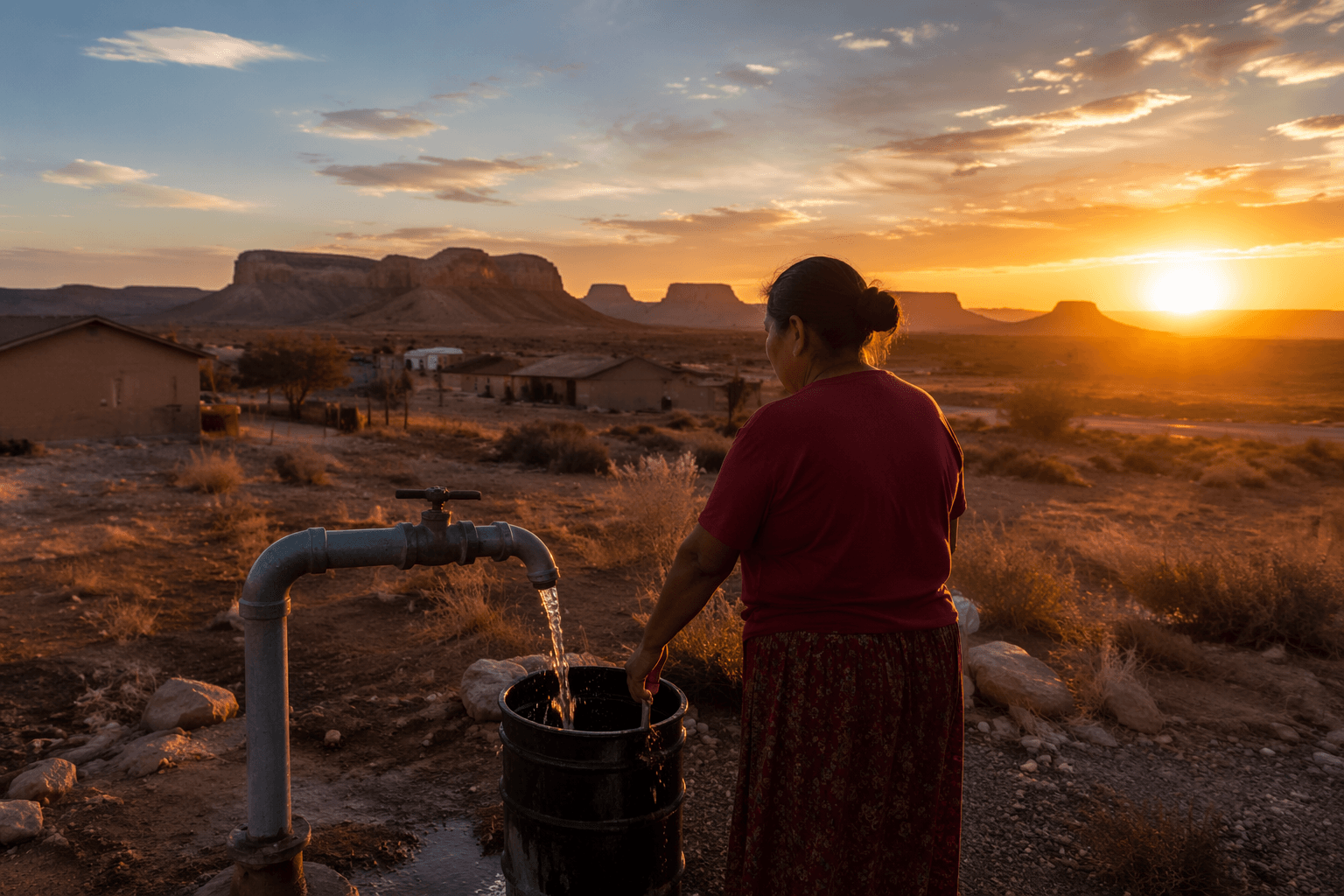
Crystalyne Curley opened with a legislative update that tied local needs to bigger Navajo Nation priorities, including transportation infrastructure funding, drought response, water resource planning, broadband expansion and issues that could come before a future special session. That context mattered because the Navajo Nation declared a drought emergency in June 2026, saying worsening conditions had strained water supplies, reduced forage production, lowered reservoir levels and deepened hardships for ranchers, farmers and families. The Council’s spring 2026 approval of a historic $120 million transportation investment for road construction, bridge improvements, airport infrastructure, road lighting, maintenance and safety projects in 59 Navajo communities showed that some money is already moving, while water access remains a harder fight.
Energy and governance drew their own line of debate. Rickie Nez pushed proposed rights-of-way legislation for energy development projects and said the Nation’s energy revenues matter to the economy. Eugenia Charles-Newton pressed for transparency, public engagement and steadier communication between leadership and local communities. Together, their remarks framed the choice facing chapter governments: whether to prioritize projects that can generate revenue and expand access, or slow down for broader public participation before decisions are made.
Amber Kanazbah Crotty turned the discussion toward rural health, asking for more information about healthcare access, vaccination availability and autism-related services for families far from the central service hubs. That concern matched reports from healthcare and research professionals on adult pneumonia surveillance, infectious disease monitoring and autism assessment initiatives for Diné families. The Navajo Department of Health says it manages 14 programs serving more than 300,000 people across the Nation, a scale that shows how quickly shortages in staff, travel distance or clinic capacity can become a daily obstacle.
Curtis Yanito focused on the budget bottlenecks at the chapter level, saying chapters need practical funding for water shortages, road maintenance, agricultural operations and community development projects. That is where the meeting landed most concretely: broadband money nearly $150 million from Arizona has already been announced, but the Northeastern Arizona Indian Water Rights Settlement still needs congressional action. For Northern Navajo communities, the difference between a plan and a delivery schedule still runs through chapter budgets, utility work and federal approvals.
This article was produced by Prism’s automated news system from verified source data, official records, and press releases, then run through automated quality and moderation checks before publishing. The system is built and supervised by the people who set the standards it runs under. Read our full AI policy.
Did this article answer your question?