Navajo Nation urges prayer as severe drought threatens water supplies
Families hauling water and feeding livestock faced a new drought warning as Navajo Reservoir neared a shortage window and Lake Powell’s inflows stayed far below normal.
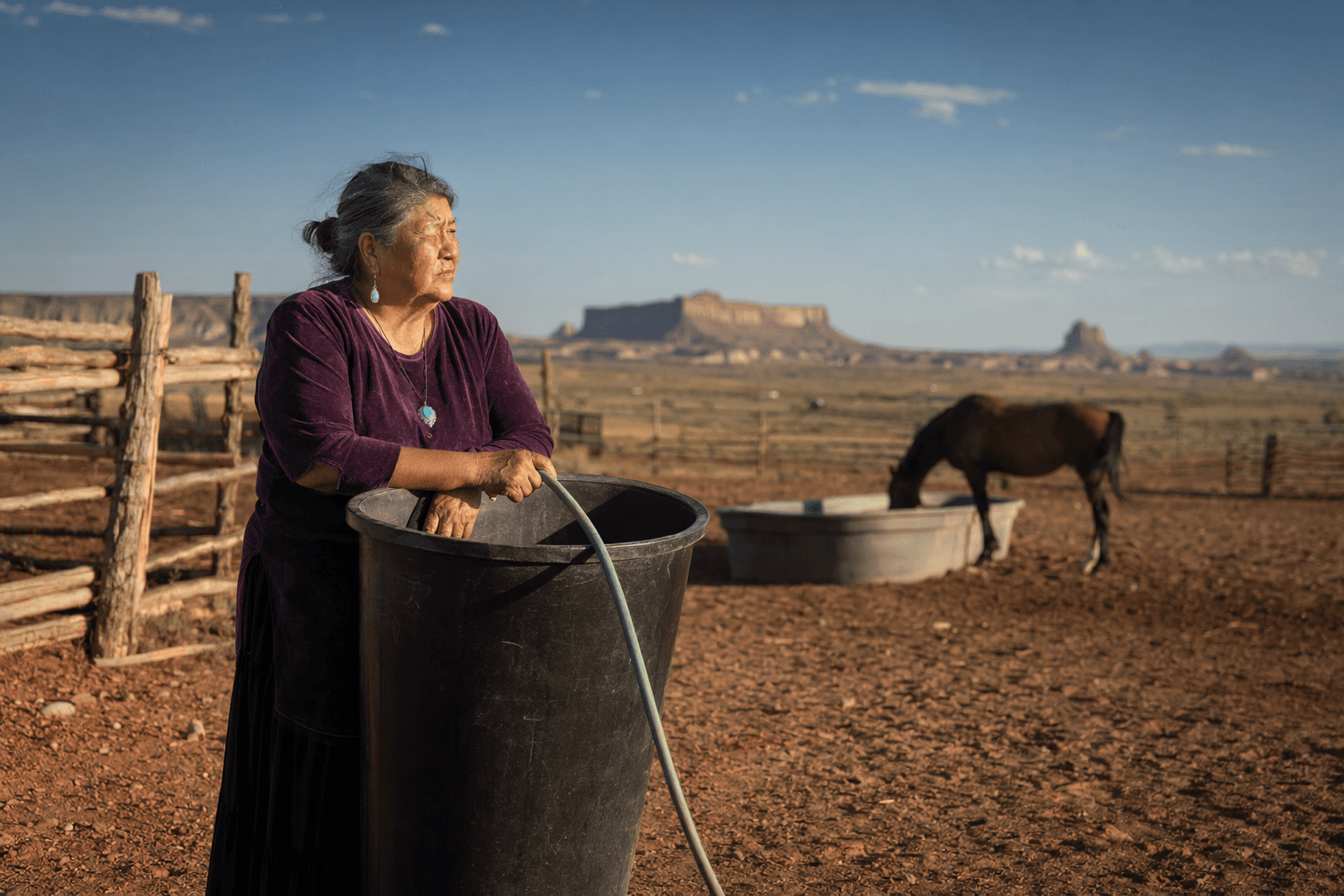
Families hauling water across Apache County and Navajo chapters faced another hard warning from Window Rock as severe drought threatened household supplies, livestock tanks and farm water on the Navajo Nation. The call from the Navajo Nation Department of Justice Water Rights Unit paired prayer with policy, with attorney Dwight Witherspoon tying the appeal to Diné teachings about caring for the land while warning that the stakes were concrete: Navajo Reservoir could run short of water from November 2026 through February 2027.
Federal forecasts showed how tight the system had become. The Bureau of Reclamation’s April 2026 24-Month Study projected Lake Powell’s April-through-July unregulated inflow at 1.40 million acre-feet, just 22% of average, while placing the reservoir in the Mid-Elevation Release Tier for water year 2026. Reclamation projected a Lake Powell release volume of 7.48 million acre-feet for the year, and said the Colorado River Basin began water year 2026 with total system storage of 21.8 million acre-feet, or 37% of total capacity. If Lake Powell drops below minimum power pool, Glen Canyon Dam can no longer generate hydropower.
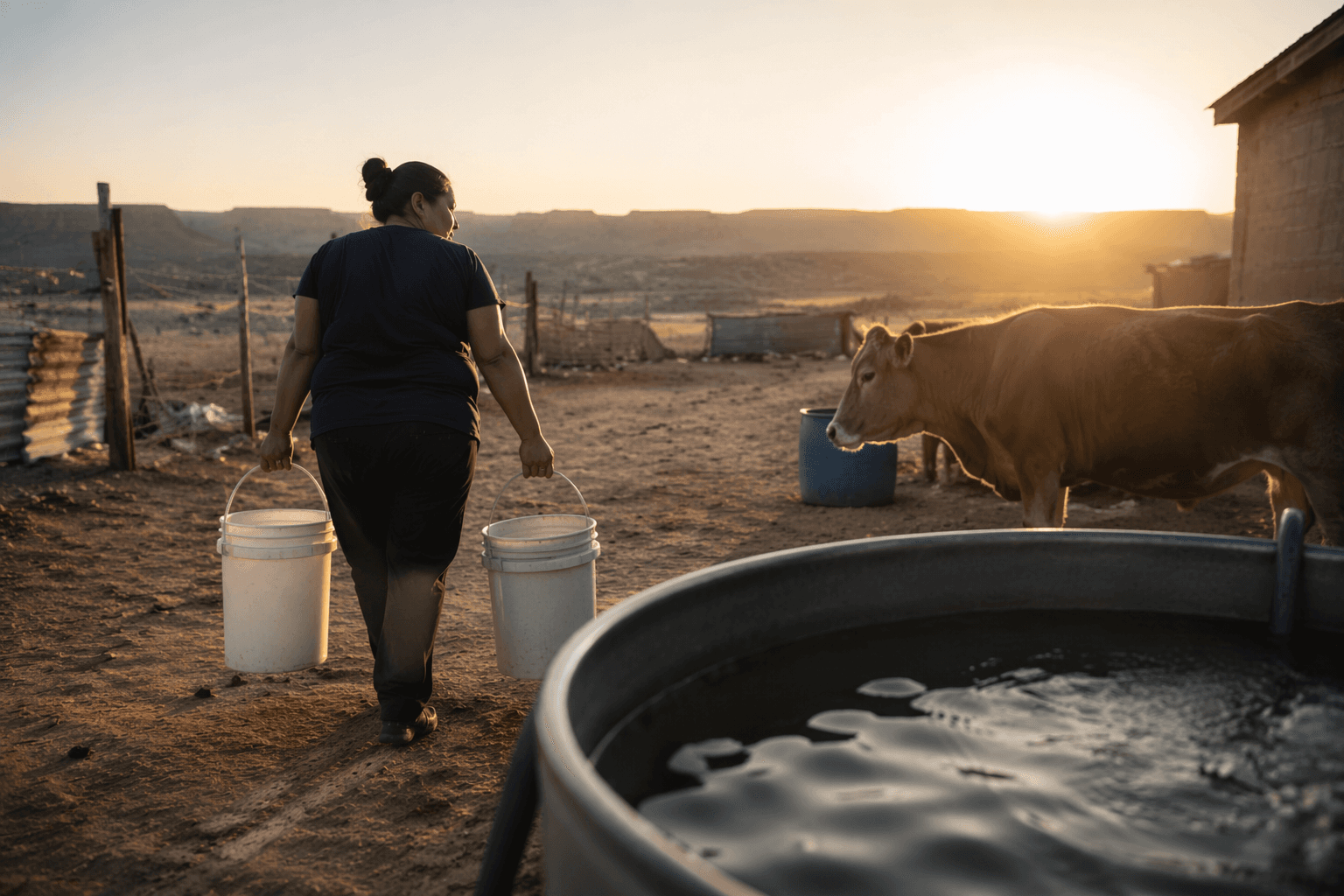
Navajo Reservoir was not starting from a comfortable position either. On April 3, 2026, its water surface elevation stood at 6036.1 feet, with live storage at 1.020 million acre-feet, or 62% of live storage capacity. Reclamation’s operations page listed April modified unregulated inflow at 81,000 acre-feet, 55% of average, May at 89,000 acre-feet, 37% of average, and June at 13,000 acre-feet, 7% of average. The San Juan Basin forecast for April through July put the 50% case at 173,000 acre-feet, with a 90% case of 79,000 acre-feet and a 10% case of 360,000 acre-feet.

That matters well beyond reservoir charts. The Navajo Indian Irrigation Project was approved by Congress in 1962 to deliver water to about 110,000 acres of Navajo lands, and its water supply depends on the same basin that is now running lean. For Apache County residents, that means drought is pressing against agriculture, energy and the reliability of daily water use, not just against long-term planning.
The warning also fits a pattern that has already forced tougher decisions. The Navajo Nation declared a drought emergency in 2025 and directed agencies to coordinate emergency response, support livestock reduction and prioritize drought-tolerant crops. What is new now is the depth of the forecast: a low-storage system, a weak runoff outlook and a basin where every acre-foot matters from Window Rock to Navajo Reservoir and down to Lake Powell.
This article was produced by Prism’s automated news system from verified source data, official records, and press releases, then run through automated quality and moderation checks before publishing. The system is built and supervised by the people who set the standards it runs under. Read our full AI policy.
Did this article answer your question?