STAR School grows food sovereignty through student garden, cooking programs
STAR School has turned its garden, sheep, and kitchen into a food-security system. The work reaches past the classroom and into Diné culture, family meals, and local resilience.
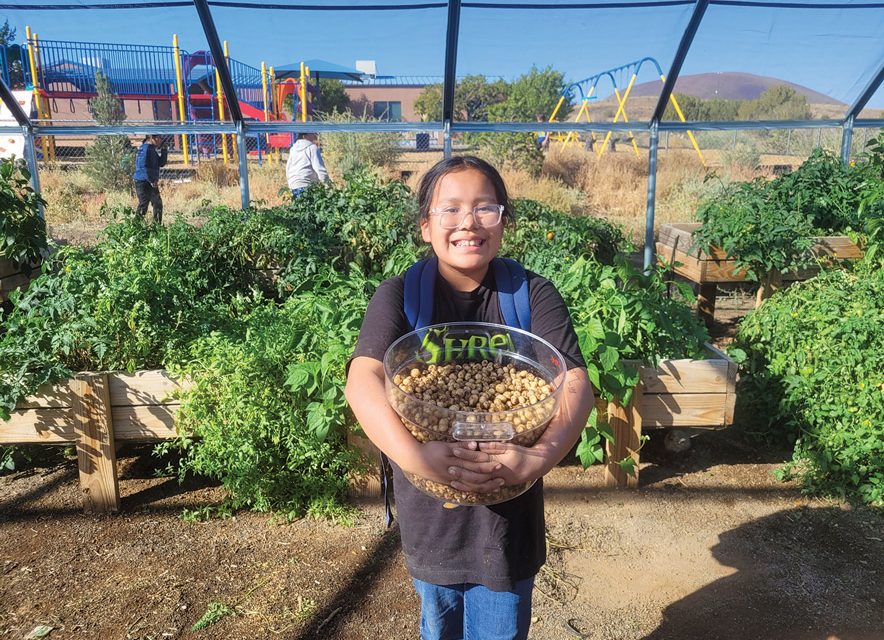
At STAR School near Leupp, food is no longer just part of the day, it is part of the institution’s mission. A 2024-26 impact report says the K-8 charter has turned its student-run garden, livestock club, and cooking program into a working food-sovereignty effort, with children planting and harvesting, raising and butchering sheep, and cooking what they grow over the school year.
A campus built around self-reliance
STAR School sits 25 miles east of Flagstaff and serves students from kindergarten through eighth grade who live in the southwest corner of the Navajo Nation and the surrounding rural area. The school opened in August 2001 with 23 students, later growing to 130, and its own mission language makes clear that it was built to function in a place with few jobs, no public utilities, and long-standing barriers that most schools do not have to solve on their own. The school describes itself as an off-grid, solar and wind powered campus, and that matters here because food sovereignty is being treated as part of the same survival mindset as water, energy, and transportation.
How the garden becomes a food system
The school’s garden program is not framed as a side activity. STAR’s garden lessons center on a set of essential questions: where food comes from, how people grow healthy food, how food ties to culture and community, how to make healthy choices, and how people prepare healthy food. The school says those lessons move students through the full food process, from the fields to the plate or cafeteria tray, and its board says students have been gardening in several greenhouses for the past 18 years, with vegetables served to students and community members. That is the core of the model: students are not only learning about food, they are helping produce it in a place where the result can be eaten at school and shared beyond campus.
STAR also ties that work to daily nutrition. Its food menu page says students receive free breakfast and free lunch, along with free drinking water during meal time and throughout campus. The school says meals are varied, nutritious, and consistent with the federal Dietary Guidelines for Americans, and it invites students, family members, and school personnel into menu planning through a nutrition committee. That gives the food program a practical reach that goes beyond growing vegetables: it shapes what children eat every day and gives families a formal role in that decision-making.
Livestock and kitchen training keep the lessons moving
The livestock side of the program gives the same lesson a different scale. The 2024-26 report says the school’s livestock program grew out of a 2022 grant for a trailer and barn, and STAR opened a 4-H Livestock Club in 2025 that has run fully since this spring. Students now raise sheep, cattle, and chickens on campus, handling feeding, watering, cleaning, grooming, and vaccinations, while also taking hands-on lessons in sheep shearing and fiber production. The school’s garden page says funding for its sheep comes through a USDA Farm to School grant, which puts federal dollars behind a program that is teaching animal care and food production together.
That mix of agriculture and cultural instruction is visible in the school’s media work as well. STAR has student-made films on traditional food practices, including a short on juniper ash in traditional Diné cooking and other projects rooted in corn, bread, and place-based learning. Those projects matter because they show the food program is not only about calories or gardening technique. It is also about preserving cooking methods, teaching the next generation how local ingredients are prepared, and connecting classroom work to Diné knowledge that has been carried through families, not textbooks alone.
Why the program reaches beyond the school fence
The school’s own wellness policy puts the broader strategy in writing. The board says the school’s role includes promoting family health through Indigenous philosophy and Native Science, using greenhouse and garden projects as the backbone of sustainable agriculture. It also says farm-to-school practices should be encouraged and locally grown food should be included in breakfast and lunch whenever possible. That is not a decorative mission statement. It is a governance document that links food access, health, and curriculum, and it helps explain why the school’s impact report matters: STAR is not just celebrating student activity, it is trying to measure whether the program is changing behavior and strengthening food access.
The Native FEWS Alliance describes STAR as a rural Northern Arizona public charter school serving a student population that is 99 percent Native American, mainly from the nearby Navajo Nation, and says the school focuses on food sovereignty and Indigenizing STEM curricula. It also points to annual harvest festivals with traditional foods and produce raised by students, along with quarterly workshops for curriculum development. Taken together, those details show how the campus functions as more than a school site: it becomes a place where food production, family participation, and cultural instruction all reinforce one another. For Apache County readers watching how Navajo communities build resilience, that is the real significance of STAR’s model.
This article was produced by Prism’s automated news system from verified source data, official records, and press releases, then run through automated quality and moderation checks before publishing. The system is built and supervised by the people who set the standards it runs under. Read our full AI policy.
Did this article answer your question?