Atchison County Courthouse, a historic Washburn-designed landmark, still serves government
The Atchison County Courthouse still runs daily county business from its 1896 Washburn-designed home at 5th and Parallel, where history and government share the same front door.
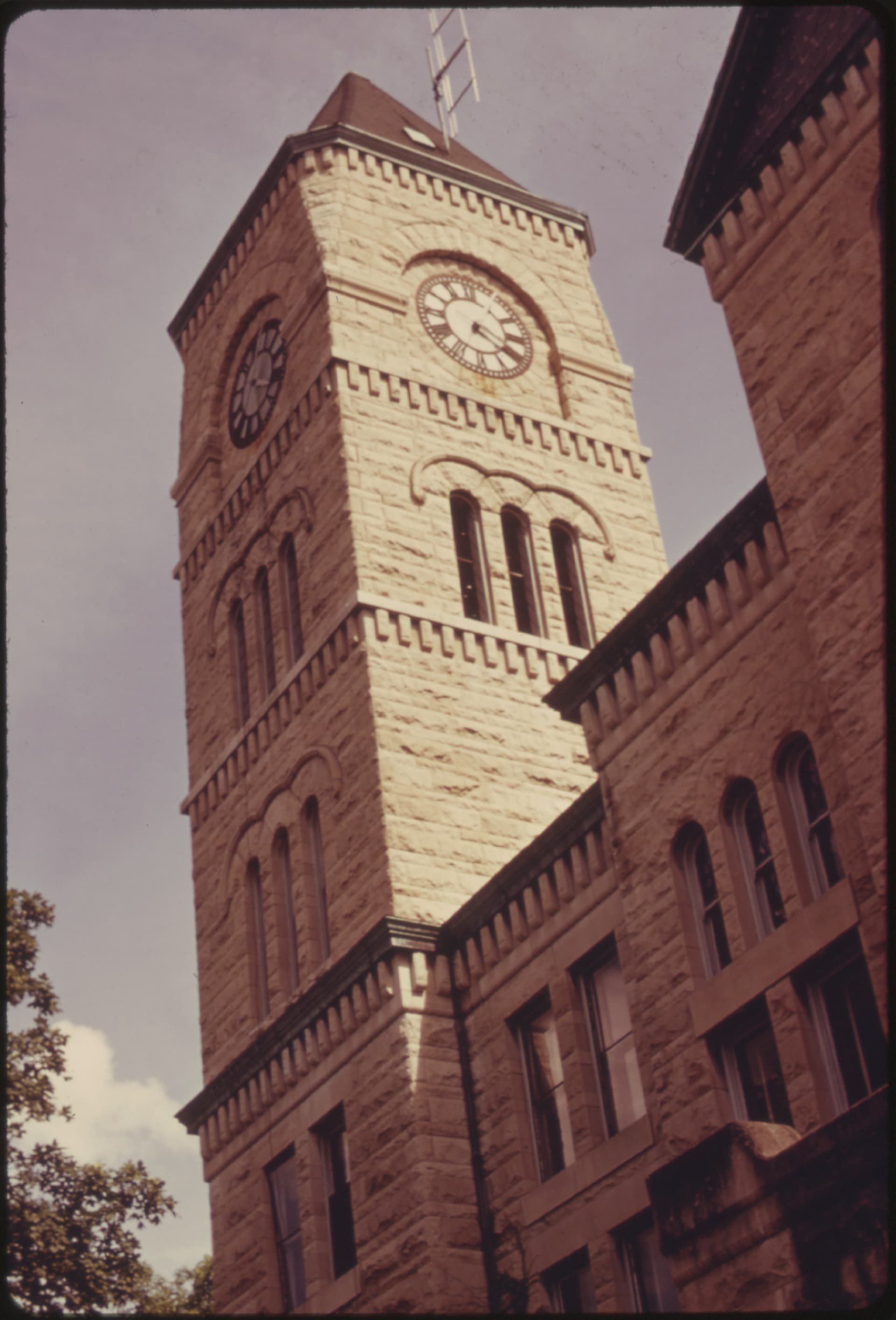
The Atchison County Courthouse still anchors daily county business at 423 N. 5th Street, where residents file records, attend hearings, and meet local government under a seven-story clock tower. It is both the county seat’s working center and one of Kansas’s most recognizable courthouse landmarks. In Atchison, the building’s value is practical first, and historic second, because it remains part of everyday county life.
A courthouse that still does the county’s work
Atchison County’s government remains based in Atchison, the county seat, and the courthouse still serves as the official address for county business. The building sits at the southwest corner of 5th and Parallel Streets, a location that makes it easy to place on a map and harder to separate from the life of downtown. People come here for the ordinary work of government, the kind that keeps a county functioning: records, hearings, and administrative decisions that shape daily life across Atchison County.
That active role is what gives the building its staying power. It is not a museum piece standing apart from civic life, but a site where the county’s present is handled inside a structure that has carried public business for generations. In a county shaped by river geography, frontier settlement, and later railroad-era growth, that continuity matters because it ties modern government to the same center of authority the county has relied on for well over a century.
Washburn’s courthouse on 5th Street
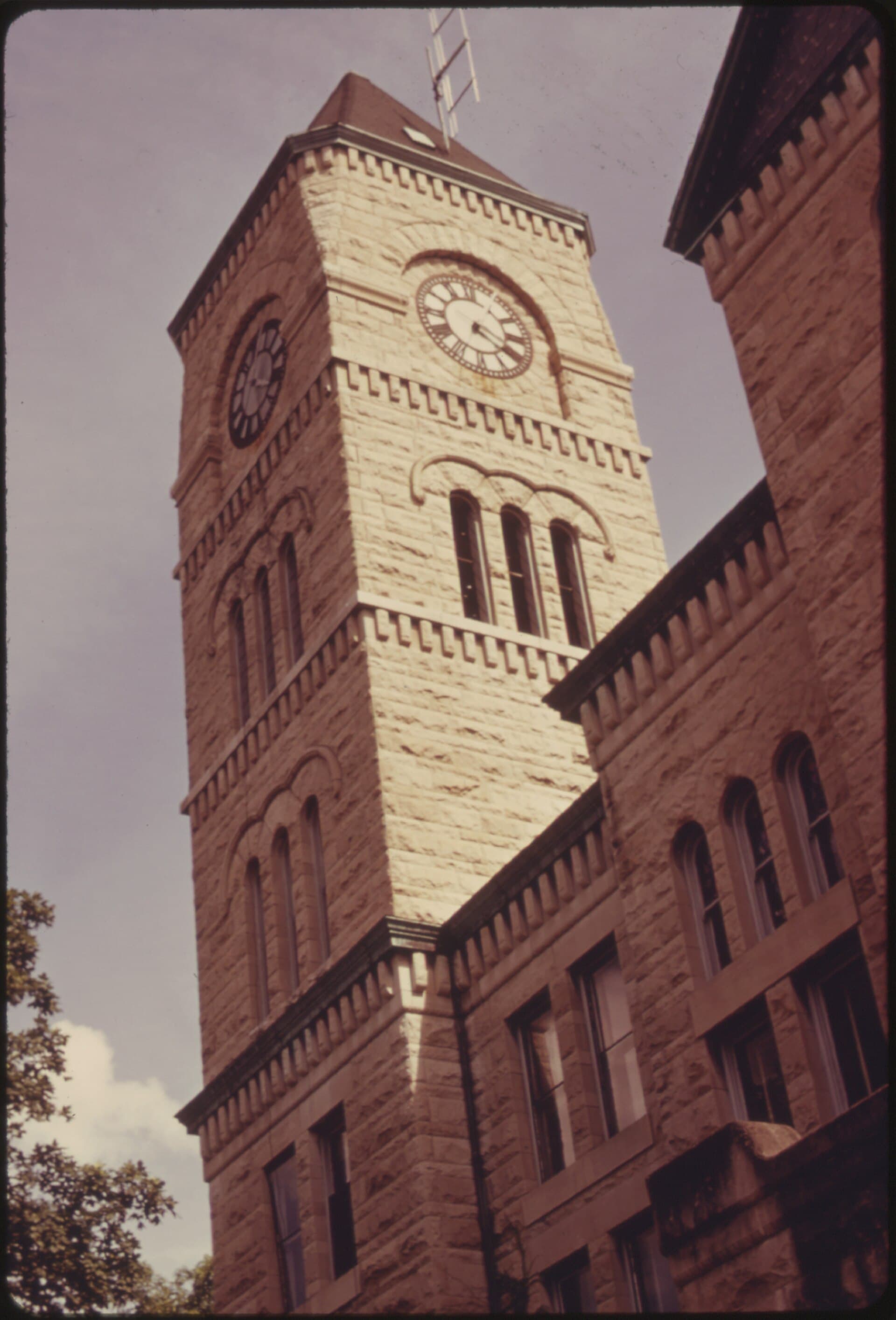
The courthouse now standing was built in 1896 and listed in the National Register of Historic Places on April 16, 1975. It is a Romanesque building of gray ashlar stone, and its seven-story clock tower dominates the front facade. The design came from George P. Washburn, one of Kansas’s signature courthouse architects, whose work helped define how county government looked across the state in the 1890s.
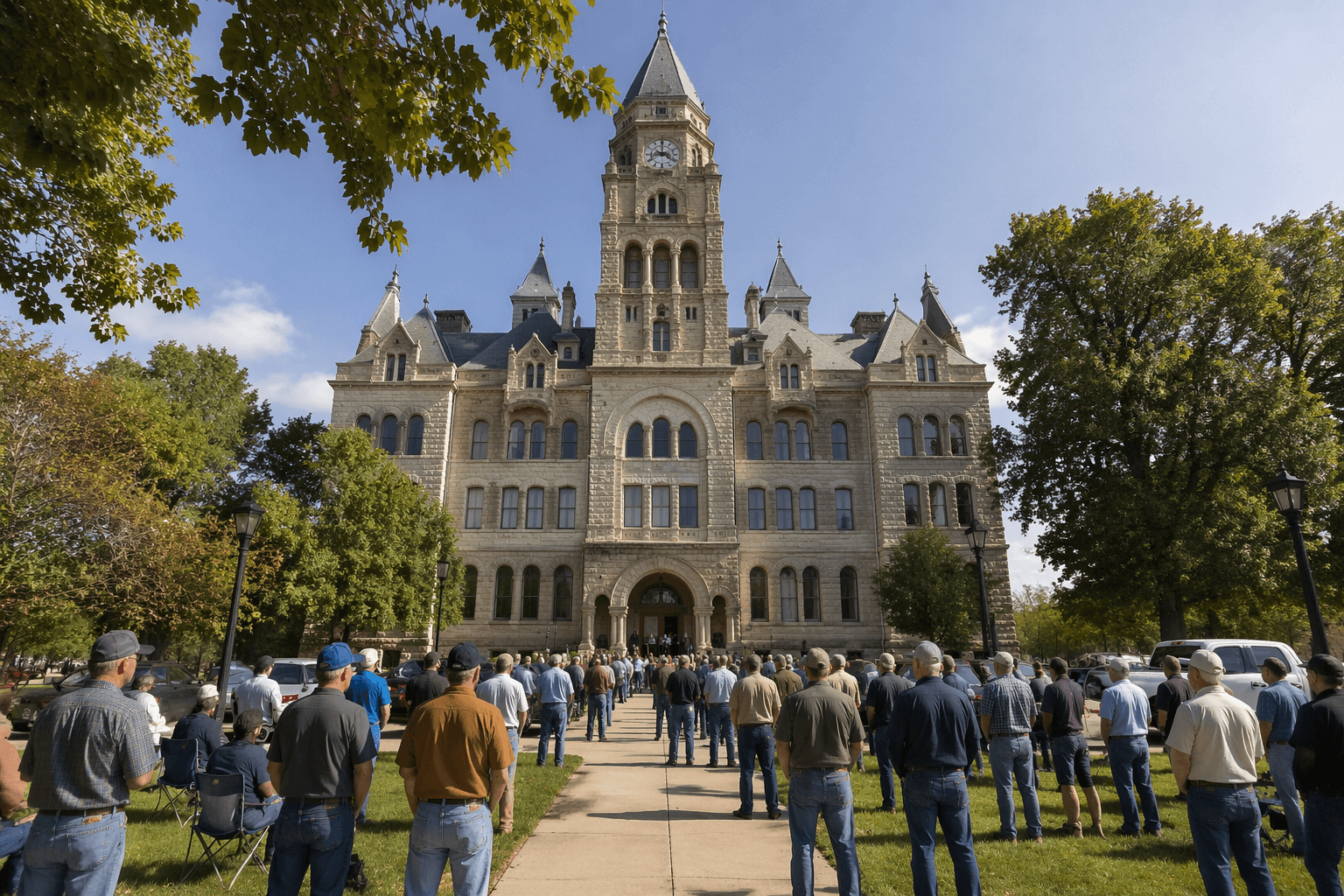
Washburn opened his practice in Ottawa in 1882 and went on to design 13 Kansas courthouses. His courthouse work included projects in Johnson, Franklin, Miami, Atchison, and Woodson counties, which places the Atchison courthouse inside a larger Kansas tradition rather than treating it as an isolated local landmark. The building’s architecture carries that signature: substantial stone, Romanesque massing, and a tower that announces public power as much as it marks time.
The Atchison courthouse also replaced the county’s first courthouse, built in 1859. County commissioners met with Washburn on February 7 and 8, 1896, and reached a verbal agreement for him to prepare the plans and specifications for four percent of the building’s cost. The contract to build the new courthouse was awarded in May 1896, and temporary space was arranged for county courthouse activities while the old building was demolished that same year. The new courthouse was not just a design choice, but a practical government project that kept the county functioning through the transition.
A building tied to the county’s earliest history
Atchison County was established on August 25, 1855, and organized on September 17, 1855. It was named for David Rice Atchison, and local history connects the area to early exploration, Lewis and Clark, and the founding of the townsite in 1854. That background helps explain why the courthouse feels so rooted in place: it stands inside a county whose civic identity reaches back to the first years of Kansas settlement.
The courthouse grounds also carry older layers of memory. A local marker associated with the site says Abraham Lincoln spoke near the courthouse location on December 2, 1859. Whether people come for county business, local history, or a self-guided walk through downtown Atchison, that marker gives the site another point of connection to national history. It helps make the courthouse more than a local government building, because it sits at the intersection of county administration and public remembrance.
For that reason, the courthouse works as one of the clearest places to read Atchison County’s past and present together. The same spot that handles public records and county proceedings also connects to the townsite’s early years, the county’s organization in the 1850s, and the architectural ambitions of the 1890s. Few buildings in the county carry that much civic continuity in one address.
Preservation and maintenance in an active government building
The courthouse’s historic status does not freeze it in place. It remains an active government building, which means repairs and renovations can still draw attention from preservation officials. An Atchison County report said county maintenance director Brian Oswald told commissioners that the Kansas State Historical Society was reviewing courthouse renovations, while county staff believed the work was cosmetic and would not damage historic fabric. That kind of scrutiny is part of life for a courthouse that is both operational and protected.
The building’s preservation also sits within a broader local effort to keep Atchison County history visible. The Atchison County Historical Society, founded in 1967, provides another anchor for that work, linking the courthouse to a countywide interest in collecting, interpreting, and protecting local heritage. Together, the courthouse and the historical society show how Atchison County handles the past: not as something separated from government, but as part of the same civic landscape.
For residents, that means the courthouse is more than a landmark to admire from the sidewalk. It is the place where county government still meets the public, where official business continues inside a 19th-century structure, and where Atchison County’s architectural legacy remains in use rather than locked away. The tower still rises over 5th Street, and the building still does the work it was built to do.
This article was produced by Prism’s automated news system from verified source data, official records, and press releases, then run through automated quality and moderation checks before publishing. The system is built and supervised by the people who set the standards it runs under. Read our full AI policy.
Know something we missed? Have a correction or additional information?
Submit a Tip