Atchison County preserves historic Black business district as museum opens
A Juneteenth museum now anchors Atchison’s Black Business District, where surviving buildings are being restored as a place of memory and new enterprise.
The northernmost building at 1118 N. 7th Street now holds a Black History Museum, but the work there is aimed at more than opening another exhibit space. In Atchison, the preservation effort is trying to restore a neighborhood story that once lived in grocery stores, cafés, barbershops, and other everyday gathering places on the north side. The remaining buildings are being treated as the last visible trace of a business district built and run by descendants of formerly enslaved people, and the point is to make that history present again in the city’s daily life.
Patty and Sonya Boldridge, lifelong Atchison residents and members of the Atchison County Historical Society, began piecing together that story in June 2021 by reading old newspapers. Their research pushed far past a single storefront or family name, uncovering more than 100 Black-owned businesses in Atchison and identifying an earliest known business dating to 1876. The district’s commercial peak stretched into the late 1960s before segregation-era changes helped weaken its trade, leaving only a few buildings behind.
From near demolition to a museum door
The Atchison County Historical Society says it owns the remaining property at 1118 N. 7th Street with support from the Atchison City Council. That public backing matters because the project nearly lost the buildings altogether, and the society’s purpose has been to hold onto the last pieces of the district before they disappeared from the streetscape.
Phase 1 is now complete. The renovated northernmost building has been turned into the Black History Museum, giving the district a public face instead of a vacant shell. The museum opened on Juneteenth, linking the site directly to Black freedom commemoration and to the city’s own effort to tell a fuller local history.
Patty Boldridge described the project’s beginnings as "no money" and a dream, and that line fits the shape of the work itself. The goal was never just preservation for preservation’s sake. It was to keep stories alive that were not in book form and to place them in a building people can walk into, see, and remember.
What the second phase is meant to add
Phase 2 will renovate the remaining two buildings once financing is secured, and that next stage is where the project becomes more than a museum stop. The society says the plan is to create a business-incubation space, turning part of the historic district into a place where young people can get mentorship and launch ideas of their own.
That matters because the district’s original life was practical, not symbolic. It was a working neighborhood where residents bought food, met neighbors, and did business in spaces that reflected Black ownership and Black presence in Atchison’s north side. Restoring the remaining buildings would not simply save old walls. It would return some of the district’s original function as a place where commerce, identity, and community connection met.
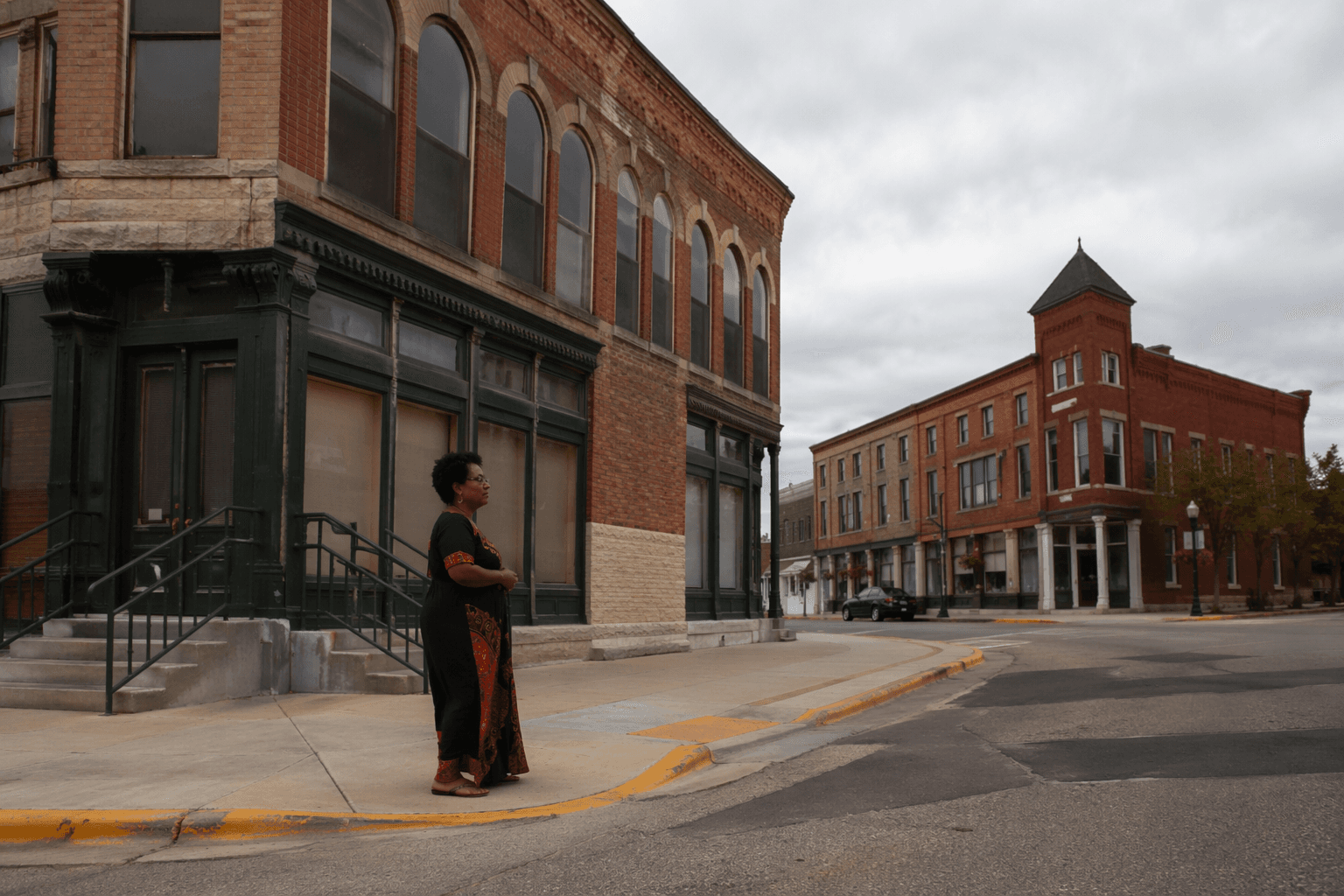
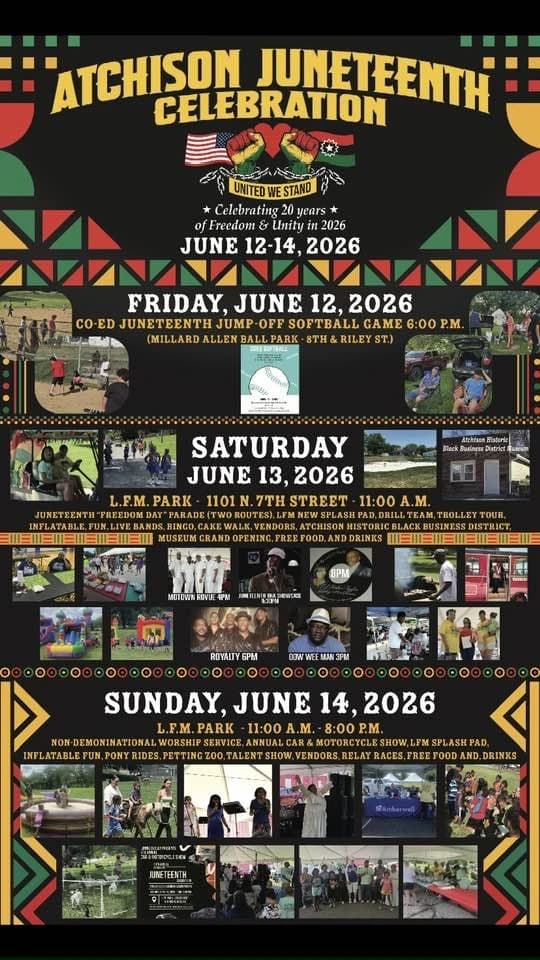
The museum’s location also helps make that connection tangible. It sits in a 1920 structure in the 1100 block of North 7th Street, near LFM Park, a location that ties the preservation effort to one of the city’s most familiar northside landmarks. During Atchison’s 20th annual Juneteenth celebration in June 2026, the museum opening and Black History trolley tours put that block back into public view.
Why the district matters to Atchison’s larger history
The story of the Black Business District fits into Atchison’s broader rise as a Kansas commercial center. Kansas Historical Society material places the city’s boom years from about 1870 to 1900, when major industries and wholesale firms developed and Atchison became one of the state’s first banking centers. That economic setting helps explain how a Black business district could take root and sustain itself on the north side.
It also shows why the district’s decline matters. When a neighborhood that once held dozens of businesses loses them to changing commercial patterns and segregation-era pressures, the loss is not only economic. It is social. The places where people gathered, traded, and recognized one another’s names vanish from memory unless someone keeps the record.
Atchison County’s Black history reaches even further back. A Kansas State History article cites a September 16, 1856 newspaper advertisement involving two runaway enslaved boys, Ned and Harrison, as a reminder that Black life in the county has always included slavery, resistance, labor, and survival. That deeper history gives the preservation project more weight. It is not only about the late 19th and 20th centuries, but about the longer arc of Black settlement and struggle in the county.
What residents stand to regain
The preservation project gives Atchison something rare: a physical place where local memory can be seen instead of only described. A museum in one building, restored storefronts in the others, and a business incubator in the future would together create a district that tells the story of who built it, who lost it, and who is trying to bring back its public meaning.
The National Park Service pending list identifies the district at 1118 North 7th Street in Atchison, underscoring the site’s recognized historic significance. But the stronger case for saving it comes from the neighborhood itself. The district once held commerce, conversation, and Black ownership in a city whose growth depended on northside labor and enterprise. If Phase 2 is financed, Atchison will not just preserve a historic address. It will regain a place where community memory, visible history, and future opportunity can occupy the same block.
This article was produced by Prism’s automated news system from verified source data, official records, and press releases, then run through automated quality and moderation checks before publishing. The system is built and supervised by the people who set the standards it runs under. Read our full AI policy.
Did this article answer your question?